







Africa
.svg) _blank.svg) | |
| Area | 30,370,000 km2 (11,730,000 sq mi) (2nd) |
|---|---|
| Population |  1,393,676,444[1][2] (2021; 2nd) 1,393,676,444[1][2] (2021; 2nd) |
| Population density | 46.1/km2 (119.4/sq mi) (2021) |
| GDP (PPP) | $10.77 trillion (2025 est; 4th)[3] |
| GDP (nominal) | $2.82 trillion (2025 est; 5th)[4] |
| GDP per capita | $1,920 (Nominal; 2025 est; 6th)[5] |
| Religions |
|
| Demonym | African |
| Countries | 54 recognised states, 2 partially recognised states, 4 dependent territories |
| Dependencies | External (4) |
| Languages | 1250–3000 native languages |
| Time zones | UTC-1 to UTC+4 |
| Largest cities | Largest urban areas: |
| ^ A: African people often combine the practice of their traditional beliefs with the practice of Abrahamic religions.[7][8] | |
Africa is the world's second-largest and second-most populous continent after Asia. At about 30.3 million km2 (11.7 million square miles) including adjacent islands, it covers around 20% of Earth's land area and 6% of its total surface area.[9] With nearly 1.4 billion people as of 2021, it accounts for about 18% of the world's human population. Africa's population is the youngest among all the continents;[10][11] the median age in 2012 was 19.7, when the worldwide median age was 30.4.[12] Based on 2024 projections, Africa's population will exceed 3.8 billion people by 2100.[13] Africa is the least wealthy inhabited continent per capita and second-least wealthy by total wealth, ahead of Oceania. Scholars have attributed this to different factors including geography, climate,[14] corruption,[14] colonialism, the Cold War,[15][16] and neocolonialism. Despite this low concentration of wealth, recent economic expansion and a large and young population make Africa an important economic market in the broader global context, and Africa has a large quantity of natural resources.
Africa straddles the equator and the prime meridian. The continent is surrounded by the Mediterranean Sea to the north, the Arabian Plate and the Gulf of Aqaba to the northeast, the Indian Ocean to the southeast and the Atlantic Ocean to the west. France, Italy, Portugal, Spain, and Yemen have parts of their territories located on African geographical soil, mostly in the form of islands.
The continent includes Madagascar and various archipelagos. It contains 54 fully recognised sovereign states, eight cities and islands that are part of non-African states, and two de facto independent states with limited or no recognition. This count does not include Malta and Sicily, which are geologically part of the African continent. Algeria is Africa's largest country by area, and Nigeria is its largest by population. African nations cooperate through the establishment of the African Union, which is headquartered in Addis Ababa.
Africa is highly biodiverse;[17] it is the continent with the largest number of megafauna species, as it was least affected by the extinction of the Pleistocene megafauna. However, Africa is also heavily affected by a wide range of environmental issues, including desertification, deforestation, water scarcity, and pollution. These entrenched environmental concerns are expected to worsen as climate change impacts Africa. The UN Intergovernmental Panel on Climate Change has identified Africa as the continent most vulnerable to climate change.[18][19]
The history of Africa is long, complex, and varied, and has often been under-appreciated by the global historical community.[20] In African societies the oral word is revered, and they have generally recorded their history via oral tradition, which has led anthropologists to term them "oral civilisations", contrasted with "literate civilisations" which pride the written word.[a][23]: 142–143 African culture is rich and diverse both within and between the continent's regions, encompassing art, cuisine, music and dance, religion, and dress.
Africa, particularly Eastern Africa, is widely accepted to be the place of origin of humans and the Hominidae clade, also known as the great apes. The earliest hominids and their ancestors have been dated to around 7 million years ago, and Homo sapiens (modern human) are believed to have originated in Africa 350,000 to 260,000 years ago.[b] In the 4th and 3rd millennia BCE Ancient Egypt, Kerma, Punt, and the Tichitt Tradition emerged in North, East and West Africa, while from 3000 BCE to 500 CE the Bantu expansion swept from modern-day Cameroon through Central, East, and Southern Africa, displacing or absorbing groups such as the Khoisan and Pygmies. Some African empires include Wagadu, Mali, Songhai, Sokoto, Ife, Benin, Asante, the Fatimids, Almoravids, Almohads, Ayyubids, Mamluks, Kongo, Mwene Muji, Luba, Lunda, Kitara, Aksum, Ethiopia, Adal, Ajuran, Kilwa, Sakalava, Imerina, Maravi, Mutapa, Rozvi, Mthwakazi, and Zulu. Despite the predominance of states, many societies were heterarchical and stateless.[c] Slave trades created various diasporas, especially in the Americas. From the late 19th century to early 20th century, driven by the Second Industrial Revolution, most of Africa was rapidly conquered and colonised by European nations, save for Ethiopia and Liberia.[32] European rule had significant impacts on Africa's societies, and colonies were maintained for the purpose of economic exploitation and extraction of natural resources. Most present states emerged from a process of decolonisation following World War II, and established the Organisation of African Unity in 1963, the predecessor to the African Union.[33] The nascent countries decided to keep their colonial borders, with traditional power structures used in governance to varying degrees.
Etymology
Afri was a Latin name used to refer to the inhabitants of what was then known as northern Africa, located west of the Nile river, and in its widest sense referring to all lands south of the Mediterranean, also known as Ancient Libya.[34][35] This name seems to have originally referred to a native Libyan tribe, an ancestor of modern Berbers;[36] see Terence for discussion. The name had usually been connected with the Phoenician word ʿafar meaning "dust",[37] but a 1981 hypothesis[38] has asserted that it stems from the Berber word ifri (plural ifran) meaning "cave", in reference to cave dwellers.[39] The same word[39] may be found in the name of the Banu Ifran from Algeria and Tripolitania, a Berber tribe originally from Yafran (also known as Ifrane) in northwestern Libya,[40] as well as the city of Ifrane in Morocco.
Under Roman rule, Carthage became the capital of the province then named Africa Proconsularis, following the Roman victory over the Carthaginians in the Third Punic War in 146 BC, which also included the coastal part of modern Libya.[41] The Latin suffix -ica can sometimes be used to denote a land (e.g., in Celtica from Celtae, as used by Julius Caesar). The later Muslim region of Ifriqiya, following its conquest of the Byzantine (Eastern Roman) Empire's Exarchatus Africae, also preserved a form of the name.
According to the Romans, Africa lies to the west of Egypt, while "Asia" was used to refer to Anatolia and lands to the east. A definite line was drawn between the two continents by the geographer Ptolemy (85–165 CE), indicating Alexandria along the Prime Meridian and making the isthmus of Suez and the Red Sea the boundary between Asia and Africa. As Europeans came to understand the real extent of the continent, the idea of "Africa" expanded with their knowledge.
Other etymological hypotheses have been postulated for the ancient name "Africa":
- The 1st-century Jewish historian Flavius Josephus (Ant. 1.15) asserted that it was named for Epher, grandson of Abraham according to Gen. 25:4, whose descendants, he claimed, had invaded Libya.
- Isidore of Seville in his 7th-century Etymologiae XIV.5.2. suggests "Africa" comes from the Latin aprica, meaning "sunny".
- Massey, in 1881, stated that Africa is derived from the Egyptian af-rui-ka, meaning "to turn toward the opening of the Ka." The Ka is the energetic double of every person and the "opening of the Ka" refers to a womb or birthplace. Africa would be, for the Egyptians, "the birthplace."[42]
- Michèle Fruyt in 1976 proposed[43] linking the Latin word with africus "south wind", which would be of Umbrian origin and mean originally "rainy wind".
- Robert R. Stieglitz of Rutgers University in 1984 proposed: "The name Africa, derived from the Latin *Aphir-ic-a, is cognate to Hebrew Ophir ['rich']."[44]
- Ibn Khallikan and some other historians claim that the name of Africa came from a Himyarite king called Afrikin ibn Kais ibn Saifi ("Afrikus son of Abraham") who subdued Ifriqiya.[45][46][47]
- Arabic afrīqā (feminine noun) and ifrīqiyā, now usually pronounced afrīqiyā (feminine) 'Africa', from 'afara [' = 'ain, not 'alif] 'to be dusty' from 'afar 'dust, powder' and 'afir 'dried, dried up by the sun, withered' and 'affara 'to dry in the sun on hot sand' or 'to sprinkle with dust'.[48]
- Possibly Phoenician faraqa in the sense of 'colony, separation'.[49]
The terms "North Africa" and "Sub-Saharan Africa" has been subject to recent criticism from some scholars due to its historical root in colonialist discourse which arbitrarily separated Africa into a white "northern" Africa and black "southern" Africa, overlooking common genetic links and regional diversity across the continent.[50][51][52]
History
History in Africa
In accordance with African cosmology, African historical consciousness viewed historical change and continuity, order and purpose within the framework of man and his environment, the gods, and his ancestors, and he believed himself part of a holistic spiritual entity.[53] In African societies, the historical process is largely a communal one, with eyewitness accounts, hearsay, reminiscences, and occasionally visions, dreams, and hallucinations crafted into narrative oral traditions which are performed and transmitted through generations.[54]: 12 : 48 In oral traditions time is sometimes mythical and social, and ancestors were considered historical actors.[d][55]: 43–53 Mind and memory shapes traditions, as events are condensed over time and crystallise into clichés.[56]: 11 Oral tradition can be exoteric or esoteric. It speaks to people according to their understanding, unveiling itself in accordance with their aptitudes.[57]: 168 In African epistemology, the epistemic subject "experiences the epistemic object in a sensuous, emotive, intuitive, abstractive understanding, rather than through abstraction alone, as is the case in Western epistemology" to arrive at a "complete knowledge", and as such oral traditions, music, proverbs, and the like were used in the preservation and transmission of knowledge.[58]
Prehistory
Africa is considered by most paleoanthropologists to be the oldest inhabited territory on Earth, with the Human species originating from the continent.[59] During the mid-20th century, anthropologists discovered many fossils and evidence of human occupation perhaps as early as seven million years ago ("Before Present"; BP). Fossil remains of several species of early apelike humans thought to have evolved into modern humans, such as Australopithecus afarensis radiometrically dated to approximately 3.9–3.0 million years BP,[60] Paranthropus boisei (c. 2.3–1.4 million years BP)[61] and Homo ergaster (c. 1.9 million–600,000 years BP) have been discovered.[9]
After the evolution of Homo sapiens approximately 350,000 to 260,000 years BP in Africa, the continent was mainly populated by groups of hunter-gatherers.[62][63] These first modern humans left Africa and populated the rest of the globe during the Out of Africa II migration dated to approximately 50,000 years BP, exiting the continent either across Bab-el-Mandeb over the Red Sea,[64][65] the Strait of Gibraltar in Morocco,[66][67] or the Isthmus of Suez in Egypt.[68]
Other migrations of modern humans within the African continent have been dated to that time, with evidence of early human settlement found in Southern Africa, Southeast Africa, North Africa, and the Sahara.[69] At the end of the Ice ages, estimated to have been around 10,500 BC, the Sahara had again become a green fertile valley, and its African populations returned from the interior and coastal highlands in Africa, with rock art paintings depicting a fertile Sahara and large populations discovered in Tassili n'Ajjer dating back perhaps 10 millennia.[70] However, the warming and drying climate meant that by 5,000 BC, the Sahara region was becoming increasingly dry and hostile. Around 3500 BC, due to a tilt in the Earth's orbit, the Sahara experienced a period of rapid desertification.[71] The domestication of cattle in Africa preceded agriculture and seems to have existed alongside hunter-gatherer cultures. It is speculated that by 6,000 BC, cattle were domesticated in North Africa.[72]
In West Africa, a wet phase ushered in an expanding rainforest and wooded savanna from Senegal to Cameroon. Between 9,000 and 5,000 BC, Niger–Congo speakers domesticated the oil palm and raffia palm. Black-eyed peas and voandzeia (African groundnuts), were domesticated, followed by okra and kola nuts. Since most of the plants grew in the forest, the Niger–Congo speakers invented polished stone axes for clearing forest.[73]: 82–4 Pygmies are thought to have inhabited Central Africa for many millennia, splitting into eastern and western groups around 5,000 BP.[74] Over 150,000 BP, there was an early dispersal of anatomically modern humans to Southern Africa, equated with the modern-day Khoisan who have preserved their traditional hunter-gatherer way of life.[e][76]
4th millennium BC – 6th century AD
Northeast Africa

From 3500 BC, nomes (ruled by nomarchs) coalesced to form the kingdoms of Lower Egypt and Upper Egypt in northeast Africa. Around 3100 BC Upper Egypt conquered Lower Egypt to unify Egypt under the 1st dynasty, with the process of consolidation and assimilation completed by the time of the 3rd dynasty who formed the Old Kingdom of Egypt in 2686 BC.[77]: 62–63 The Kingdom of Kerma emerged around this time to become the dominant force in Nubia, controlling territory as large as Egypt between the 1st and 4th cataracts of the Nile.[78][79] The height of the Old Kingdom saw the construction of many great pyramids, though under the 6th dynasty power gradually decentralised to the nomarchs, culminating in the disintegration of the kingdom, exacerbated by drought and famine. Around 2055 BC, the 11th dynasty, based in Thebes, conquered the others to form the Middle Kingdom of Egypt, and the 12th dynasty expanded into Lower Nubia at the expense of Kerma.[77]: 68–71 Around 1700 BC, the Middle Kingdom fractured in two, and the Hyksos (a militaristic people from Palestine) invaded and conquered Lower Egypt, while Kerma coordinated invasions deep into Egypt to reach its greatest extent.[80] In 1550 BC, the 18th dynasty expelled the Hyksos, and established the New Kingdom of Egypt. The New Kingdom conquered the Levant from the Canaanites, Mittani, Amorites, and Hittites, and extinguished Kerma, incorporating Nubia into the empire, and sending the Egyptian empire into its golden age.[77]: 73 Internal struggles, drought, famine, and invasions by a confederation of seafaring peoples contributed to the New Kingdom's collapse in 1069 BC.[77]: 76–77
The New Kingdom's collapse liberated the Kingdom of Kush in Nubia, which manoeuvred into power in Upper Egypt and conquered Lower Egypt in 754 BC to form the Kushite Empire. The Kushites ruled for a century and oversaw a revival in pyramid building, until they were driven out of Egypt by the Assyrians in 663 BC in reprisal for their expansion towards the Assyrian Empire.[81] The Assyrians installed a puppet dynasty that later gained independence and once more unified Egypt, until it was conquered by the Achaemenid Empire in 525 BC.[77]: 77 Egypt briefly regained independence from the Achaemenids under the 28th dynasty from 404 to 343 BC. The conquest of Achaemenid Egypt by Alexander the Great in 332 BC marked the beginning of Hellenistic rule and the installation of the Macedonian Ptolemaic dynasty in Egypt.[82]: 119 The Ptolemaics lost their holdings outside of Africa to the Seleucids in the Syrian Wars, expanded into Cyrenaica, and briefly occupied part of Kush in the 3rd century BC.[83]: 384–93 In the 1st century BC, Ptolemaic Egypt became entangled in a Roman civil war, leading to its conquest by the Romans in 30 BC.[84] Kush persisted as a major regional power until, having been weakened from internal rebellion amid worsening climatic conditions, invasions by Aksum and the Noba caused their disintegration into Makuria, Alodia, and Nobatia around the 5th century AD.[85]
Horn of Africa
In the Horn of Africa, there was the Land of Punt, a kingdom on the Red Sea which was a close trading partner of Ancient Egypt in the 3rd and 2nd millennia BC. Rodolfo Fattovich equated it to the Gash Group in the Sudanese-Eritrean lowlands, and some scholars have hypothesised modern-day Somalia, while Kenneth Kitchen and Felix Chami locate it on Zanzibar Island.[86][87]: 680 In the Eritrean-Ethiopian Highlands, the kingdom of dʿmt rose c. 980 BC as the region was incorporated into global trading networks,[88] and it exhibited Sabaean influences which most scholars attribute to a small migration of Sabaeans and their assimilation.[89] Several scholars consider there to have been other contemporaneous states,[90][91]: 39–40 and dʿmt's collapse in the mid-1st century BC saw the region inhabited by small polities.[92] Modern-day Somalia was inhabited by nomadic pastoralists, and along the Horn's coast there were many ancient Somali city-states that thrived off of the wider Red Sea trade, and enjoyed a lucrative monopoly on cinnamon from Ancient India due to their freedom from Roman interference.[93]: 24–5, 33 In the 1st century AD, the Kingdom of Aksum rose from a city-state to rule much of the northern Ethiopian-Eritrean Highlands and the Red Sea port of Adulis. Aksum was described as one of the four great powers by Persian prophet Mani in the 3rd century.[94][95]: 174 Aksum's king converted from traditional religion to Christianity in the 4th century, gradually followed by the population. In the 6th century, Aksum conquered South Arabia, though struggled to maintain control over it, and began to gradually lose its dominance over Red Sea trade to Persians and Arabs.[94]
Northwest Africa
Northwest Africa (the Maghreb) was inhabited by Berber semi-nomadic pastoralists. In the 1st millennium BC, Phoenician migration and settlement came in search for precious metals in the Gulf of Tunis.[96]: 442 This grew into Ancient Carthage after gaining independence from Phoenicia in the 6th century BC, and they built an extensive trading empire with a strict mercantile network.[97] Carthage's collapse and conquest by Rome in the Punic Wars (3rd and 2nd centuries BC) saw Numidia and Mauretania become major powers in the Maghreb. Towards the end of the 2nd century BC Mauretania fought alongside Numidia's Jugurtha against the Romans in the Jugurthine War after he had usurped the Numidian throne from a Roman ally. Together they inflicted heavy casualties, with the war only ending inconclusively when Mauretania's Bocchus I sold out Jugurtha to the Romans. Around the turn of the millennium, both came under direct Roman rule.[96]: 460–2 While traditional religion predominated among Berbers, some people converted to Christianity. In the 5th century AD the Vandals conquered Roman Africa before the fall of Rome, though the province was reconquered by the Byzantines a century later. Large swathes of indigenous peoples regained self-governance in Masuna and its numerous successor polities in the Maghreb, including the kingdoms of Ouarsenis, Aurès, and Altava.[98]: 495–7, 500–8
West Africa

In the western Sahel the rise of settled communities occurred largely as a result of the domestication of millet and of sorghum, and cattle pastoralism began c. 2500 BC. Extensive east-west belts of deserts, grasslands, and forests from north to south were crucial for the moulding of their respective societies and meant that symbiotic trade relations developed in response to the differing environments.[99][100]: 79–80 Beginning around 4000 BC, the Tichitt culture in modern-day Mauritania and Mali is the oldest known complexly organised society in West Africa,[101] while others included the Kintampo culture in modern-day Ghana, the Nok culture in modern-day Nigeria, and the Daima culture around Lake Chad.[102]: 603–12 Towards the end of the 3rd century AD, a wet period in the Sahel created areas for human habitation and exploitation that had not been habitable for the best part of a millennium. The Ghana Empire (also called Wagadu) rose out of the Tichitt culture, growing wealthy following the introduction of the camel to the western Sahel, which revolutionised the trans-Saharan trade that linked their capital and Aoudaghost with Tahert and Sijilmasa in North Africa.[103] Soninke tradition holds that the final founding of Wagadu occurred after Dinga did a deal with Bida, a serpent deity who was guarding a well, to sacrifice one maiden a year in exchange for assurance regarding plenty of rainfall and gold supply.[f][104] Based on large tumuli scattered across West Africa dating to this period, several scholars have speculated that there were further simultaneous and preceding states relative to Wagadu.[105][101]
Central, Eastern, and Southern Africa
In the Grasslands of northwestern Cameroon, Bantu-speaking agriculturalists started to gradually migrate south sometime between 5000 BC and 3000 BC. Despite intensive research, the cause of the migrations, and that of the directions taken, is still unclear,[g] however there is consensus that there were multiple dispersal events. Around 1500 BC, Bantu speakers reached central Cameroon. The 'Western Stream' likely followed the coast and the major rivers of the Congo system southwards to reach the southern fringe of the Congolian Rainforest around 500 BC (some may have used the sea to circumvent the rainforest). Their arrival coincided with the spread of iron metallurgy through Central Africa. Meanwhile, the 'Eastern Stream' travelled either the northern fringe of the rainforest or the Ubangi River eastwards, and reached just west of Lake Victoria around 500 BC. While there, Bantu speakers adopted iron metallurgy from Cushitic speakers already present, and coexisted with them.[107][106]: 23–5 Dispersal from the Great Lakes region occurred in two more streams. One went west to meet the Western Stream in the DR Congo and Angola, while the other went south and spread across Eastern and Southern Africa.[106]: 26 Around the turn of the millennium, Bantu speakers reached central modern-day Tanzania and near Dar es Salaam, before rapidly moving southwards along the coast to reach modern-day Kwazulu Natal in South Africa around the 3rd century AD.[107] Throughout this, Bantu speakers displaced, replaced, or intermarried with and absorbed hunter-gatherer and agricultural groups.[108][106]: 32 [109]: 636
7th to 18th centuries

Pre-colonial Africa possessed as many as 10,000 different states and polities.[111] These included small family groups of hunter-gatherers such as the San people of southern Africa; larger, more structured groups such as the family clan groupings of the Bantu peoples of central, southern, and eastern Africa; heavily structured clan groups in the Horn of Africa; the large Sahelian kingdoms; and autonomous city-states and kingdoms, such as those of the Akan; Edo, Yoruba, and Igbo people in West Africa; and the Swahili coastal trading towns of Southeast Africa.
By the 9th century AD, a string of dynastic states, including the earliest Hausa states, stretched across the sub-Saharan savannah from the western regions to central Sudan. The most powerful of these states were Ghana, Gao, and the Kanem-Bornu Empire. Ghana declined in the eleventh century, but was succeeded by the Mali Empire, which consolidated much of western Sudan in the thirteenth century. Kanem accepted Islam in the eleventh century.
In the forested regions of the West African coast, independent kingdoms grew with little influence from the Muslim north. The Kingdom of Nri, which was ruled by the Eze Nri, was established around the ninth century, making it one of the oldest kingdoms in present-day Nigeri. The Nri kingdom is famous for its elaborate bronzes, found at the town of Igbo-Ukwu.[112]

The Kingdom of Ife, historically the first of these Yoruba city-states or kingdoms, established government under a priestly oba ('king' or 'ruler' in the Yoruba language), called the Ooni of Ife. Ife was noted as a major religious and cultural centre in West Africa and for its unique naturalistic tradition of bronze sculpture. The Ife model of government was adapted by the Oyo Empire, whose obas, called the Alaafins of Oyo, controlled many other Yoruba and non-Yoruba city-states and kingdoms including the Fon Kingdom of Dahomey.
The Almoravids were a Berber dynasty from the Sahara that spread over northwestern Africa and the Iberian peninsula during the eleventh century.[113] The Banu Hilal and Banu Ma'qil were a collection of Arab Bedouin tribes from the Arabian Peninsula who migrated westwards via Egypt between the eleventh and thirteenth centuries. Their migration resulted in the fusion of the Arabs and Berbers, where the locals were arabised,[114] and Arab culture absorbed elements of the local culture, under the unifying framework of Islam.[115]
Following the breakup of Mali, a local leader named Sonni Ali (1464–1492) founded the Songhai Empire in the region of middle Niger and the western Sudan and took control of the trans-Saharan trade. Sonni Ali seized Timbuktu in 1468 and Jenne in 1473, building his regime on trade revenues and the cooperation of Muslim merchants. His successor Askia Mohammad I (1493–1528) made Islam the official religion, built mosques, and brought to Gao Muslim scholars, including al-Maghili (d.1504), the founder of an important tradition of Sudanic African Muslim scholarship.[116] By the eleventh century, some Hausa states – such as Kano, Jigawa, Katsina, and Gobir – had developed into walled towns engaging in trade, servicing caravans, and the manufacture of goods. Until the fifteenth century, these small states were on the periphery of the major Sudanic empires of the era, paying tribute to Songhai to the west and Kanem-Borno to the east.
Height of the slave trade

Slavery had long been practiced in Africa.[117][118] Between the 15th and the 19th centuries, the Atlantic slave trade took an estimated 7–12 million slaves to the New World.[119][120][121] In addition, more than 1 million Europeans were captured by Barbary pirates and sold as slaves in North Africa between the 16th and 19th centuries.[122]
The Trans-Saharan slave trade contributed to a mass movement of Africans across North Africa and wider Near East over several millennia.[123] Islamic caliphs with Sub-Saharan African ancestry include Abu al-Misk Kafur[124] Al-Mustansir Billah[125], Yaqub al-Mansur,[126] Abu al-Hasan Ali ibn Othman, Sultan of the Marinid dynasty[127] and Moulay Ismail Ibn Sharif.[128]
In West Africa, the decline of the Atlantic slave trade in the 1820s caused dramatic economic shifts in local polities. The gradual decline of slave-trading, prompted by a lack of demand for slaves in the New World, increasing anti-slavery legislation in Europe and America, and the British Royal Navy's increasing presence off the West African coast, obliged African states to adopt new economies. Between 1808 and 1860, the British West Africa Squadron seized approximately 1,600 slave ships and freed 150,000 Africans who were aboard.[129]
Action was also taken against African leaders who refused to agree to British treaties to outlaw the trade, for example against "the usurping King of Lagos", deposed in 1851. Anti-slavery treaties were signed with over 50 African rulers.[130] The largest powers of West Africa (the Asante Confederacy, the Kingdom of Dahomey, and the Oyo Empire) adopted different ways of adapting to the shift. Asante and Dahomey concentrated on the development of "legitimate commerce" in the form of palm oil, cocoa, timber and gold, forming the bedrock of West Africa's modern export trade. The Oyo Empire, unable to adapt, collapsed into civil wars.[131]
Colonialism
The Scramble for Africa[h] was the invasion, conquest, and colonisation of most of Africa by seven Western European powers driven by the Second Industrial Revolution during the late 19th century and early 20th century in the era of "New Imperialism". Belgium, France, Germany, Italy, Portugal, Spain and the United Kingdom were the contending powers.
In 1870, 10% of the continent was formally under European control. By 1914, this figure had risen to almost 90%; the only states retaining sovereignty were Liberia, Ethiopia, Egba,[i] Aussa, Mbunda,[133] the Dervish State, the Darfur Sultanate,[134] and the Ovambo kingdoms,[135][136] most of which were later conquered.
The 1884 Berlin Conference regulated European colonisation and trade in Africa, and is seen as emblematic of the "scramble".[137] In the last quarter of the 19th century, there were considerable political rivalries between the European empires, which provided the impetus for the colonisation.[138] The later years of the 19th century saw a transition from "informal imperialism" – military influence and economic dominance – to direct rule.[139][140]
With the decline of the European colonial empires in the wake of the two world wars, most African colonies gained independence during the Cold War, and decided to keep their colonial borders in the Organisation of African Unity conference of 1964 due to fears of civil wars and regional instability, placing emphasis on pan-Africanism.[141]
Independence struggles

Imperial rule by Europeans continued until after the conclusion of World War II, when almost all remaining colonial territories gradually obtained formal independence. Independence movements in Africa gained momentum following World War II, which left the major European powers weakened. In 1951, Libya, a former Italian colony, gained independence. In 1956, Tunisia and Morocco won their independence from France.[142] Ghana followed suit the next year (March 1957),[143] becoming the first of the sub-Saharan colonies to be granted independence. Over the next decade, waves of decolonisation took place across the continent, culminating in the 1960 Year of Africa and the establishment of the Organisation of African Unity in 1963.[33]
Portugal's overseas presence in sub-Saharan Africa (most notably in Angola, Cape Verde, Mozambique, Guinea-Bissau, and São Tomé and Príncipe) lasted from the 16th century to 1975, after the Estado Novo regime was overthrown in a military coup in Lisbon. Rhodesia unilaterally declared independence from the United Kingdom in 1965, under the white minority government of Ian Smith, but was not internationally recognised as an independent state (as Zimbabwe) until 1980, when black nationalists gained power after a bitter guerrilla war. Although South Africa was one of the first African countries to gain independence, the state remained under the control of the country's white minority, initially through qualified voting rights and from 1956 by a system of racial segregation known as apartheid, until 1994.
Post-colonial Africa
As of 2025, Africa contains 54 sovereign countries.[144] Since independence, African states have frequently been hampered by instability, corruption, violence, and authoritarianism. The vast majority of African states are republics that operate under some form of the presidential system of rule. However, few of them have been able to sustain democratic governments on a permanent basis—per the criteria laid out by Lührmann et al. (2018), only Botswana and Mauritius have been consistently democratic for the entirety of their post-colonial history. Most African countries have experienced several coups or periods of military dictatorship. Between 1990 and 2018, though, the continent as a whole has trended towards more democratic governance.[145]
Upon independence an overwhelming majority of Africans lived in extreme poverty. The continent suffered from the lack of infrastructural or industrial development under colonial rule, along with political instability. With limited financial resources or access to global markets, relatively stable countries such as Kenya still experienced only very slow economic development. Only a handful of African countries succeeded in obtaining rapid economic growth prior to 1990. Exceptions include Libya and Equatorial Guinea, both of which possess large oil reserves.
Instability throughout the continent after decolonisation resulted primarily from marginalisation of ethnic groups, and corruption. In pursuit of personal political gain, many leaders deliberately promoted ethnic conflicts, some of which had originated during the colonial period, such as from the grouping of multiple unrelated ethnic groups into a single colony, the splitting of a distinct ethnic group between multiple colonies, or existing conflicts being exacerbated by colonial rule (for instance, the preferential treatment given to ethnic Hutus over Tutsis in Rwanda during German and Belgian rule).
Faced with increasingly frequent and severe violence, military rule was widely accepted by the population of many countries as means to maintain order, and during the 1970s and 1980s a majority of African countries were controlled by military dictatorships. Territorial disputes between nations and rebellions by groups seeking independence were also common in independent African states. The most devastating of these was the Nigerian Civil War, fought between government forces and an Igbo separatist republic, which resulted in a famine that killed 1–2 million people. Two civil wars in Sudan, the first lasting from 1955 to 1972 and the second from 1983 to 2005, collectively killed around 3 million. Both were fought primarily on ethnic and religious lines.
Cold War conflicts between the United States and the Soviet Union also contributed to instability. Both the Soviet Union and the United States offered considerable incentives to African political and military leaders who aligned themselves with the superpowers' foreign policy. As an example, during the Angolan Civil War, the Soviet and Cuban aligned MPLA and the American aligned UNITA received the vast majority of their military and political support from these countries. Many African countries became highly dependent on foreign aid. The sudden loss of both Soviet and American aid at the end of the Cold War and fall of the USSR resulted in severe economic and political turmoil in the countries most dependent on foreign support.
There was a major famine in Ethiopia between 1983 and 1985, killing up to 1.2 million people, which most historians attribute primarily to the forced relocation of farmworkers and seizure of grain by the communist Derg government, further exacerbated by the civil war.[146][147][148][149] In 1994 a genocide in Rwanda resulted in up to 800,000 deaths, added to a severe refugee crisis and fueled the rise of militia groups in neighbouring countries. This contributed to the outbreak of the first and second Congo Wars, which were the most devastating military conflicts in modern Africa, with up to 5.5 million deaths,[150] making it by far the deadliest conflict in modern African history and one of the costliest wars in human history.[151]
-
 An animated map shows the order of independence of African nations, 1950–2011.
 -
 Africa's wars and conflicts, 1980–96Major wars/conflicts (>100,000 casualties)Minor wars/conflictsOther conflicts
 -
 Political map of Africa in 2021


Various conflicts between various insurgent groups and governments continue. Since 2003, there has been an ongoing conflict in Darfur (Sudan), which peaked in intensity from 2003 to 2005 with notable spikes in violence in 2007 and 2013–15, killing around 300,000 people total. The Boko Haram Insurgency primarily within Nigeria (with considerable fighting in Niger, Chad, and Cameroon as well) has killed around 350,000 people since 2009. Most African conflicts have been reduced to low-intensity conflicts as of 2022. However, the Tigray War from 2020 to 2022 killed an estimated 300,000–500,000 people, primarily due to famine.
Overall though, violence across Africa has greatly declined in the 21st century, with the end of civil wars in Angola, Sierra Leone, and Algeria in 2002, Liberia in 2003, and Sudan and Burundi in 2005. The Second Congo War, which involved 9 countries and several insurgent groups, ended in 2003. This decline in violence coincided with many countries abandoning communist-style command economies and opening up for market reforms, which over the course of the 1990s and 2000s promoted the establishment of permanent, peaceful trade between neighbouring countries (see Capitalist peace).
Improved stability and economic reforms have led to a great increase in foreign investment into many African nations, mainly from China,[152] which further spurred economic growth. Between 2000 and 2014, annual GDP growth in sub-Saharan Africa averaged 5.02%, doubling its total GDP from $811 billion to $1.63 trillion (constant 2015 USD).[153] North Africa experienced comparable growth rates.[154] A significant part of this growth can also be attributed to the facilitated diffusion of information technologies and specifically the mobile telephone.[155] While several individual countries have maintained high growth rates, since 2014 overall growth has considerably slowed, primarily as a result of falling commodity prices, continued lack of industrialisation, and epidemics of Ebola and COVID-19.[156][157]
Geography

Africa is the largest of the three great southward projections from the largest landmass of the Earth. Separated from Europe by the Mediterranean Sea, it is joined to Asia at its northeast extremity by the Isthmus of Suez (transected by the Suez Canal), 163 km (101 mi) wide.[158] Geopolitically, Egypt's Sinai Peninsula east of the Suez Canal is often considered part of Africa as well.[159]


The coastline is 26,000 km (16,000 mi) long, and the absence of deep indentations of the shore is illustrated by the fact that Europe, which covers only 10,400,000 km2 (4,000,000 sq mi) – about a third of the surface of Africa – has a coastline of 32,000 km (20,000 mi).[160] From the most northerly point, Ras ben Sakka in Tunisia (37°21' N), to the most southerly point, Cape Agulhas in South Africa (34°51'15" S), is a distance of approximately 8,000 km (5,000 mi).[161] Cape Verde, 17°33'22" W, the westernmost point, is a distance of approximately 7,400 km (4,600 mi) to Ras Hafun, 51°27'52" E, the most easterly projection that neighbours Cape Guardafui, the tip of the Horn of Africa.[160]
Africa's largest country is Algeria, and its smallest country is Seychelles, an archipelago off the east coast.[162] The smallest nation on the continental mainland is The Gambia.
African plate

The African plate, also known as the Nubian plate, is a major tectonic plate that includes most of the continent of Africa (except for its easternmost part) and the adjacent oceanic crust to the west and south. It also includes a narrow strip of Western Asia along the Mediterranean Sea, including much of Palestine and Lebanon. It is bounded by the North American plate and South American plate to the west (separated by the Mid-Atlantic Ridge); the Arabian plate and Somali plate to the east; the Eurasian plate, Aegean Sea plate and Anatolian plate to the north; and the Antarctic plate to the south.
Between 60 million years ago and 10 million years ago, the Somali plate began rifting from the African plate along the East African Rift.[163] Since the continent of Africa consists of crust from both the African and the Somali plates, some literature refers to the African plate as the Nubian plate to distinguish it from the continent as a whole.[164]
Climate
The climate of Africa ranges from tropical to subarctic on its highest peaks. Its northern half is primarily desert, or arid, while its central and southern areas contain both savanna plains and dense jungle (rainforest) regions. In between, there is a convergence, where vegetation patterns such as sahel and steppe dominate. Africa is the hottest continent on Earth and 60% of the entire land surface consists of drylands and deserts.[165] The record for the highest-ever recorded temperature, in Libya in 1922 (58 °C (136 °F)), was discredited in 2013.[166][167]
Climate change

Climate change in Africa is a serious threat as Africa is one of the most vulnerable regions to the effects of climate change, despite contributing the least to causing it. Climate change is causing increasingly erratic rainfall patterns, more frequent extreme weather events including droughts, floods, and rising sea surface temperatures in Africa. These changes threaten food and water security, biodiversity, public health, and economic development.[168][169] Africa is currently warming faster than the rest of the world on average.[170]
Climate change intensifies existing socioeconomic vulnerabilities. Large segments of the African population depend on climate-sensitive livelihoods such as agriculture (55 - 62% of the workforce in sub-Saharan Africa)[171] and already live in poverty, heightening their exposure to shocks. Health outcomes worsen as heat stress, vector-borne diseases (such as malaria and dengue), and malnutrition become more prevalent. Over half (56%) of the over 2,000 recorded public health incidents in Africa between 2001 and 2021 were connected to climate change.[172] Resource scarcity contributes to displacement and conflict, particularly in fragile regions. Urban areas, often characterized by informal settlements, face heightened risks from flooding and extreme heat.[168]
Ecology and biodiversity

Africa has over 3,000 protected areas, with 198 marine protected areas, 50 biosphere reserves, and 80 wetlands reserves. Significant habitat destruction, increases in human population and poaching are reducing Africa's biological diversity and arable land. Human encroachment, civil unrest and the introduction of non-native species threaten biodiversity in Africa. This has been exacerbated by administrative problems, inadequate personnel and funding problems.[165]
Deforestation is affecting Africa at twice the world rate, according to the United Nations Environment Programme (UNEP).[173] According to the University of Pennsylvania African Studies Center, 31% of Africa's pasture lands and 19% of its forests and woodlands are classified as degraded, and Africa is losing over four million hectares of forest per year, which is twice the average deforestation rate for the rest of the world.[165] Some sources claim that approximately 90% of the original, virgin forests in West Africa have been destroyed.[174] Over 90% of Madagascar's original forests have been destroyed since the arrival of humans 2000 years ago.[175] About 65% of Africa's agricultural land suffers from soil degradation.[176]
Fauna

Africa boasts perhaps the world's largest combination of density and "range of freedom" of wild animal populations and diversity, with wild populations of large carnivores (such as lions, hyenas, and cheetahs) and herbivores (such as buffalo, elephants, camels, and giraffes) ranging freely on primarily open non-private plains. It is also home to a variety of "jungle" animals including snakes and primates and aquatic life such as crocodiles and amphibians. In addition, Africa has the largest number of megafauna species, as it was least affected by the extinction of the Pleistocene megafauna.
Environmental issues
African environmental problems are problems caused by the direct and indirect human impacts on the natural environment and affect humans and nearly all forms of life in Africa. Issues include deforestation, soil degradation, air pollution, water pollution, coastal erosion, garbage pollution, climate change, Oil spills, Biodiversity loss, and water scarcity (resulting in problems with access to safe water supply and sanitation).[177] These issues result in environmental conflict and are connected to broader social struggles for democracy and sovereignty.[178] The scarcity of climate adaptation techniques in Africa makes it the least resilient continent to climate change.
Politics
African Union

Northern Region , Southern Region , Eastern Region , Western Regions A and B , Central Region
The African Union (AU) is a continental union consisting of 55 member states. The union was formed, with Addis Ababa, Ethiopia, as its headquarters, on 26 June 2001. The union was officially established on 9 July 2002[179] as a successor to the Organisation of African Unity (OAU). In July 2004, the African Union's Pan-African Parliament (PAP) was relocated to Midrand, in South Africa, but the African Commission on Human and Peoples' Rights remained in Addis Ababa.
The African Union, not to be confused with the AU Commission, is formed by the Constitutive Act of the African Union, which aims to transform the African Economic Community, a federated commonwealth, into a state under established international conventions. The African Union has a parliamentary government, known as the African Union Government, consisting of legislative, judicial and executive organs. It is led by the African Union President and Head of State, who is also the President of the Pan-African Parliament. A person becomes AU President by being elected to the PAP, and subsequently gaining majority support in the PAP. The powers and authority of the President of the African Parliament derive from the Constitutive Act and the Protocol of the Pan-African Parliament, as well as the inheritance of presidential authority stipulated by African treaties and by international treaties, including those subordinating the Secretary General of the OAU Secretariat (AU Commission) to the PAP. The government of the AU consists of all-union, regional, state, and municipal authorities, as well as hundreds of institutions, that together manage the day-to-day affairs of the institution.
Extensive human rights abuses still occur in several parts of Africa, often under the oversight of the state. Most of such violations occur for political reasons, often as a side effect of civil war. Countries where major human rights violations have been reported in recent times include the Democratic Republic of the Congo, Sierra Leone, Liberia, Sudan, Zimbabwe, and Ivory Coast.
Boundary conflicts
African nations have made great efforts to respect international borders as inviolate for a long time. For example, the Organization of African Unity (OAU), which was established in 1963 and replaced by the African Union in 2002, set the respect for the territorial integrity of each country as one of its principles in OAU Charter.[180] Indeed, compared with the formation of European countries, there have been fewer international conflicts in Africa for changing the borders, which has influenced country formation there and has enabled some countries to survive that might have been defeated and absorbed by others.[181] Yet international conflicts have played out by support for proxy armies or rebel movements. Many states have experienced civil wars: including Rwanda, Sudan, Angola, Sierra Leone, Congo, Liberia, Ethiopia and Somalia.[182] Wars of national liberation also often took up a Marxist, Marxist–Leninist, or Maoist character in ideological terms, where the independence of African nations was raised in Marxian terms. Early examples included the Union of the Peoples of Cameroon armed movement against French colonialism, a Marxist–Leninist insurgency, followed by similar movements in Congo (the Simba Rebellion). Che Guevara participated in the latter, and opined in 1967 that Africa was not ready for revolution. Despite this, in Zanzibar before and after unification with Tanzania, forms of socialism took hold. In Sudan under Gaafar Nimeiry, in Somalia under Siad Barre, in Ethiopia under the Dergue and Mengistu Haile Mariam, in Congo Brazzaville under various administration from the 1960s onwards including that of Denis Sassou-Nguesso, in Benin under Mathieu Kerekou, in the Seychelles under France-Albert René, in Angola, Mozambique and Guinea-Bissau before Portugal's 1974 Carnation Revolution, Marxism–Leninism was fashionable. Even after 1990, there are some examples of Military Marxism, such as a militia established by Ernest Wamba-dia-Wamba in Eastern Congo in the 1990s.[183]
List of states and territories

The countries in this table are categorised according to the scheme for geographic subregions used by the United Nations, and data included are per sources in cross-referenced articles. Where they differ, provisos are clearly indicated.
| Arms | Flag | Name of region[j] and territory, with flag |
Area (km2) |
Population[184] | Year | Density (per km2) |
Capital | Name(s) in official language(s) | ISO 3166-1 |
|---|---|---|---|---|---|---|---|---|---|
| North Africa | |||||||||

|

|
Algeria | 2,381,740 | 46,731,000 | 2022 | 17.7 | Algiers | الجزائر (al-Jazāʾir)/Algérie | DZA |

|

|
Egypt[k] | 1,001,450 | 82,868,000 | 2012 | 83 | Cairo | مِصر (Miṣr) | EGY |

|

|
Libya | 1,759,540 | 6,310,434 | 2009 | 4 | Tripoli | ليبيا (Lībiyā) | LBY |

|

|
Morocco | 446,550 | 35,740,000 | 2017 | 78 | Rabat | المغرب (al-maḡrib)/ⵍⵎⵖⵔⵉⴱ (lmeɣrib)/Maroc | MAR |

|

|
Sudan | 1,861,484 | 30,894,000 | 2008 | 17 | Khartoum | Sudan/السودان (as-Sūdān) | SDN |

|

|
Tunisia | 163,610 | 10,486,339 | 2009 | 64 | Tunis | تونس (Tūnis)/Tunest/Tunisie | TUN |

|

|
Western Sahara[l] | 266,000 | 405,210 | 2009 | 2 | El Aaiún | الصحراء الغربية (aṣ-Ṣaḥrā' al-Gharbiyyah)/Taneẓroft Tutrimt/Sáhara Occidental | ESH |
| East Africa | |||||||||

|

|
Burundi | 27,830 | 8,988,091 | 2009 | 323 | Gitega | Uburundi/Burundi/Burundi | BDI |

|

|
Comoros | 2,170 | 752,438 | 2009 | 347 | Moroni | Komori/Comores/جزر القمر (Juzur al-Qumur) | COM |

|

|
Djibouti | 23,000 | 828,324 | 2015 | 22 | Djibouti | Yibuuti/جيبوتي (Jībūtī)/Djibouti/Jabuuti | DJI |

|

|
Eritrea | 121,320 | 5,647,168 | 2009 | 47 | Asmara | Eritrea | ERI |

|

|
Ethiopia | 1,127,127 | 84,320,987 | 2012 | 75 | Addis Ababa | ኢትዮጵያ (Ītyōṗṗyā)/Itiyoophiyaa/ኢትዮጵያ/Itoophiyaa/Itoobiya/ኢትዮጵያ | ETH |

|

|
French Southern Territories (France) | 439,781 | 100 | 2019 | — | Saint Pierre | Terres australes et antarctiques françaises | FRA-TF |

|

|
Kenya | 582,650 | 39,002,772 | 2009 | 66 | Nairobi | Kenya | KEN |

|

|
Madagascar | 587,040 | 20,653,556 | 2009 | 35 | Antananarivo | Madagasikara/Madagascar | MDG |

|

|
Malawi | 118,480 | 14,268,711 | 2009 | 120 | Lilongwe | Malaŵi/Malaŵi | MWI |

|

|
Mauritius | 2,040 | 1,284,264 | 2009 | 630 | Port Louis | Mauritius/Maurice/Moris | MUS |

|

|
Mayotte (France) | 374 | 223,765 | 2009 | 490 | Mamoudzou | Mayotte/Maore/Maiôty | MYT |

|

|
Mozambique | 801,590 | 21,669,278 | 2009 | 27 | Maputo | Moçambique/Mozambiki/Msumbiji/Muzambhiki | MOZ |

|
|
Réunion (France) | 2,512 | 743,981 | 2002 | 296 | Saint Denis | La Réunion | FRA-RE |

|

|
Rwanda | 26,338 | 10,473,282 | 2009 | 398 | Kigali | Rwanda | RWA |

|

|
Seychelles | 455 | 87,476 | 2009 | 192 | Victoria | Seychelles/Sesel | SYC |

|

|
Somalia | 637,657 | 9,832,017 | 2009 | 15 | Mogadishu | 𐒈𐒝𐒑𐒛𐒐𐒘𐒕𐒖 (Soomaaliya) /الصومال (aṣ-Ṣūmāl) | SOM |

|

|
Somaliland | 176,120 | 5,708,180 | 2021 | 25 | Hargeisa | Soomaaliland/صوماليلاند (Ṣūmālīlānd) | |

|

|
South Sudan | 619,745 | 8,260,490 | 2008 | 13 | Juba | South Sudan | SSD |

|

|
Tanzania | 945,087 | 44,929,002 | 2009 | 43 | Dodoma | Tanzania/Tanzania | TZA |

|

|
Uganda | 236,040 | 32,369,558 | 2009 | 137 | Kampala | Uganda/Yuganda | UGA |

|

|
Zambia | 752,614 | 11,862,740 | 2009 | 16 | Lusaka | Zambia | ZMB |

|

|
Zimbabwe | 390,580 | 11,392,629 | 2009 | 29 | Harare | Zimbabwe | ZWE |
| Central Africa | |||||||||

|

|
Angola | 1,246,700 | 12,799,293 | 2009 | 10 | Luanda | Angola | AGO |

|

|
Cameroon | 475,440 | 18,879,301 | 2009 | 40 | Yaoundé | Cameroun/Kamerun | CMR |

|

|
Central African Republic | 622,984 | 4,511,488 | 2009 | 7 | Bangui | Ködörösêse tî Bêafrîka/République centrafricaine | CAF |

|

|
Chad | 1,284,000 | 10,329,208 | 2009 | 8 | N'Djamena | تشاد (Tšād)/Tchad | TCD |

|

|
Republic of the Congo | 342,000 | 4,012,809 | 2009 | 12 | Brazzaville | Congo/Kôngo/Kongó | COG |

|

|
Democratic Republic of the Congo | 2,345,410 | 69,575,000 | 2012 | 30 | Kinshasa | République démocratique du Congo | COD |

|

|
Equatorial Guinea | 28,051 | 633,441 | 2009 | 23 | Ciudad de la Paz | Guinea Ecuatorial/Guinée Équatoriale/Guiné Equatorial | GNQ |

|

|
Gabon | 267,667 | 1,514,993 | 2009 | 6 | Libreville | Gabon | GAB |

|

|
São Tomé and Príncipe | 1,001 | 212,679 | 2009 | 212 | São Tomé | São Tomé e Príncipe | STP |
| Southern Africa | |||||||||

|

|
Botswana | 600,370 | 1,990,876 | 2009 | 3 | Gaborone | Botswana/Botswana | BWA |

|

|
Eswatini | 17,363 | 1,123,913 | 2009 | 65 | Mbabane | eSwatini/Eswatini | SWZ |

|

|
Lesotho | 30,355 | 2,130,819 | 2009 | 70 | Maseru | Lesotho/Lesotho | LSO |

|

|
Namibia | 825,418 | 2,108,665 | 2009 | 3 | Windhoek | Namibia | NAM |

|

|
South Africa | 1,219,912 | 51,770,560 | 2011 | 42 | Bloemfontein, Cape Town, Pretoria[m] | yaseNingizimu Afrika/yoMzantsi-Afrika/Suid-Afrika/Afrika-Borwa/Aforika Borwa/Afrika Borwa/Afrika Dzonga/yeNingizimu Afrika/Afurika Tshipembe/yeSewula Afrika | ZAF |
| West Africa | |||||||||

|

|
Benin | 112,620 | 8,791,832 | 2009 | 78 | Porto-Novo | Bénin | BEN |

|

|
Burkina Faso | 274,200 | 15,746,232 | 2009 | 57 | Ouagadougou | Burkina Faso | BFA |

|

|
Cape Verde | 4,033 | 429,474 | 2009 | 107 | Praia | Cabo Verde/Kabu Verdi | CPV |

|

|
The Gambia | 11,300 | 1,782,893 | 2009 | 158 | Banjul | The Gambia | GMB |

|

|
Ghana | 239,460 | 23,832,495 | 2009 | 100 | Accra | Ghana | GHA |

|

|
Guinea | 245,857 | 10,057,975 | 2009 | 41 | Conakry | Guinée | GIN |

|

|
Guinea-Bissau | 36,120 | 1,533,964 | 2009 | 43 | Bissau | Guiné-Bissau | GNB |

|

|
Ivory Coast | 322,460 | 20,617,068 | 2009 | 64 | Abidjan,[n] Yamoussoukro | Côte d'Ivoire | CIV |

|

|
Liberia | 111,370 | 3,441,790 | 2009 | 31 | Monrovia | Liberia | LBR |

|

|
Mali | 1,240,000 | 12,666,987 | 2009 | 10 | Bamako | Mali/Maali/مالي (Mālī)/𞤃𞤢𞥄𞤤𞤭 (Maali)/ߡߊߟߌ (Mali) | MLI |

|

|
Mauritania | 1,030,700 | 3,129,486 | 2009 | 3 | Nouakchott | موريتانيا (Mūrītānyā) | MRT |

|

|
Niger | 1,267,000 | 15,306,252 | 2009 | 12 | Niamey | Niger | NER |

|

|
Nigeria | 923,768 | 166,629,000 | 2012 | 180 | Abuja | Nigeria | NGA |

|

|
Saint Helena, Ascension and Tristan da Cunha (United Kingdom) | 420 | 7,728 | 2012 | 13 | Jamestown | Saint Helena, Ascension and Tristan da Cunha | SHN |

|

|
Senegal | 196,190 | 13,711,597 | 2009 | 70 | Dakar | Sénégal | SEN |

|

|
Sierra Leone | 71,740 | 6,440,053 | 2009 | 90 | Freetown | Sierra Leone | SLE |

|

|
Togo | 56,785 | 6,019,877 | 2009 | 106 | Lomé | Togo | TGO |
| Africa Total | 30,368,609 | 1,001,320,281 | 2009 | 33 | |||||
Other territories
This list contains nine territories that are administered as incorporated areas of a primarily non-African country but that belong geographically to the African continent.
| Flag | Map | English short, formal names, and ISO | Ruling power | Status | Domestic short name(s) and formal name(s) |
Capital | Population | Area | Currency |
|---|---|---|---|---|---|---|---|---|---|
 |

|
Canary Islands Autonomous Region of the Canary Islands ES-CN |
 Spain Spain
|
Autonomous community of Spain | Spanish: Islas Canarias | Santa Cruz and Las Palmas[185] Spanish: Santa Cruz de Tenerife and Las Palmas de Gran Canaria |
2,207,225 | 7,447 km2 (2,875 sq mi) | euro |
 |

|
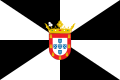
Ceuta Autonomous City of Ceuta ES-CE |
Autonomous city of Spain | Spanish: Ceuta - Ciudad autónoma de Ceuta | Ceuta Spanish: Ceuta |
84,843 | 28 km2 (11 sq mi) | euro | |
 |

|
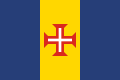
Madeira Autonomous Region of Madeira PT-30 |
 Portugal Portugal
|
Autonomous Region of Portugal | Portuguese: Madeira - Região Autónoma da Madeira | Funchal Portuguese: Funchal |
267,785 | 828 km2 (320 sq mi) | euro |
 |

|
Mayotte Mayotte Region YT |
France
|
Overseas region and constituent part of the French Republic | French: Mayotte - Région Mayotte | Mamoudzou French: Mamoudzou |
266,380 | 374 km2 (144 sq mi) | euro |
 |
|
Melilla Autonomous City of Melilla ES-ML |
Spain
|
Autonomous city of Spain | Spanish: Melilla - Ciudad autónoma de Melilla | Melilla Spanish: Melilla |
84,714 | 20 km2 (8 sq mi) | euro |
 |

|
Pelagie Islands |
 Italy Italy
|
Archipelago of Italy | Italian: Isole Pelagie Sicilian: Ìsuli Pilaggî |
Lampedusa e Linosa[o] Italian: Lampedusa e Linosa Sicilian: Lampidusa e Linusa[186] |
6,304 | 21.4 km2 (8 sq mi) | euro |
 |

|
Plazas de soberanía |
Spain
|
Overseas territory of Spain | Spanish: Plazas de soberanía | N/A | 74 | 0.59 km2 (0.23 sq mi) | euro |

|

|
Réunion Réunion Region RE |
France
|
Overseas region and constituent part of the French Republic | French: Réunion - Région Réunion | Saint-Denis French: Saint-Denis |
889,918 | 2,512 km2 (970 sq mi) | euro |
 |

|
Socotra Archipelago |
 Yemen Yemen
|
Governorate of Yemen | Arabic: أرخبيل سقطرى (ʾArḫabīl Suquṭrā) |
Hadibu Arabic: اديبو (Ḥādībū) |
60,550 | 3,974.64 km2 (1,535 sq mi) | Yemeni rial |
Economy

_per_capita_in_2023.png)
Although it has abundant natural resources, Africa remains the world's poorest and least-developed continent (other than Antarctica), the result of a variety of causes that may include corrupt governments that have often committed serious human rights violations, failed central planning, high levels of illiteracy, low self-esteem, lack of access to foreign capital, legacies of colonialism, the slave trade, the Cold War, and frequent tribal and military conflict (ranging from guerrilla warfare to genocide).[187] The continent's total nominal GDP remains behind that of several individual countries, including the United States, China, Japan, Germany, the United Kingdom, India and France. According to the United Nations' Human Development Report in 2003, the bottom 24 ranked nations (151st to 175th) were all African.[188]
Poverty, illiteracy, malnutrition, inadequate water supply and sanitation, and poor health affect a large proportion of the people who reside on the African continent. In August 2008, the World Bank[189] announced revised global poverty estimates based on a new international poverty line of $1.25 per day (versus the previous measure of $1.00). Eighty-one percent of the sub-Saharan African population was living on less than $2.50 (PPP) per day in 2005, compared with 86% for India.[190]
Sub-Saharan Africa is the least successful region of the world in reducing poverty ($1.25 per day); some 50% of the population living in poverty in 1981 (200 million people), a figure that rose to 58% in 1996 before dropping to 50% in 2005 (380 million people). The average poor person in sub-Saharan Africa is estimated to live on only 70 cents per day, and was poorer in 2003 than in 1973,[191] indicating increasing poverty in some areas. Some of it is attributed to unsuccessful economic liberalisation programmes spearheaded by foreign companies and governments, but other studies have cited bad domestic government policies more than external factors.[192][193]
Africa is now[when?] at risk of being in debt once again, particularly in sub-Saharan African countries. The last debt crisis in 2005 was resolved with help from the heavily indebted poor countries scheme (HIPC). The HIPC resulted in some positive and negative effects on the economy in Africa. About ten years after the 2005 debt crisis in sub-Saharan Africa was resolved, Zambia fell back into debt. A small reason was due to the fall in copper prices in 2011, but the bigger reason was that a large amount of the money Zambia borrowed was wasted or pocketed by the elite.[194]
From 1995 to 2005, Africa's rate of economic growth increased, averaging 5% in 2005. Some countries experienced still higher growth rates, notably Angola, Sudan and Equatorial Guinea, all of which had recently[when?] begun extracting their petroleum reserves or had expanded their oil extraction capacity.
In a recently[when?] published analysis based on World Values Survey data, the Austrian political scientist Arno Tausch maintained that several African countries, most notably Ghana, perform quite well on scales of mass support for democracy and the market economy.[195]
The following table shows the projected nominal GDP and GDP per capita (at purchasing power parity) in 2025 by the IMF.[196]
| Rank | Country | GDP (nominal, in 2025) millions of USD |
GDP per capita (PPP, in 2025) in international dollars |
|---|---|---|---|
| — |  Africa Africa |
3,057,762 | 7,858 |
| 1 | South Africa |
426,383 | 16,050 |
| 2 | Egypt |
349,264 | 21,759 |
| 3 | Algeria |
288,013 | 18,509 |
| 4 | Nigeria |
285,003 | 9,488 |
| 5 | Morocco |
179,612 | 11,437 |
| 6 | Kenya |
136,014 | 7,556 |
| 7 | Angola |
115,167 | 10,217 |
| 8 | Ghana |
111,963 | 8,410 |
| 9 | Ethiopia |
109,492 | 4,420 |
| 10 | Côte d'Ivoire |
99,207 | 8,113 |
| 11 | Tanzania |
87,444 | 4,371 |
| 12 | DR Congo |
82,262 | 1,975 |
| 13 | Uganda |
64,993 | 3,904 |
Tausch's global value comparison based on the World Values Survey derived the following factor analytical scales: 1. The non-violent and law-abiding society 2. Democracy movement 3. Climate of personal non-violence 4. Trust in institutions 5. Happiness, good health 6. No redistributive religious fundamentalism 7. Accepting the market 8. Feminism 9. Involvement in politics 10. Optimism and engagement 11. No welfare mentality, acceptancy of the Calvinist work ethics. The spread in the performance of African countries with complete data, Tausch concluded "is really amazing". While one should be especially hopeful about the development of future democracy and the market economy in Ghana, the article suggests pessimistic tendencies for Egypt and Algeria, and especially for Africa's leading economy, South Africa. High human inequality, as measured by the UNDP's Human Development Report's Index of Human Inequality, impairs the development of human security. Tausch also maintains that the certain recent optimism, corresponding to economic and human rights data, emerging from Africa, is reflected in the development of a civil society.
The continent is believed to hold 90% of the world's cobalt, 90% of its platinum, 50% of its gold, 98% of its chromium, 70% of its tantalite,[197] 64% of its manganese and one-third of its uranium.[198] The Democratic Republic of the Congo (DRC) has 70% of the world's coltan, a mineral used in the production of tantalum capacitors for electronic devices such as cell phones. The DRC also has more than 30% of the world's diamond reserves.[199] Guinea is the world's largest exporter of bauxite.[200] As the growth in Africa has been driven mainly by services and not manufacturing or agriculture, it has been growth without jobs and without reduction in poverty levels. In fact, the food security crisis of 2008, which took place on the heels of the global financial crisis, pushed 100 million people into food insecurity.[201]
In recent years,[when?] China has built increasingly stronger ties with African nations and is Africa's largest trading partner. In 2007, Chinese companies invested a total of US$1 billion in Africa.[152]
A Harvard University study led by professor Calestous Juma showed that Africa could feed itself by making the transition from importer to self-sufficiency. "African agriculture is at the crossroads; we have come to the end of a century of policies that favoured Africa's export of raw materials and importation of food. Africa is starting to focus on agricultural innovation as its new engine for regional trade and prosperity."[202]
Electricity generation
The main source of electricity is hydropower, which contributes significantly to the current installed capacity for energy.[203] The Kainji Dam is a typical hydropower resource generating electricity for all the large cities in Nigeria as well as their neighbouring country, Niger.[204] Hence, the continuous investment in the last decade, which has increased the amount of power generated.[203]
Infrastructure
Water resources
Water development and management are complex in Africa due to the multiplicity of trans-boundary water resources (rivers, lakes and aquifers).[203] Around 75% of sub-Saharan Africa falls within 53 international river basin catchments that traverse multiple borders.[205][203] This particular constraint can also be converted into an opportunity if the potential for trans-boundary cooperation is harnessed in the development of the area's water resources.[203] A multi-sectoral analysis of the Zambezi River, for example, shows that riparian cooperation could lead to a 23% increase in firm energy production without any additional investments.[205][203] A number of institutional and legal frameworks for transboundary cooperation exist, such as the Zambezi River Authority, the Southern African Development Community (SADC) Protocol, Volta River Authority and the Nile Basin Commission.[203] However, additional efforts are required to further develop political will, as well as the financial capacities and institutional frameworks needed for win-win multilateral cooperative actions and optimal solutions for all riparians.[203]
Demographics
- Nigeria (15.4%)
- Ethiopia (8.37%)
- Egypt (7.65%)
- Democratic Republic of the Congo (6.57%)
- Tanzania (4.55%)
- South Africa (4.47%)
- Kenya (3.88%)
- Uganda (3.38%)
- Algeria (3.36%)
- Other (42.4%)
Africa is considered by anthropologists to be the most genetically diverse continent as a result of being the longest inhabited.[206][207][208] Africa's population has rapidly increased over the last 40 years, and is consequently relatively young. In some African states, more than half the population is under 25 years of age.[209] The total number of people in Africa increased from 229 million in 1950 to 630 million in 1990.[210] As of 2021, the population of Africa is estimated at 1.4 billion.[1][2] Africa's total population surpassing other continents is fairly recent; African population surpassed Europe in the 1990s, while the Americas was overtaken sometime around the year 2000.[211] This increase in number of babies born in Africa compared to the rest of the world is expected to reach approximately 37% in the year 2050; while in 1990 sub-Saharan Africa accounted for only 16% of the world's births.[212]
The total fertility rate (children per woman) for Sub-Saharan Africa is 4.7 as of 2018, the highest in the world.[213] All countries in sub-Saharan Africa had TFRs (average number of children) above replacement level in 2019 and accounted for 27.1% of global livebirths.[214] In 2021, sub-Saharan Africa accounted for 29% of global births.[215]
Speakers of Bantu languages (part of the Niger–Congo family) are the majority in southern, central and southeast Africa. The Bantu-speaking peoples from the Sahel progressively expanded over most of sub-Saharan Africa.[216] But there are also several Nilotic groups in South Sudan and East Africa, the mixed Swahili people on the Swahili Coast, and a few remaining indigenous Khoisan ("San" or "Bushmen") and Pygmy peoples in Southern and Central Africa, respectively. Bantu-speaking Africans also predominate in Gabon and Equatorial Guinea, and are found in parts of southern Cameroon. In the Kalahari Desert of Southern Africa, the distinct people known as the Bushmen (also "San", closely related to, but distinct from "Hottentots") have long been present. The San are physically distinct from other Africans and are the indigenous people of southern Africa.[citation needed] Pygmies are the pre-Bantu indigenous peoples of central Africa.[217]
The peoples of West Africa primarily speak Niger–Congo languages, belonging mostly to its non-Bantu branches, though some Nilo-Saharan and Afro-Asiatic speaking groups are also found. The Niger–Congo-speaking Yoruba, Igbo, Fulani, Akan, and Wolof ethnic groups are the largest and most influential. In the central Sahara, Mandinka or Mande groups are most significant. Chadic-speaking groups, including the Hausa, are found in more northerly parts of the region nearest to the Sahara, and Nilo-Saharan communities, such as the Songhai, Kanuri and Zarma, are found in the eastern parts of West Africa bordering Central Africa.
.png)
| Map of Africa indicating Human Development Index (2018). | ||
|
The peoples of North Africa consist of three main indigenous groups: Berbers in the northwest, Egyptians in the northeast, and Nilo-Saharan-speaking peoples in the east. The Arabs who arrived in the 7th century AD introduced the Arabic language and Islam to North Africa. The Semitic Phoenicians (who founded Carthage) and Hyksos, the Indo-Iranian Alans, the Indo-European Greeks, Romans, and Vandals settled in North Africa as well. Significant Berber communities remain within Morocco and Algeria in the 21st century, while, to a lesser extent, Berber speakers are also present in some regions of Tunisia and Libya.[218] The Berber-speaking Tuareg and other often-nomadic peoples are the principal inhabitants of the Saharan interior of North Africa. In Mauritania, there is a small but near-extinct Berber community in the north and Niger–Congo-speaking peoples in the south, though in both regions Arabic and Arab culture predominates. In Sudan, although Arabic and Arab culture predominate, it is mostly inhabited by groups that originally spoke Nilo-Saharan, such as the Nubians, Fur, Masalit and Zaghawa, who, over the centuries, have variously intermixed with migrants from the Arabian peninsula. Small communities of Afro-Asiatic-speaking Beja nomads can also be found in Egypt and Sudan.[219]
In the Horn of Africa, some Ethiopian and Eritrean groups (like the Amhara and Tigrayans, collectively known as Habesha) speak languages from the Semitic branch of the Afro-Asiatic language family, while the Oromo and Somali speak languages from the Cushitic branch of Afro-Asiatic.
Prior to the decolonisation movements of the post-World War II era, Europeans were represented in every part of Africa.[220] Decolonization during the 1960s and 1970s often resulted in the mass emigration of white settlers—especially from Algeria and Morocco (1.6 million pieds-noirs in North Africa),[221] Kenya, Congo,[222] Rhodesia, Mozambique and Angola.[223] Between 1975 and 1977, over a million colonials returned to Portugal alone.[224] Nevertheless, white Africans remain an important minority in many African states, particularly Zimbabwe, Namibia, Réunion, and South Africa.[225] The country with the largest white African population is South Africa.[226] Dutch and British diasporas represent the largest communities of European ancestry on the continent today.[227]
European colonisation also brought sizable groups of Asians, particularly from the Indian subcontinent, to British colonies. Large Indian communities are found in South Africa, and smaller ones are present in Kenya, Tanzania, and some other southern and southeast African countries. The large Indian community in Uganda was expelled by the dictator Idi Amin in 1972, though many have since returned. The islands in the Indian Ocean are also populated primarily by people of Asian origin, often mixed with Africans and Europeans. The Malagasy people of Madagascar are an Austronesian people, but those along the coast are generally mixed with Bantu, Arab, Indian and European origins. Malay and Indian ancestries are also important components in the group of people known in South Africa as Cape Coloureds (people with origins in two or more races and continents). During the 20th century, small but economically important communities of Lebanese[152] have also developed in the larger coastal cities of West and East Africa, respectively.[228]
Alternative estimates of African population, 1–2018 AD (in thousands)
Source: Maddison and others (University of Groningen)[229]
| Year[229] | 1 | 1000 | 1500 | 1600 | 1700 | 1820 | 1870 | 1913 | 1950 | 1973 | 1998 | 2018 | 2100 (projected) |
|---|---|---|---|---|---|---|---|---|---|---|---|---|---|
| Africa | 16 500 | 33 000 | 46 000 | 55 000 | 61 000 | 74 208 | 90 466 | 124 697 | 228 342 | 387 645 | 759 954 | 1 321 000[230] | 3 924 421[231] |
| World | 230 820 | 268 273 | 437 818 | 555 828 | 603 410 | 1 041 092 | 1 270 014 | 1 791 020 | 2 524 531 | 3 913 482 | 5 907 680 | 7 500 000[232] | 10 349 323[231] |
Shares of Africa and world population, 1–2020 AD (% of world total)
Source: Maddison and others (University of Groningen)[229]
| Year[229] | 1 | 1000 | 1500 | 1600 | 1700 | 1820 | 1870 | 1913 | 1950 | 1973 | 1998 | 2020 | 2100 (projected) |
|---|---|---|---|---|---|---|---|---|---|---|---|---|---|
| Africa | 7.1 | 12.3 | 10.5 | 9.9 | 10.1 | 7.1 | 7.1 | 7.0 | 9.0 | 9.9 | 12.9 | 18.2[230] | 39.4[233] |
Religion

While Africans profess a wide variety of religious beliefs, the majority of the people respect African religions or parts of them. However, in formal surveys or census, most people will identify with major religions that came from outside the continent, mainly through colonisation. There are several reasons for this, the main one being the colonial idea that African religious beliefs and practices are not good enough. Religious beliefs and statistics on religious affiliation are difficult to come by since they are often a sensitive topic for governments with mixed religious populations.[234][235] According to the World Book Encyclopedia, Islam and Christianity are the two largest religions in Africa. Islam is most prevalent in Northern Africa, and is the state religion of many North African countries, such as Algeria, where 99% of the population practices Islam.[236] The majority of people in most governments in Southern, Southeast, and Central Africa, as well as in a sizable portion of the Horn of Africa and West Africa, identify as Christians. The Coptic Christians constitute a sizable minority in Egypt, and the Ethiopian Orthodox Church is the largest church in Ethiopia, with 36 million and 51 million adherents.[237] According to Encyclopædia Britannica, 45% of the population are Christians, 40% are Muslims, and 10% follow traditional religions.[citation needed] A small number of Africans are Hindu, Buddhist, Confucianist, Baháʼí, or Jewish. There is also a minority of people in Africa who are irreligious.
Languages
By most estimates, well over a thousand languages (UNESCO has estimated around two thousand) are spoken in Africa.[238] Most are of African origin, though some are of European or Asian origin. Africa is the most multilingual continent in the world, and it is not rare for individuals to fluently speak not only multiple African languages, but one or more European ones as well.[further explanation needed] There are four major groups indigenous to Africa:

- The Afroasiatic languages are a language family of about 240 languages and 285 million people widespread throughout the Horn of Africa, North Africa, the Sahel, and Southwest Asia.
- The Nilo-Saharan languages consist of a group of several possibly related families,[239] spoken by 30 million people between 100 languages. Nilo-Saharan languages are spoken by ethnic groups in Chad, Ethiopia, Kenya, Nigeria, Sudan, South Sudan, Uganda, and northern Tanzania.
- The Niger-Congo language family covers much of sub-Saharan Africa. In terms of number of languages, it is the largest language family in Africa and perhaps one of the largest in the world.
- The Khoisan languages form a group of three unrelated[240] families and two isolates and number about fifty in total. They are mainly spoken in Southern Africa by approximately 400,000 people.[241] Many of the Khoisan languages are endangered. The Khoi and San peoples are considered the original inhabitants of this part of Africa.
Following the end of colonialism, nearly all African countries adopted official languages that originated outside the continent, although several countries also granted legal recognition to indigenous languages (such as Swahili, Yoruba, Igbo and Hausa). In numerous countries, English and French (see African French) are used for communication in the public sphere such as government, commerce, education and the media. Arabic, Portuguese, Afrikaans and Spanish are examples of languages that trace their origin to outside of Africa, and that are used by millions of Africans today, both in the public and private spheres. Italian is spoken by some in former Italian colonies in Africa. German is spoken in Namibia, as it was a former German protectorate. In total, at least a fifth of Africans speak the former colonial languages.[242][243][244][p] Moreover, in recent years some African countries have been considering removing their official former colonial languages, such as Mali, Burkina Faso and Niger which removed French as an official language in the 2020s in favour of native languages,[245] while also renaming colonial street names.[246][247]
Health

| over 15% 5–15% 2–5% 1–2% 0.5–1% 0.1–0.5% not available |
More than 85% of individuals in Africa use traditional medicine as an alternative to often expensive allopathic medical health care and costly pharmaceutical products. The Organization of African Unity (OAU) Heads of State and Government declared the 2000s decade as the African Decade on African traditional medicine in an effort to promote The WHO African Region's adopted resolution for institutionalising traditional medicine in health care systems across the continent.[248] Public policy makers in the region are challenged with consideration of the importance of traditional/indigenous health systems and whether their coexistence with the modern medical and health sub-sector would improve the equitability and accessibility of health care distribution, the health status of populations, and the social-economic development of nations within sub-Saharan Africa.[249]
AIDS in post-colonial Africa is a prevalent issue. Although the continent is home to about 15.2 percent of the world's population,[250] more than two-thirds of the total infected worldwide—some 35 million people—were Africans, of whom 15 million have already died.[251] Sub-Saharan Africa alone accounted for an estimated 69 percent of all people living with HIV[252] and 70 percent of all AIDS deaths in 2011.[253] In the countries of sub-Saharan Africa most affected, AIDS has raised death rates and lowered life expectancy among adults between the ages of 20 and 49 by about twenty years.[251] Furthermore, the life expectancy in many parts of Africa has declined, largely as a result of the HIV/AIDS epidemic with life-expectancy in some countries reaching as low as thirty-four years.[254]
Culture

Some aspects of traditional African cultures have become less practised in recent years as a result of neglect and suppression by colonial and post-colonial regimes. For example, African customs were discouraged, and African languages were prohibited in mission schools.[255] Leopold II of Belgium attempted to "civilize" Africans by discouraging polygamy and witchcraft.[255]
Obidoh Freeborn posits that colonialism is one element that has created the character of modern African art.[256] According to authors Douglas Fraser and Herbert M. Cole, "The precipitous alterations in the power structure wrought by colonialism were quickly followed by drastic iconographic changes in the art."[257] Fraser and Cole assert that, in Igboland, some art objects "lack the vigor and careful craftsmanship of the earlier art objects that served traditional functions."[257] Author Chika Okeke-Agulu states that "the racist infrastructure of British imperial enterprise forced upon the political and cultural guardians of empire a denial and suppression of an emergent sovereign Africa and modernist art."[258] Editors F. Abiola Irele and Simon Gikandi comment that the current identity of African literature had its genesis in the "traumatic encounter between Africa and Europe."[259] On the other hand, Mhoze Chikowero believes that Africans deployed music, dance, spirituality, and other performative cultures to (re)assert themselves as active agents and indigenous intellectuals, to unmake their colonial marginalisation and reshape their own destinies.[260]
There is now a resurgence in the attempts to rediscover and revalue African traditional cultures, under such movements as the African Renaissance, led by Thabo Mbeki, Afrocentrism, led by a group of scholars, including Molefi Asante, as well as the increasing recognition of traditional spiritualism through decriminalisation of Vodou and other forms of spirituality.
As of March 2023, 98 African properties are listed by UNESCO as World Heritage Sites. Among these proprieties, 54 are cultural sites, 39 are natural sites and 5 are mixed sites. The List of World Heritage in Danger includes 15 African sites.[261]
Visual art


.jpg)
African art refers to works of visual art, including works of sculpture, painting, metalwork, and pottery, originating from the various peoples of the African continent and influenced by distinct, indigenous traditions of aesthetic expression.
While the various artistic traditions of such a large and diverse continent display considerable regional and cultural variety, there are consistent artistic themes, recurring motifs, and unifying elements across the broad spectrum of the African visual expression.[262] As is the case for every artistic tradition in human history, African art was created within specific social, political, and religious contexts. Likewise, African art was often created not purely for art's sake, but rather with some practical, spiritual, and/or didactic purpose in mind. In general, African art prioritizes conceptual and symbolic representation over realism, aiming to visualize the subject's spiritual essence.[263]
Ethiopian art, heavily influenced by Ethiopia's long-standing Christian tradition,[264] is also different from most African art, where Traditional African religion (with Islam prevalent in the north east and north west presently) was dominant until the 20th century.[265] African art includes prehistoric and ancient art, the Islamic art of West Africa, the Christian art of East Africa, and the traditional artifacts of these and other regions. Many African sculptures were historically made of wood and other natural materials that have not survived from earlier than a few centuries ago, although rare older pottery and metal figures can be found in some areas.[266] Some of the earliest decorative objects, such as shell beads and evidence of paint, have been discovered in Africa, dating to the Middle Stone Age.[267][268][269]
Masks are important elements in the art of many people, along with human figures, and are often highly stylized. There exist diverse styles, which can often be observed within a single context of origin and may be influenced by the intended use of the object. Nevertheless, broad regional trends are discernible. Sculpture is most common among "groups of settled cultivators in the areas drained by the Niger and Congo rivers" in West Africa.[270] Direct images of deities are relatively infrequent, but masks in particular are or were often made for ritual ceremonies. Since the late 19th century, there has been an increasing amount of African art in Western collections, the finest pieces of which are displayed as part of the history of colonization.
African art had an important influence on European Modernist art,[271] which was inspired by their interest in abstract depiction.[263] It was this appreciation of African sculpture that has been attributed to the very concept of "African art", as seen by European and American artists and art historians.[272]
Architecture

Like other aspects of the culture of Africa, the architecture of Africa is exceptionally diverse. Throughout the history of Africa, Africans have developed their own local architectural traditions. In some cases, broader regional styles can be identified, such as the Sudano-Sahelian architecture of West Africa. A common theme in traditional African architecture is the use of fractal scaling: small parts of the structure tend to look similar to larger parts, such as a circular village made of circular houses.[273]
African architecture in some areas has been influenced by external cultures for centuries, according to available evidence. Western architecture has influenced coastal areas since the late 15th century and is now an important source of inspiration for many larger buildings, particularly in major cities.
African architecture uses a wide range of materials, including thatch, stick/wood, mud, mudbrick, rammed earth, and stone. These material preferences vary by region: North Africa for stone and rammed earth, the Horn of Africa for stone and mortar, West Africa for mud/adobe, Central Africa for thatch/wood and more perishable materials, Southeast and Southern Africa for stone and thatch/wood.
Cinema

Cinema of Africa refers to the film industries and films produced in the continent of Africa. It covers both the history and present of the making or screening of films on the African continent, and also refers to the persons involved in this form of audiovisual culture. It dates back to the late 19th century, when film reels were the primary cinematic technology in use. Cairo has been the capital of film industry in Africa since the early 20th century to the present day.[274][275][276]
As there are more than 50 countries with audiovisual traditions, there is no one single 'African cinema'. Both historically and culturally, there are major regional differences between North African and sub-Saharan cinemas, and between the cinemas of different countries.[277] The Egyptian film industry and the Tunisian are also among the oldest in the world. Cinema of Egypt in particular is the most established and flourishing industry in Africa.[278][279] Pioneers Auguste and Louis Lumière screened their films in Alexandria, Cairo, Tunis, Susa, Libya and Hammam-Lif, Tunisia in 1896.[280][281] Albert Samama Chikly is often cited as the first producer of indigenous African cinema, screening his own short documentaries in the casino of Tunis as early as December 1905.[282]
Music

The continent of Africa and its music is vast and highly diverse, with different regions and nations maintaining distinct musical traditions. African music includes genres such as makwaya, highlife, mbube, township music, jùjú, fuji, jaiva, afrobeat, afrofusion, mbalax, Congolese rumba, soukous, ndombolo, makossa, kizomba, and taarab, among others.[283] African music also uses a wide variety of instruments from across the continent.
The music and dance traditions of the African diaspora, shaped to varying degrees by African musical traditions, include American genres such as Dixieland jazz, blues, and jazz, as well as Caribbean styles such as calypso (see kaiso), and soca. Latin American music genres including cumbia, salsa, son cubano, rumba, conga, bomba, samba, and zouk developed from the music of enslaved Africans and have, in turn, influenced contemporary African popular music.[283][284]
.jpg)
Dance
African dance (also Afro dance, Afrodance and Afro-dance)[285][286][287][288][289] refers to the various dance styles of sub-Saharan Africa. These dances are closely connected with the traditional rhythms and music traditions of the region. Music and dancing is an integral part of many traditional African societies. Songs and dances facilitate teaching and promoting social values, celebrating special events and major life milestones, performing oral history and other recitations, and spiritual experiences.[290] African dance uses the concepts of polyrhythm and total body articulation.[291] African dances are a collective activity performed in large groups, with significant interaction between dancers and onlookers in the majority of styles.[292]
Sports

Fifty-four African countries have football teams in the Confederation of African Football. Egypt has won the African Cup seven times, and a record-making three times in a row. Cameroon, Nigeria, Morocco, Senegal, Ghana, and Algeria have advanced to the knockout stage of recent FIFA World Cups. Morocco, at the 2022 World Cup in Qatar was the first African nation to reach the semi-finals of the FIFA Men's World Cup. South Africa hosted the 2010 World Cup tournament, becoming the first African country to do so. The top clubs in each African football league play the CAF Champions League, while lower-ranked clubs compete in CAF Confederation Cup.
In recent years, the continent has progressed in terms of state-of-the-art basketball facilities, which have been built in cities such as Cairo, Dakar, Johannesburg, Kigali, Luanda and Rades.[293] The number of African basketball players who drafted into the U.S. NBA has experienced growth in the 2010s.[294]
Cricket is popular in some African nations. South Africa and Zimbabwe have Test status, while Kenya is the leading non-test team and previously had One-Day International cricket (ODI) status (from 10 October 1997, until 30 January 2014). The three countries jointly hosted the 2003 Cricket World Cup. Namibia is the other African country to have played in a World Cup. Morocco, in northern Africa, hosted the 2002 Morocco Cup, but the national team has never qualified for a major tournament.
Rugby is popular in several southern African nations. Namibia and Zimbabwe have appeared on multiple occasions at the Rugby World Cup, while South Africa is the most successful national team at the Rugby World Cup, having won the tournament on four occasions, in 1995, 2007, 2019, and 2023.[295]
Traditional sports were strictly marginalised during the colonial era, and many are dying or have gone extinct under the pressure of modernisation, however lots remain popular despite not having formal governmental recognition or support.[296][297]: 193–194 Some examples are Senegalese wrestling, Dambe, Nguni stick-fighting, and Savika.
See also
Notes
- ^ This characterisation has come under criticism by some African scholars, as it implies conflict between the oral and written. They instead contend that in reality, the characterisation is defined by the interaction between three ways of expression and diffusion: the oral, the written, and the printed word.[21] Bethwell Allan Ogot notes that images of Africa composed by Western writers have often been in terms of "opposites" and how they differ from "us".[22]
- ^ Attributed to multiple sources:[24][25][26][27][28][29]
- ^ In stateless societies, oral histories centred around clan histories.[30] John Lonsdale famously said that "the most distinctively African contribution to human history could be said to have been precisely the civilized art of living fairly peaceably together not in states".[31]
- ^ In these cases, time's duration is not as it affects the fate of the individual, but the pulse of the social group. It is not a river flowing in one direction from a known source to a known outlet. Generally, traditional African time involves eternity in both directions, unlike Christians who consider eternity to operate in one direction. In African animism, time is an arena where both the group and the individual struggle for their vitality. The goal is to improve their situation, thus being dynamic. Bygone generations remain contemporary, and as influential as they were during their lifetime, if not more so. In these circumstances causality operates in a forward direction from past to present and from present to future, however direct intervention can operate in any direction.[55]: 44, 49
- ^ Some scholars contest that cultures and identities cannot be considered fixed or invariable, especially over such a long time period.[75]
- ^ Bida is stressed as a protective force by narrators; some versions have Bida descending from Dinga, with his children founding Wagadu. Pythons are most at home in grasslands near water, and likely came to be associated with the seasonal rains, with them rarely being seen during the dry periods. As such, snake deities feature prominently in West African traditional religions.[104]
- ^ An initial idea that the dispersal was caused by population pressure following the introduction of farming is generally now discounted.[106]: 23
- ^ Also known as the Partition of Africa, the Conquest of Africa, or the Rape of Africa
- ^ The Egba United Government, a government of the Egba people, was legally recognised by the British as independent until being annexed into the Colony and Protectorate of Nigeria in 1914.[132]
- ^ Continental regions as per UN categorizations/map
- ^ Egypt is generally considered a transcontinental country in Northern Africa (UN region) and Western Asia; population and area figures are for African portion only, west of the Suez Canal.
- ^ The territory of Western Sahara is claimed by the Sahrawi Arab Democratic Republic and Morocco. The SADR is recognised as a sovereign state by the African Union. Morocco claims the entirety of the country as its Southern Provinces. Morocco administers 4/5 of the territory while the SADR controls 1/5. Morocco's annexation of this territory has not been recognised internationally.
- ^ Bloemfontein is the judicial capital of South Africa, while Cape Town is its legislative seat, and Pretoria is the country's administrative seat.
- ^ Yamoussoukro is the official capital of Ivory Coast, while Abidjan is the de facto seat.
- ^ Geographically part of the archipelago (Lampedusa and Lampione) belongs to the African continent; politically and administratively, the islands fall within the Province of Agrigento in Sicily
- ^ The previous three references show that there a total of 130 million English speakers, 120 million French speakers, and over 30 million Portuguese speakers in Africa, making them about 20% of Africa's 2022 population of 1.4 billion people.
References
- ^ a b "World Population Prospects 2022". United Nations Department of Economic and Social Affairs, Population Division. Retrieved 17 July 2022.
- ^ a b "World Population Prospects 2022: Demographic indicators by region, subregion and country, annually for 1950–2100" (XSLX) ("Total Population, as of 1 July (thousands)"). United Nations Department of Economic and Social Affairs, Population Division. Retrieved 17 July 2022.
- ^ "GDP PPP, current prices". International Monetary Fund. 2022. Archived from the original on 22 January 2021. Retrieved 16 January 2022.
- ^ "GDP Nominal, current prices". International Monetary Fund. 2022. Archived from the original on 25 February 2017. Retrieved 16 January 2022.
- ^ "Nominal GDP per capita". International Monetary Fund. 2022. Archived from the original on 11 January 2020. Retrieved 16 January 2022.
- ^ "Gordon Conwell Theological Seminary, African Christianity, 2020". 18 March 2020. Archived from the original on 3 May 2021. Retrieved 1 July 2021.
- ^ Mbiti, John S (1992). Introduction to African religion. East African Publishers. ISBN 978-0-435-94002-7.
When Africans are converted to other religions, they often mix their traditional religion with the one to which they are converted. In this way they are not losing something valuable, but are gaining something from both religious customs
- ^ Riggs, Thomas (2006). Worldmark Encyclopedia of Religious Practices: Religions and denominations. Thomson Gale. p. 1. ISBN 978-0-7876-6612-5.
Although a large proportion of Africans have converted to Islam an Christianity, these two world religions have been assimilated into African culture, and many African Christians and Muslims maintain traditional spiritual beliefs
- ^ a b Sayre, April Pulley (1999), Africa, Twenty-First Century Books. ISBN 0-7613-1367-2.
- ^ Swanson, Ana (17 August 2015). "5 ways the world will look dramatically different in 2100". The Washington Post. Archived from the original on 26 September 2017. Retrieved 26 September 2017.
- ^ Harry, Njideka U. (11 September 2013). "African Youth, Innovation and the Changing Society". HuffPost. Archived from the original on 20 September 2013. Retrieved 27 September 2013.
- ^ Janneh, Abdoulie (April 2012). "item, 4 of the provisional agenda – General debate on national experience in population matters: adolescents and youth" (PDF). United Nations Economic Commission for Africa. Archived (PDF) from the original on 10 November 2013. Retrieved 15 December 2015.
- ^ "Population by world region". Our World in Data. 11 July 2024. Retrieved 8 October 2024.
- ^ a b Collier, Paul; Gunning, Jan Willem (1 August 1999). "Why Has Africa Grown Slowly?". Journal of Economic Perspectives. 13 (3): 3–22. doi:10.1257/jep.13.3.3. ISSN 0895-3309.
- ^ Alemazung, Joy Asongazoh (1 September 2010). "Post-colonial colonialism: an analysis of international factors and actors marring African socio-economic and political development" (PDF). Journal of Pan African Studies. 3 (10): 62–85. S2CID 140806396. Gale A306596751. Archived (PDF) from the original on 27 November 2021. Retrieved 24 October 2021.
- ^ Bayeh, Endalcachew (February 2015). "The political and economic legacy of colonialism in the post-independence African states". International Journal in Commerce, IT & Social Sciences. 2 (2): 89–93. doi:10.4000/poldev.78. S2CID 198939744.
- ^ Studies, the Africa Center for Strategic. "African Biodiversity Loss Raises Risk to Human Security". Africa Center for Strategic Studies. Archived from the original on 12 July 2023. Retrieved 12 July 2023.
- ^ Schneider, S. H.; et al. (2007). "19.3.3 Regional vulnerabilities". In Parry, M.L.; et al. (eds.). Chapter 19: Assessing Key Vulnerabilities and the Risk from Climate Change. Climate change 2007: impacts, adaptation, and vulnerability: contribution of Working Group II to the fourth assessment report of the Intergovernmental Panel on Climate Change (IPCC). Cambridge University Press (CUP): Cambridge, UK: Print version: CUP. This version: IPCC website. ISBN 978-0-521-88010-7. Archived from the original on 12 March 2013. Retrieved 15 September 2011.
- ^ Niang, I., O.C. Ruppel, M.A. Abdrabo, A. Essel, C. Lennard, J. Padgham, and P. Urquhart, "2014: Africa". In: Climate Change 2014: Impacts, Adaptation, and Vulnerability. Part B: Regional Aspects. Contribution of Working Group II to the Fifth Assessment Report of the Intergovernmental Panel on Climate Change [Barros, V.R., C.B. Field, D.J. Dokken et al. (eds.)]. Cambridge University Press, Cambridge, and New York, pp. 1199–1265. https://www.ipcc.ch/site/assets/uploads/2018/02/WGIIAR5-Chap22_FINAL.pdf, Archived 19 June 2020 at the Wayback Machine.
- ^ "One of Africa's best kept secrets – its history". BBC News. 1 July 2017. Archived from the original on 29 July 2021. Retrieved 29 July 2021.
- ^ Mouralis, Bernard (2022). "Orality". Encyclopedia of African Religions and Philosophy. Springer. pp. 537–539. doi:10.1007/978-94-024-2068-5_296. ISBN 978-94-024-2066-1.
- ^ Ogot, Bethwell Allan (2009). "Rereading the History and Historiography of Epistemic Domination and Resistance in Africa". African Studies Review. 52 (1): 1–22. doi:10.1353/arw.0.0127.
- ^ Vansina, Jan (1981). "Oral tradition and its methodology". General History of Africa: Volume 1. UNESCO Publishing.
- ^ "Homo sapiens: University of Utah News Release: 16 February 2005". Archived from the original on 24 October 2007.
- ^ Schlebusch, Carina M; Malmström, Helena; Günther, Torsten; Sjödin, Per; Coutinho, Alexandra; Edlund, Hanna; Munters, Arielle R; Vicente, Mário; Steyn, Maryna; Soodyall, Himla; Lombard, Marlize; Jakobsson, Mattias (2017). "Southern African ancient genomes estimate modern human divergence to 350,000 to 260,000 years ago". Science. 358 (6363): 652–655. Bibcode:2017Sci...358..652S. doi:10.1126/science.aao6266. PMID 28971970.
- ^ Sample, Ian (7 June 2017). "Oldest Homo sapiens bones ever found shake foundations of the human story". The Guardian. Archived from the original on 31 October 2019. Retrieved 7 June 2017.
- ^ Zimmer, Carl (10 September 2019). "Scientists Find the Skull of Humanity's Ancestor – on a Computer – By comparing fossils and CT scans, researchers say they have reconstructed the skull of the last common forebear of modern humans". The New York Times. Archived from the original on 31 December 2019. Retrieved 10 September 2019.
- ^ Mounier, Aurélien; Lahr, Marta (2019). "Deciphering African late middle Pleistocene hominin diversity and the origin of our species". Nature Communications. 10 (1): 3406. Bibcode:2019NatCo..10.3406M. doi:10.1038/s41467-019-11213-w. PMC 6736881. PMID 31506422.
- ^ Vidal, Celine M.; Lane, Christine S.; Asfawrossen, Asrat; et al. (January 2022). "Age of the oldest known Homo sapiens from eastern Africa". Nature. 601 (7894): 579–583. Bibcode:2022Natur.601..579V. doi:10.1038/s41586-021-04275-8. PMC 8791829. PMID 35022610.
- ^ Odhiambo, E. S. Atieno (2004). "The Usages of the past: African historiographies since independence". African Research and Documentation. 96: 3–61. doi:10.1017/S0305862X00014369. ISSN 0305-862X.
- ^ Austin, Gareth (2007). "Reciprocal Comparison and African History: Tackling Conceptual Eurocentrism in the Study of Africa's Economic Past". African Studies Review. 50 (3): 1–28. doi:10.1353/arw.2008.0009.
- ^ The Egba United Government, a government of the Egba people, was legally recognised by the British as independent until being annexed into the Colony and Protectorate of Nigeria in 1914: Daly, Samuel Fury Childs (4 May 2019). "From Crime to Coercion: Policing Dissent in Abeokuta, Nigeria, 1900–1940". The Journal of Imperial and Commonwealth History. 47 (3): 474–489. doi:10.1080/03086534.2019.1576833. ISSN 0308-6534. S2CID 159124664. Archived from the original on 7 April 2022. Retrieved 5 July 2022.
- ^ a b Hargreaves, John D. (1996). Decolonization in Africa (2nd ed.). London: Longman. ISBN 0-582-24917-1. OCLC 33131573.
- ^ Georges, Karl Ernst (1913–1918). "Afri". In Georges, Heinrich (ed.). Ausführliches lateinisch-deutsches Handwörterbuch (in German) (8th ed.). Archived from the original on 16 January 2016. Retrieved 20 September 2015.
- ^ Lewis, Charlton T.; Short, Charles (1879). "Afer". A Latin Dictionary. Oxford: Clarendon Press. Archived from the original on 16 January 2016. Retrieved 20 September 2015.
- ^ Vycichl, W. (1 November 1985). "Africa". Encyclopédie berbère (in French). 2 (2): 216–217. doi:10.4000/encyclopedieberbere.888. ISSN 1015-7344.
Etymology: The Latin designation (Africa) originally meant the land of the Afri, an indigenous tribe of present-day northern Tunisia, often confused with the Carthaginians, but Livy clearly distinguishes the Afri from the Carthaginians:- "Hasdrubal placed the Carthaginians on the right wing and the Afri on the left"- "the Carthaginians and the African veterans"- "the Carthaginians had Afri and Numidians as mercenaries"- "the horsemen of the Libyphoenicians, a Carthaginian tribe mixed with Afri
- ^ Venter & Neuland, NEPAD and the African Renaissance (2005), p. 16.
- ^ Desfayes, Michel (25 January 2011). "The Names of Countries". michel-desfayes.org. Archived from the original on 27 June 2019. Retrieved 9 April 2019.
Africa. From the name of an ancient tribe in Tunisia, the Afri (adjective: Afer). The name is still extant today as Ifira and Ifri-n-Dellal in Greater Kabylia (Algeria). A Berber tribe was called Beni-Ifren in the Middle Ages and Ifurace was the name of a Tripolitan people in the 6th century. The name is from the Berber language ifri 'cave'. Troglodytism was frequent in northern Africa and still occurs today in southern Tunisia. Herodote wrote that the Garamantes, a North African people, used to live in caves. The Ancient Greek called troglodytēs an African people who lived in caves. Africa was coined by the Romans and 'Ifriqiyeh' is the arabised Latin name. (Most details from Decret & Fantar, 1981).
- ^ a b Babington Michell, Geo (1903). "The Berbers". Journal of the Royal African Society. 2 (6): 161–194. doi:10.1093/oxfordjournals.afraf.a093193. JSTOR 714549. Archived from the original on 30 December 2020. Retrieved 30 August 2020.
- ^ Edward Lipinski, Itineraria Phoenicia Archived 16 January 2016 at the Wayback Machine, Peeters Publishers, 2004, p. 200. ISBN 90-429-1344-4
- ^ "Africa African Africanus Africus". Consultos.com. Archived from the original on 29 January 2009. Retrieved 14 November 2006.
- ^ "Nile Genesis: the opus of Gerald Massey". Gerald-massey.org.uk. 29 October 1907. Archived from the original on 30 January 2010. Retrieved 18 May 2010.
- ^ Fruyt, M. (1976). "D'Africus ventus a Africa terrain". Revue de Philologie. 50: 221–238.
- ^ Stieglitz, Robert R. (1984). "Long-Distance Seafaring in the Ancient Near East". The Biblical Archaeologist. 47 (3): 134–142. doi:10.2307/3209914. JSTOR 3209914. S2CID 130072563.
- ^ Hallikan, 'Abu-l-'Abbas Sams-al-din 'Ahmad ibn Muhammad Ibn (1842). Kitab Wafayat Ala'yan. Ibn Khallikan's Biographical Dictionary Transl. by (Guillaume) B(aro)n Mac-Guckin de Slane. Benjamin Duprat. Archived from the original on 24 September 2019. Retrieved 30 July 2018.
- ^ al-Andalusi, Sa'id (2010). Science in the Medieval World. University of Texas Press. ISBN 978-0-292-79231-9. Archived from the original on 24 September 2019. Retrieved 30 July 2018.
- ^ Upton, Roger D. (1881). Travels in the Arabian Desert: With Special Reference to the Arabian Horse and Its Pedigree. C.K. Paul & Company. Archived from the original on 24 September 2019. Retrieved 30 July 2018.
- ^ Modified from Wilhelm Sturmfels and Heinz Bischof: Unsere Ortsnamen im ABC erklärt nach Herkunft und Bedeutung, Bonn, 1961, Ferdinand Dümmlers Verlag.
- ^ Serge Losique: Dictionnaire étymologique des noms de pays et de peuples, Paris, 1971, Éditions Klincksieck.
- ^ Holl, Augustin. General history of Africa, IX: General history of Africa revisited. pp. 511–531.
- ^ Davis, Muriam Haleh (22 February 2023). "Race and Decolonization in North Africa". Oxford Research Encyclopedia of African History.
- ^ Meziane, Mohamed Amer. "The Invention of North Africa: Hegel, Fanon, and the racialization of geography".
- ^ Ajaegbo, D.I. (1990). "African Historiographical Traditions from the Earliest Times to the Second World War: An Analytical Survey". Transafrican Journal of History. 19: 139–151. ISSN 0251-0391. JSTOR 24328680.
- ^ Vansina, Jan (1985). Oral tradition as history. Internet Archive. Madison, Wis. : University of Wisconsin Press. ISBN 978-0-299-10214-2.
- ^ a b Hama, Boubou; Ki-Zerbo, Joseph (1981). "The place of history in African society". General History of Africa: Volume 1. UNESCO Publishing.
- ^ Isichei, Elizabeth (13 April 1997). A History of African Societies to 1870. Cambridge University Press. ISBN 978-0-521-45599-2.
- ^ Bâ, Amadou (1981). "The living tradition". General History of Africa: Volume 1. UNESCO Publishing.
- ^ Jimoh, Anselm Kole (2017). "An African Theory of Knowledge". In Ukpokolo, Isaac E. (ed.). Themes, Issues and Problems in African Philosophy. Cham: Springer International Publishing. pp. 121–136. doi:10.1007/978-3-319-40796-8_8. ISBN 978-3-319-40796-8.
- ^ Herrera, Rene J.; Garcia-Bertrand, Ralph (2018). Ancestral DNA, Human Origins, and Migrations. Elsevier Science. pp. 61–. ISBN 978-0-12-804128-4. Archived from the original on 30 March 2021. Retrieved 18 October 2020.
- ^ Kimbel, William H. and Yoel Rak and Donald C. Johanson. (2004) The Skull of Australopithecus Afarensis, Oxford University Press US. ISBN 0-19-515706-0.
- ^ Tudge, Colin. (2002) The Variety of Life., Oxford University Press. ISBN 0-19-860426-2
- ^ Mokhtar, G. (1990) UNESCO General History of Africa, Vol. II, Abridged Edition: Ancient Africa, University of California Press. ISBN 0-85255-092-8.
- ^ Eyma, A. K. and C. J. Bennett. (2003) Delts-Man in Yebu: Occasional Volume of the Egyptologists' Electronic Forum No. 1, Universal Publishers. p. 210. ISBN 1-58112-564-X.
- ^ Wells, Spencer (December 2002) The Journey of Man, Archived 27 April 2011 at the Wayback Machine. National Geographic.
- ^ Oppenheimer, Stephen. The Gates of Grief, Archived 30 May 2014 at the Wayback Machine. bradshawfoundation.com.
- ^ "15. Strait of Gibraltar, Atlantic Ocean/Mediterranean Sea". lpi.usra.edu. Archived from the original on 26 January 2021. Retrieved 13 May 2020.
- ^ Fregel, Rosa; Méndez, Fernando L.; Bokbot, Youssef; Martín-Socas, Dimas; Camalich-Massieu, María D.; Santana, Jonathan; Morales, Jacob; Ávila-Arcos, María C.; Underhill, Peter A.; Shapiro, Beth; Wojcik, Genevieve; Rasmussen, Morten; Soares, André E. R.; Kapp, Joshua; Sockell, Alexandra; Rodríguez-Santos, Francisco J.; Mikdad, Abdeslam; Trujillo-Mederos, Aioze; Bustamante, Carlos D. (26 June 2018). "Ancient genomes from North Africa evidence prehistoric migrations to the Maghreb from both the Levant and Europe". Proceedings of the National Academy of Sciences. 115 (26): 6774–6779. Bibcode:2018PNAS..115.6774F. doi:10.1073/pnas.1800851115. PMC 6042094. PMID 29895688.
- ^ Derricourt, Robin (2005). "Getting "Out of Africa": Sea Crossings, Land Crossings and Culture in the Hominin Migrations" (PDF). Journal of World Prehistory. 19 (2): 119–132. doi:10.1007/s10963-006-9002-z. S2CID 28059849. Archived (PDF) from the original on 22 February 2012. Retrieved 26 December 2013.
- ^ Goucher, Candice; Walton, Linda (2013). World History: Journeys from Past to Present. Routledge. pp. 2–20. ISBN 978-1-134-72354-6. Archived from the original on 11 June 2020. Retrieved 5 February 2018.
- ^ Mercier, Norbert; et al. (2012). "OSL dating of quaternary deposits associated with the parietal art of the Tassili-n-Ajjer plateau (Central Sahara)". Quaternary Geochronology. 10: 367–373. Bibcode:2012QuGeo..10..367M. doi:10.1016/j.quageo.2011.11.010.
- ^ "Sahara's Abrupt Desertification Started by Changes in Earth's Orbit, Accelerated by Atmospheric and Vegetation Feedbacks", Archived 7 March 2014 at the Wayback Machine, Science Daily.
- ^ Diamond, Jared. (1999) Guns, Germs and Steel: The Fates of Human Societies. New York: Norton, p. 167. ISBN 978-0-8134-9802-7.
- ^ Ehret, Christopher (2002). The Civilizations of Africa: A History to 1800. University Press of Virginia.
- ^ Batini, Chiara; Lopes, Joao; Behar, Doron M.; Calafell, Francesc; Jorde, Lynn B.; van der Veen, Lolke; Quintana-Murci, Lluis; Gabriella, Spedini; Giovanni, Destro-Bisol; David, Comas (1 February 2011). "Insights into the Demographic History of African Pygmies from Complete Mitochondrial Genomes". Molecular Biology and Evolution. 28 (2). doi:10.1093/molbev/m. ISSN 0737-4038. Archived from the original on 7 March 2024.
- ^ Pargeter, Justin; Mackay, Alex; Mitchell, Peter; Shea, John; Stewart, Brian (2016). "Primordialism and the 'Pleistocene San' of southern Africa". Antiquity. 90 (352).
- ^ Schlebusch, Carina M.; Malmström, Helena; et al. (2017). "Southern African ancient genomes estimate modern human divergence to 350,000 to 260,000 years ago". Science. 358 (6363): 652–655. Bibcode:2017Sci...358..652S. doi:10.1126/science.aao6266. PMID 28971970.
- ^ a b c d e Abu Bakr, Abdel (1981). "Pharoanic Egypt". General History of Africa: Volume 2. UNESCO Publishing.
- ^ Anderson, J. R. (2012). "Kerma". The Encyclopedia of Ancient History. The Encyclopedia of Ancient History. doi:10.1002/9781444338386.wbeah15224. ISBN 978-1-4443-3838-6. She states, "To date, Kerma-culture has been found from the region of the First Cataract to upstream of the Fourth Cataract."
- ^ Buzon, Michele (2011). "Nubian identity in the Bronze Age. Patterns of cultural and biological variation". Retrieved 30 March 2017.
- ^ "Tomb Reveals Ancient Egypt's Humiliating Secrets". Daily Times. 29 July 2003. Archived from the original on 5 November 2013.
- ^ Elayi, Josette (2018). Sennacherib, King of Assyria. SBL Press. pp. 66–67. ISBN 978-0-88414-318-5.
- ^ Riad, Henry (1981). "Egypt in the Hellenistic era". General History of Africa: Volume 2. UNESCO Publishing.
- ^ Török, László (2009). Between Two Worlds: The Frontier Region Between Ancient Nubia and Egypt, 3700 BC-AD 500. BRILL. ISBN 978-90-04-17197-8.
- ^ Fischer-Bovet, Christelle (2023). "Cleopatra VII, 69–30 bce". Oxford Classical Dictionary. Oxford University Press.
- ^ Tsakos, Alexandros (2021). "Medieval/Christian Nubia". Oxford Research Encyclopedia of African History. Oxford University Press.
- ^ Fattovich, Rodolfo (2018). "The Archaeology of Punt". The Journal of Egyptian Archaeology. 104 (2).
- ^ Chami, Felix (2025). "The Advent of Domestication in Eastern and Southern Africa". General History of Africa: Volume 9. UNESCO Publishing.
- ^ Fattovich, Rodolfo (2012). "The northern Horn of Africa in the first millennium BCE: local traditions and external connections". Rassegna di Studi Etiopici. 4 (47): 1–60. ISSN 0390-0096. JSTOR 43854528.
- ^ González-Ruibal, Alfredo (2025). "Colonies and colonialism in the Horn of Africa: from the first millennium BC to the nineteenth century". Azania: Archaeological Research in Africa. 0: 1–22. doi:10.1080/0067270X.2025.2510762. ISSN 0067-270X.
- ^ Dugast, Fabienne; Gajda, Iwona (29 October 2012). Reconsidering contacts between southern Arabia and the highlands of Tigrai in the 1st millennium BC according to epigraphic data. 18th International Conference of Ethiopian Studies Movements in Ethiopia / Ethiopia in Movement. Dire Dawa.
- ^ Phillipson, D. W. (2012). "The First Millennium BC". Foundations of an African Civilisation: Aksum & the Northern Horn, 1000 BC-1300 AD. Boydell & Brewer Ltd. ISBN 978-1-84701-041-4.
- ^ Fattovich, Rodolfo (2012). "The northern Horn of Africa in the first millennium BCE: local traditions and external connections". Rassegna di Studi Etiopici. 4 (47): 1–60. ISSN 0390-0096.
- ^ Njoku, Raphael Chijioke (2013). "Precolonial States and Societies". The History of Somalia. Greenwood. ISBN 978-0-313-37857-7.
- ^ a b Phillips, Jacke (2016). "Aksum, Kingdom of". The Encyclopedia of Empire. Wiley.
- ^ Munro-Hay, Stuart (2003). "Aksum: History of the town and Empire". In Uhlig, Siegbert (ed.). Encyclopedia Aethiopica: A–C. Harrassowitz.
- ^ a b Warmington, Brian (1981). "The Carthaginian Period". General History of Africa: Volume 2. UNESCO Publishing.
- ^ Hoyos, Dexter (2016). "Carthaginian Empire". The Encyclopedia of Empire. Wiley.
- ^ Mahjoubi, Ammar; Salama, Pierre (1981). "The Roman and post-Roman period in North Africa". General History of Africa: Volume 2. UNESCO Publishing.
- ^ Canos-Donnay, Sirio (2024). "Archaeology of Senegambia". Oxford Research Encyclopedia of African History. Oxford University Press.
- ^ Collins, Robert; Burns, James (2007). "Empires of the plains". A History of Sub-Saharan Africa. Cambridge University Press. ISBN 978-0-521-86746-7.
- ^ a b Holl, Augustine (1985). "Background to the Ghana empire: Archaeological investigations on the transition to statehood in the Dhar Tichitt region (mauritania)". Journal of Anthropological Archaeology. 4 (2): 73–115. doi:10.1016/0278-4165(85)90005-4.
- ^ Wai-Andah, Bassey (1981). "West Africa before the seventh century". General History of Africa: Volume 2. UNESCO Publishing.
- ^ Gestrich, Nikolas (2019). "Ghana Empire". Oxford Research Encyclopedias: African history. doi:10.1093/acrefore/9780190277734.013.396. ISBN 978-0-19-027773-4.
- ^ a b Conrad, David; Fisher, Humphrey (1983). "The Conquest That Never Was: Ghana and the Almoravids, 1076. II. The Local Oral Sources". History in Africa. 10: 53–78. doi:10.2307/3171690. JSTOR 3171690.
- ^ Posnansky, Merrick (1981). "The societies of Africa south of the Sahara in the Early Iron Age". General History of Africa: Volume 2 (PDF). UNESCO. p. 729.
- ^ a b c d Juwayeyi, Yusuf M. (2020). "The Bantu origins of the Chewa". Archaeology and Oral Tradition in Malawi: Origins and Early History of the Chewa. Boydell & Brewer. ISBN 978-1-84701-253-1.
- ^ a b Bostoen, Koen (2018). "The Bantu Expansion". Oxford Research Encyclopedia of African History. Oxford University Press. ISBN 978-0-19-027773-4.
- ^ Pakendorf, Brigitte; Filippo, Cesare de; Bostoen, Koen (1 January 2011). "Molecular Perspectives on the Bantu Expansion: A Synthesis". Language Dynamics and Change. 1 (1): 50–88. doi:10.1163/221058211X570349. ISSN 2210-5832.
- ^ de Maret, Pierre (2013). "Archaeologies of the Bantu Expansion". In Mitchell, Peter (ed.). The Oxford Handbook of African Archaeology. Oxford University Press.
- ^ Honour, Hugh; Fleming, John (2005). A world history of art (7th ed.). London: Laurence King. ISBN 978-1-85669-451-3.
- ^ Meredith, Martin (20 January 2006). "The Fate of Africa – A Survey of Fifty Years of Independence". The Washington Post. Archived from the original on 2 May 2019. Retrieved 23 July 2007.
- ^ "Igbo-Ukwu (c. 9th century) | Thematic Essay | Heilbrunn Timeline of Art History". The Metropolitan Museum of Art. October 2001. Archived from the original on 4 December 2008. Retrieved 18 May 2010.
- ^ Glick, Thomas F. (2005). Islamic And Christian Spain in the Early Middle Ages. Brill Academic Publishers, p. 37. ISBN 978-90-04-14771-3.
- ^ "Mauritania – Arab Invasions". countrystudies.us. Archived from the original on 23 June 2011. Retrieved 25 April 2010.
- ^ Nebel, A; et al. (1 April 2010). "Genetic Evidence for the Expansion of Arabian Tribes into the Southern Levant and North Africa". American Journal of Human Genetics. 70 (6): 1594–1596. doi:10.1086/340669. PMC 379148. PMID 11992266.
- ^ Lapidus, Ira M. (1988) A History of Islamic Societies, Cambridge.
- ^ Historical survey: Slave societies. Archived 30 December 2007 at the Wayback Machine, Encyclopædia Britannica.
- ^ Swahili Coast Archived 6 December 2007 at the Wayback Machine, National Geographic
- ^ Welcome to Encyclopædia Britannica's Guide to Black History. Archived 23 February 2007 at the Wayback Machine, Encyclopædia Britannica.
- ^ "Focus on the slave trade". BBC News. 3 September 2001. Archived from the original on 28 July 2011. Retrieved 28 February 2008.
- ^ Lovejoy, Paul E. (2000). Transformations in Slavery: A History of Slavery in Africa. Cambridge University Press. p. 25. ISBN 978-0-521-78430-6.
- ^ Rees Davies, "British Slaves on the Barbary Coast". [1], BBC, 1 July 2003.
- ^ Richards, Martin; Rengo, Chiara; Cruciani, Fulvio; Gratrix, Fiona; Wilson, James F.; Scozzari, Rosaria; Macaulay, Vincent; Torroni, Antonio (April 2003). "Extensive female-mediated gene flow from sub-Saharan Africa into near eastern Arab populations". American Journal of Human Genetics. 72 (4): 1058–1064. doi:10.1086/374384. ISSN 0002-9297.
- ^ Hassan, Yusuf Fadl (1967). The Arabs and the Sudan: from the Seventh to the Early Sixteenth Century. Edinburgh U.P. p. 47. ISBN 978-0-85224-023-6.
- ^ Morgan, Robert (21 September 2016). History of the Coptic Orthodox People and the Church of Egypt. FriesenPress. p. 254. ISBN 978-1-4602-8027-0.
- ^ Landau, Rom (1967). Morocco: Marrakesh, Fez, Rabat. Elek. p. 74. ISBN 978-0-236-30866-8.
- ^ Badawi, Zeinab (18 April 2024). An African History of Africa: Instant Sunday Times bestseller and shortlisted for the Nero Book Awards. Ebury Publishing. pp. 186–200. ISBN 978-0-7535-6015-0.
- ^ Hamel, Chouki El (27 February 2014). Black Morocco: A History of Slavery, Race, and Islam. Cambridge University Press. pp. 160–164. ISBN 978-1-139-62004-8.
- ^ Jo Loosemore, Sailing against slavery. Archived 3 November 2008 at the Wayback Machine. BBC.
- ^ "The West African Squadron and slave trade". Pdavis.nl. Archived from the original on 10 June 2010. Retrieved 18 May 2010.
- ^ Simon, Julian L. (1995) State of Humanity, Blackwell Publishing. p. 175. ISBN 1-55786-585-X.
- ^ Daly, Samuel Fury Childs (4 May 2019). "From Crime to Coercion: Policing Dissent in Abeokuta, Nigeria, 1900–1940". The Journal of Imperial and Commonwealth History. 47 (3): 474–489. doi:10.1080/03086534.2019.1576833. ISSN 0308-6534. S2CID 159124664.
- ^ Association, Cheke Cultural Writers (1994). "Chapter 14: The Kolongongo War Against the Portuguese". The history and cultural life of the Mbunda speaking peoples. The Association. ISBN 9789982030069.
- ^ Bassil, Noah R. (1 December 2006). "The Rise and Demise of the Keira Sultanate of Dar Fur". The Journal of North African Studies. 11 (4): 347–364. doi:10.1080/13629380601036098. ISSN 1362-9387.
- ^ Williams, Frieda-Nela (1991). Precolonial Communities of Southwestern Africa: A history of Owambo Kingdoms 1600–1920 (PDF). National Archives of Namibia. Archived (PDF) from the original on 7 March 2024. Retrieved 7 March 2024.
- ^ Fokkens, Andries (2023). "The ovamboland expedition of 1917: the deposing of King Mandume". Small Wars & Insurgencies. 34 (2): 382–421. doi:10.1080/09592318.2022.2153468.
- ^ Brantlinger 1985, pp. 166–203.
- ^ Robinson, Gallagher & Denny 1961, p. 175.
- ^ Shillington 2005, p. 301.
- ^ "Berlin Conference | 1884, Result, Summary, & Impact on Africa | Britannica". www.britannica.com. 20 June 2025. Retrieved 12 July 2025.
- ^ Touval, Saadia (1967). "The Organization of African Unity and African Borders". International Organization. 21 (1): 102–127. doi:10.1017/S0020818300013151. JSTOR 2705705.
- ^ Bély, Lucien (2001). The History of France. Editions Jean-paul Gisserot. p. 118. ISBN 978-2-87747-563-1. Archived from the original on 11 June 2020. Retrieved 5 February 2018.
- ^ Aryeetey, Ernest; Harrigan, Jane; Machiko, Nissanke (2000). Economic Reforms in Ghana: The Miracle and the Mirage. Africa World Press. p. 5. ISBN 978-0-86543-844-6. Archived from the original on 11 June 2020. Retrieved 5 February 2018.
- ^ Maria, Caitriona; Lomo, Naa-Atawei Mawufemor (15 November 2025). "The 54 Countries of Africa in Alphabetic Order". Retrieved 3 December 2025.
- ^ Lührmann, Anna; Grahn, Sandra; Morgan, Richard; Pillai, Shreeya; Lindberg, Staffan I. (18 August 2019). "State of the world 2018: democracy facing global challenges". Democratization. 26 (6): 895–915. doi:10.1080/13510347.2019.1613980. ISSN 1351-0347.
- ^ "BBC: 1984 famine in Ethiopia". BBC News. 6 April 2000. Archived from the original on 19 April 2019. Retrieved 1 January 2010.
- ^ Robert G. Patman, The Soviet Union in the Horn of Africa, 1990, ISBN 0-521-36022-6, pp. 295–296.
- ^ Steven Varnis, Reluctant aid or aiding the reluctant?: U.S. food aid policy and the Ethiopian Famine Relief, 1990, ISBN 0-88738-348-3, p. 38.
- ^ Woldemeskel, Getachew (1989). "The Consequences of Resettlement in Ethiopia". African Affairs. 88 (352): 359–374. doi:10.1093/oxfordjournals.afraf.a098187. JSTOR 722691.
- ^ Rayner, Gordon (27 September 2011). "Is your mobile phone helping fund war in Congo?". The Daily Telegraph. London. Archived from the original on 18 October 2017. Retrieved 3 April 2018.
- ^ "Congo war-driven crisis kills 45,000 a month-study". Reuters. 22 January 2008. Archived from the original on 14 April 2011. Retrieved 20 May 2022.
- ^ a b c Malia Politzer, "China and Africa: Stronger Economic Ties Mean More Migration". Archived 29 January 2014 at the Wayback Machine, Migration Information Source. August 2008.
- ^ "GDP (Constant 2015 US$) – Sub-Saharan Africa | Data". Archived from the original on 21 May 2022. Retrieved 21 May 2022.
- ^ Onyishi, Augustine; Solomon, Ogbonna (2019). "The African Continental Free Trade Zone (AFCFTZ): Economic Tsunami Or Development Opportunities In Sub-Sahara Africa". Journal of Development and Administrative Studies. (1): 133–149.
- ^ Jenny Aker, Isaac Mbiti, "Mobile Phones and Economic Development in Africa". Archived 30 March 2021 at the Wayback Machine SSRN.
- ^ Frankema, Ewout; Van Waijenburg, Marlous (October 2018). "Africa rising? A historical perspective". African Affairs. 117 (469): 543–568. doi:10.1093/afraf/ady022. Archived from the original on 21 May 2022. Retrieved 21 May 2022.
- ^ "Development prospects in Africa undermined by a severe economic downturn". Africa Renewal. 25 January 2021. Archived from the original on 21 May 2022. Retrieved 21 May 2022.
- ^ Drysdale, Alasdair and Gerald H. Blake. (1985) The Middle East and North Africa, Oxford University Press US. ISBN 0-19-503538-0.
- ^ "Atlas – Xpeditions". National Geographic Society. 2003. Archived from the original on 3 March 2009. Retrieved 1 March 2009.
- ^ a b Merriam-Webster's Geographical Dictionary (Index) (1998), Merriam-Webster, pp. 10–11. ISBN 0-87779-546-0.
- ^ Lewin, Evans. (1924) Africa, Clarendon press.
- ^ Hoare, Ben. (2002) The Kingfisher A–Z Encyclopedia, Kingfisher Publications. p. 11. ISBN 0-7534-5569-2.
- ^ "Somali Plate". Ashten Sawitsky. Retrieved 30 June 2015.
- ^ Chu, D.; Gordon, R.G. (1999). "Evidence for motion between Nubia and Somalia along the Southwest Indian ridge". Nature. 398 (6722): 64–67. Bibcode:1999Natur.398...64C. doi:10.1038/18014. S2CID 4403043.
- ^ a b c "Africa: Environmental Atlas, 06/17/08." Archived 5 January 2012 at the Wayback Machine African Studies Center Archived 31 July 2011 at the Wayback Machine, University of Pennsylvania. Retrieved June 2011.
- ^ El Fadli, K. I.; et al. (September 2012). "World Meteorological Organization Assessment of the Purported World Record 58°C Temperature Extreme at El Azizia, Libya (13 September 1922)". Bulletin of the American Meteorological Society. 94 (2): 199. Bibcode:2013BAMS...94..199E. doi:10.1175/BAMS-D-12-00093.1. (The 136 °F (57.8 °C), claimed by 'Aziziya, Libya, on 13 September 1922, has been officially deemed invalid by the World Meteorological Organization.)
- ^ "World Meteorological Organization World Weather / Climate Extremes Archive". Archived from the original on 4 January 2013. Retrieved 10 January 2013.
- ^ a b Intergovernmental Panel on Climate Change (IPCC) (22 June 2023). "Africa". Climate Change 2022 – Impacts, Adaptation and Vulnerability: Working Group II Contribution to the Sixth Assessment Report of the Intergovernmental Panel on Climate Change (1 ed.). Cambridge University Press. pp. 1285–1456. doi:10.1017/9781009325844.011. ISBN 978-1-009-32584-4.
- ^ United Nations, UNEP (2017). "Responding to climate change". UNEP – UN Environment Programme. Retrieved 1 July 2022.
- ^ World Meterological Organization (2 September 2024). "Africa faces disproportionate burden from climate change and adaptation costs". World Meteorological Organization. Retrieved 16 September 2025.
- ^ Intergovernmental Panel on Climate Change (IPCC) (22 June 2023). "Africa". Climate Change 2022 – Impacts, Adaptation and Vulnerability: Working Group II Contribution to the Sixth Assessment Report of the Intergovernmental Panel on Climate Change (1 ed.). Cambridge University Press. p. 1289. doi:10.1017/9781009325844.011. ISBN 978-1-009-32584-4.
- ^ Africa CDC (7 July 2025). Climate Change and Health: Strategic Framework 2025. pp. vii.
- ^ Deforestation reaches worrying level – UN. Archived 6 December 2008 at the Wayback Machine. AfricaNews. 11 June 2008.
- ^ Forests and deforestation in Africa – the wasting of an immense resource. Archived 20 May 2009 at the Wayback Machine. afrol News.
- ^ World Wildlife Fund, ed. (2001). "Madagascar subhumid forests". WildWorld Ecoregion Profile. National Geographic Society. Archived from the original on 8 March 2010.
- ^ "Nature laid waste: The destruction of Africa" Archived 17 October 2017 at the Wayback Machine, The Independent, 11 June 2008.
- ^ "Types of Environmental Issues: Meaning, Pollution, Videos, Examples". Toppr-guides. 8 March 2018. Retrieved 3 June 2022.
- ^ Obi, Cyril (2005). Environmental movements in sub-Saharan Africa: a political ecology of power and conflict. UN Research Institute for Social Development. OCLC 153316952.
- ^ Mbeki, Thabo (9 July 2002). "Launch of the African Union, 9 July 2002: Address by the chairperson of the AU, President Thabo Mbeki". ABSA Stadium, Durban, South Africa: africa-union.org. Archived from the original on 3 May 2009. Retrieved 8 February 2009.
- ^ Kodjo, Tchioffo. "OAU Charter, Addis Ababa, 25 May 1963-African Union – Peace and Security Department". African Union, Peace and Security Department.
- ^ Herbst, Jeffrey (1990). "War and the State in Africa". International Security. 14 (4): 117–139. doi:10.2307/2538753. JSTOR 2538753. S2CID 153804691.
- ^ The Economist, March 28th 2020, page 7, "The forever wars".
- ^ Adam Mayer: Military Marxism: Africa's Contribution to Revolutionary Theory, 1957-2023, Lexington Books, Lanham, 2025, pp. 37-90
- ^ "IDB: Countries Ranked by Population". 28 November 1999. Archived from the original on 28 November 1999.
- ^ "Estatuto de Autonomía de Canarias en la Página Web Oficial del Gobierno de Canarias". .gobiernodecanarias.org. Archived from the original on 20 January 2011. Retrieved 20 September 2010.
- ^ "Pelagie - Enciclopedia - Treccani" (in Italian).
Gruppo di 3 isole a S della Sicilia (25,5 km2 con 6137 ab. nel 2008): Lampedusa, Linosa e Lampione. Linosa è d'origine vulcanica, mentre le altre due emergono dalla piattaforma africana. Lampedusa e Linosa costituiscono un comune della prov. di Agrigento, mentre Lampione è disabitata.
- ^ Sandbrook, Richard (1985). The Politics of Africa's Economic Stagnation, Cambridge University Press. passim.
- ^ "Human Development Reports". United Nations Development Programme. Archived from the original on 16 March 2018. Retrieved 11 September 2005.
- ^ "World Bank Updates Poverty Estimates for the Developing World". World Bank. 26 August 2008. Archived from the original on 19 May 2010. Retrieved 18 May 2010.
- ^ "The developing world is poorer than we thought, but no less successful in the fight against poverty". World Bank. Archived from the original on 23 March 2009. Retrieved 16 April 2009.
- ^ Economic report on Africa 2004: unlocking Africa's potential in the global economy. Archived 18 January 2017 at the Wayback Machine (Substantive session 28 June–23 July 2004), United Nations.
- ^ "Neo-Liberalism and the Economic and Political Future of Africa". Globalpolitician.com. 19 December 2005. Archived from the original on 31 January 2010. Retrieved 18 May 2010.
- ^ "The Number of the Poor Increasing Worldwide while Sub-Saharan Africa is the Worst of All". Turkish Weekly. 29 August 2008. Archived from the original on 24 September 2008. Retrieved 7 November 2011.
- ^ "Zambia's looming debt crisis is a warning for the rest of Africa". The Economist. Archived from the original on 18 September 2018. Retrieved 19 September 2018.
- ^ Tausch, Arno (2018). "Africa on the Maps of Global Values: Comparative Analyses, Based on Recent World Values Survey Data" (PDF). doi:10.2139/ssrn.3214715. S2CID 158596579. SSRN 3214715. Archived (PDF) from the original on 11 February 2020. Retrieved 26 September 2019.
- ^ "World Economic Outlook Database October 2025". IMF. Retrieved 8 November 2025.
- ^ "Africa: Developed Countries' Leverage On the Continent. Archived 20 October 2012 at the Wayback Machine". AllAfrica.com. 7 February 2008.
- ^ Africa, China's new frontier. Archived 29 June 2011 at the Wayback Machine. Times Online. 10 February 2008.
- ^ "DR Congo poll crucial for Africa". BBC News. 16 November 2006. Archived from the original on 2 December 2010. Retrieved 10 October 2009.
- ^ China tightens grip on Africa with $4.4bn lifeline for Guinea junta. The Times. 13 October 2009 (subscription required). [2].
- ^ The African Decade? Archived 13 June 2010 at the Wayback Machine. Ilmas Futehally. Strategic Foresight Group.
- ^ "Africa Can Feed Itself in a Generation, Experts Say". Archived 17 October 2017 at the Wayback Machine, Science Daily, 3 December 2010.
- ^ a b c d e f g h The United Nations World Water Development Report 2016: Water and Jobs. Paris: UNESCO. 2016. ISBN 978-92-3-100146-8.
 Text was copied from this source, which is available under a Creative Commons Attribution-ShareAlike 3.0 IGO (CC BY-SA 3.0 IGO) license.
- ^ "An inside look at Kainji Dam". 14 October 2012. Archived from the original on 14 October 2012. Retrieved 28 November 2020.
- ^ a b "Cooperation in International Waters in Africa (CIWA)". The World Bank. Archived from the original on 19 January 2022. Retrieved 13 November 2016.
- ^ "The genetic diversity in Africa is greater than in any other region in the world". 19 July 2018. Archived from the original on 24 October 2021. Retrieved 24 October 2021.
- ^ "New study confirms that Africans are the most genetically diverse people on Earth. And it claims to pinpoint our center of origin". Archived from the original on 24 October 2021. Retrieved 24 October 2021.
- ^ "Africa is most genetically diverse continent, DNA study shows". 9 June 2009. Archived from the original on 24 October 2021. Retrieved 24 October 2021.
- ^ "Africa Population Dynamics". overpopulation.org. Archived from the original on 17 February 2015. Retrieved 26 July 2007.
- ^ Past and future population of Africa. Archived 24 September 2015 at the Wayback Machine. Source: United Nations, Department of Economic and Social Affairs, Population Division (2013).
- ^ Gladstone, Rick (29 July 2015). "India Will Be Most Populous Country Sooner Than Thought, U.N. Says". The New York Times. Archived from the original on 1 December 2020. Retrieved 14 February 2017.
- ^ "What to do about Africa's dangerous baby boom". The Economist. Archived from the original on 25 September 2018. Retrieved 26 September 2018.
- ^ "Fertility rate, total (births per woman) – Sub-Saharan Africa". The World Bank. Archived from the original on 13 May 2020. Retrieved 29 May 2020.
- ^ GBD 2019 Demographics Collaborators; et al. (2020). "Global age-sex-specific fertility, mortality, healthy life expectancy (HALE), and population estimates in 204 countries and territories, 1950–2019: a comprehensive demographic analysis for the Global Burden of Disease Study 2019". The Lancet. 396 (10258): 1160–1203. Bibcode:2020Lanc..396.1160W. doi:10.1016/S0140-6736(20)30977-6. PMC 7566045. PMID 33069325.
- ^ United Nations. Department of Economic and Social Affairs. World Population Prospects 2022. Summary of Results (PDF). New York. p. 14. Archived (PDF) from the original on 19 July 2022. Retrieved 6 July 2023.
- ^ Luc-Normand Tellier (2009). Urban world history: an economic and geographical perspective. Archived 24 September 2015 at the Wayback Machine. PUQ. p. 204. ISBN 2-7605-1588-5.
- ^ Pygmies struggle to survive in war zone where abuse is routine. Archived 25 May 2010 at the Wayback Machine. Times Online. 16 December 2004.
- ^ "Q&A: The Berbers". BBC News. 12 March 2004. Archived from the original on 12 January 2018. Retrieved 30 December 2013.
- ^ Blench, Roger (2019). "The Linguistic Prehistory of the Sahara". Burials, Migration and Identity in the Ancient Sahara and Beyond. pp. 431–463. doi:10.1017/9781108634311.014. ISBN 978-1-108-63431-1. S2CID 197854997.
- ^ "We Want Our Country" (3 of 10). Archived 23 July 2013 at the Wayback Machine. Time, 5 November 1965.
- ^ Raimondo Cagiano De Azevedo (1994). Migration and development co-operation.. Archived 6 September 2015 at the Wayback Machine. Council of Europe, p. 25. ISBN 92-871-2611-9.
- ^ "Jungle Shipwreck". Archived 22 July 2013 at the Wayback Machine. Time, 25 July 1960.
- ^ "Flight from Angola". [3], The Economist, 16 August 1975.
- ^ Portugal – Emigration. Archived 29 June 2011 at the Wayback Machine, Eric Solsten, ed. Portugal: A Country Study. Washington, D. C.: GPO for the Library of Congress, 1993.
- ^ Holm, John A. (1989). Pidgins and Creoles: References survey. Cambridge University Press. p. 394. ISBN 978-0-521-35940-5. Archived from the original on 5 September 2015. Retrieved 14 October 2015.
- ^ South Africa: People: Ethnic Groups., Archived 10 January 2021 at the Wayback Machine, CIA World Factbook.
- ^ "Africa". World Book Encyclopedia. Chicago, Illinois: World Book, Incorporated. 1989. ISBN 978-0-7166-1289-6.
- ^ Winder, R. Bayly (April 1962). "The Lebanese in West Africa". Comparative Studies in Society and History. 4 (3): 296–333. JSTOR 177524.
- ^ a b c d Maddison (27 July 2016). "Growth of World Population, GDP and GDP Per Capita before 1820" (PDF). Archived (PDF) from the original on 12 February 2021. Retrieved 17 July 2019.
- ^ a b "Africa Population (LIVE)". worldometers.info. Archived from the original on 2 September 2020. Retrieved 17 July 2019.
- ^ a b Ritchie, Hannah; Mathieu, Edouard; Rodés-Guirao, Lucas; Gerber, Marcel (11 July 2022). "Five key findings from the 2022 UN Population Prospects". Our World in Data. Archived from the original on 16 June 2023. Retrieved 23 July 2022.
- ^ "World Population Day: July 11, 2018". United States Census Bureau. 11 July 2018. Archived from the original on 18 July 2019. Retrieved 18 July 2019.
- ^ Cilluffo, Anthony; Ruiz, Neil G. (17 June 2019). "World's population is projected to nearly stop growing by the end of the century". Pew Research Center. Archived from the original on 22 July 2019. Retrieved 2 June 2023.
- ^ "African Religion on the Internet". Stanford University. Archived from the original on 2 September 2006.
- ^ Onishi, Normitsu (1 November 2001). "Rising Muslim Power in Africa Causing Unrest in Nigeria and Elsewhere". The New York Times. Retrieved 1 March 2009.
- ^ "Algeria". The World Factbook. Central Intelligence Agency. 11 April 2024. Archived from the original on 4 January 2021. Retrieved 16 April 2024..
- ^ Center, Pew Research (8 November 2017). "Orthodox Christianity in the 21st Century". Pew Research Center's Religion & Public Life Project. Archived from the original on 17 April 2024. Retrieved 16 April 2024.
- ^ "Africa". UNESCO. 2005. Archived from the original on 2 June 2008. Retrieved 1 March 2009.
- ^ Wolff, Ekkehard. Linguistic features and typologies in languages commonly referred to as 'Nilo-Saharan'. Cambridge University Press. pp. 326–381. Retrieved 22 October 2023.
- ^ Güldemann, Tom (29 August 2014). Beyond 'Khoisan': Historical relations in the Kalahari Basin. John Benjamins. pp. 1–40. Archived from the original on 24 October 2023. Retrieved 22 October 2023.
- ^ "Khoisan Languages". The Language Gulper. Archived from the original on 25 January 2017. Retrieved 2 January 2017.
- ^ Oluwole, Victor (12 September 2021). "A comprehensive list of all the English-speaking countries in Africa". Business Insider Africa. Archived from the original on 2 September 2023. Retrieved 2 September 2023.
- ^ Stein-Smith, Kathleen (17 March 2022). "Africa and the French language are growing together in global importance". The Conversation. Archived from the original on 2 September 2023. Retrieved 2 September 2023.
- ^ Babbel.com; GmbH, Lesson Nine. "How Many People Speak Portuguese, And Where Is It Spoken?". Babbel Magazine. Archived from the original on 11 July 2020. Retrieved 2 September 2023.
- ^ "MSN". MSN. Retrieved 9 April 2025.
- ^ Presse, AFP-Agence France. "Mali Junta Renames Colonial French Street Names". barrons.com. Retrieved 1 January 2025.
- ^ "New wave of anti-colonial populism sweeps Francophone Africa ". Quartz. 6 June 2022. Retrieved 2 September 2024.
- ^ Kofi-Tsekpo, Mawuli (11 February 2005). "Editorial: Institutionalization of African Traditional Medicine in Health Care Systems in Africa". African Journal of Health Sciences. 11 (1): i–ii. doi:10.4314/ajhs.v11i1.30772. PMID 17298111.
- ^ Dunlop, David W. (November 1975). "Alternatives to 'modern' health delivery systems in Africa: Public policy issues of traditional health systems". Social Science & Medicine. 9 (11–12): 581–586. doi:10.1016/0037-7856(75)90171-7. PMID 817397.
- ^ "World Population by continents and countries – Nations Online Project". Archived from the original on 5 January 2014. Retrieved 18 March 2015.
- ^ a b Appiah, Anthony; Gates, Henry Louis (2010). Encyclopedia of Africa. Oxford University Press. p. 8.
- ^ ""Global Fact Sheet", Joint United Nations Programme on HIV and AIDS, 20 November 2012" (PDF). Archived (PDF) from the original on 27 March 2014. Retrieved 18 October 2020.
- ^ "UNAIDS Report on the Global AIDS Epidemic 2012" (PDF). Retrieved 13 May 2013.
- ^ Stearns PN (2008). The Oxford Encyclopedia of The Modern World. Oxford University Press. p. 556.
- ^ a b "Pearsonhighered.com" (PDF). Archived from the original (PDF) on 1 May 2015.
- ^ Freeborn, Odiboh (2005). "The Crisis of Appropriating Identity for African Art and Artists: The Abayomi Barber School Responsorial Paradigm". Gefame. Archived from the original on 22 December 2015. Retrieved 18 December 2015.
- ^ a b Fraser, Douglas; Cole, Herbert M. (2004). African Art and Leadership. University of Wisconsin Press. p. 95. ISBN 978-0-299-05824-1. Archived from the original on 11 June 2020. Retrieved 18 December 2015.
- ^ Okeke-Agulu, Chika (2015). Postcolonial Modernism: Art and Decolonization in Twentieth-Century Nigeria. Duke University Press. p. 63. ISBN 978-0-8223-7630-9. Archived from the original on 11 June 2020. Retrieved 18 December 2015.
- ^ Gikandi, Simon (2000). "African literature and the colonial factor". The Cambridge History of African and Caribbean Literature. pp. 379–397. doi:10.1017/CHOL9780521832755.021. ISBN 978-1-139-05463-8.
- ^ Chikowero, Mhoze (2015). African Music, Power, and Being in Colonial Zimbabwe. Indiana University Press. p. 8. ISBN 978-0-253-01809-0. Archived from the original on 11 June 2020. Retrieved 18 December 2015.
- ^ "Africa". UNESCO World Heritage Convention. Archived from the original on 30 March 2023. Retrieved 30 March 2023.
- ^ Suzanne Blier: "Africa, Art, and History: An Introduction", A History of Art in Africa, pp. 15–19
- ^ a b Lawal, Babatunde (2005). "Art and architecture, History of African". In Shillington, Kevin (ed.). Encyclopedia of African History. Fitzroy Dearborn. ISBN 1-57958-245-1.
- ^ Ross, Emma George (October 2002). "African Christianity in Ethiopia". The Metropolitan Museum of Art.
- ^ Kino, Carol (26 October 2012). "When Artifact 'Became' Art". The New York Times. Retrieved 12 December 2014.
- ^ Breunig, Peter (2014), Nok: African Sculpture in Archaeological Context, Frankfurt: Africa Magna Verlag, ISBN 978-3-937248-46-2.
- ^ Mitchell, Peter and Lane, Paul (2013) The Oxford Handbook of African Archaeology. Oxford University Press. p. 375. ISBN 0191626147
- ^ Henshilwood, Christopher S.; et al. (2011). "A 100,000-Year-Old Ochre-Processing Workshop at Blombos Cave, South Africa". Science. 334 (6053): 219–222. Bibcode:2011Sci...334..219H. doi:10.1126/science.1211535. PMID 21998386. S2CID 40455940.
- ^ McBrearty, Sally; Brooks, Allison (2000). "The revolution that wasn't: a new interpretation of the origin of modern human behavior". Journal of Human Evolution. 39 (5): 453–563. Bibcode:2000JHumE..39..453M. doi:10.1006/jhev.2000.0435. PMID 11102266.
- ^ Honour & Fleming, 557
- ^ Murrell, Denise. "African Influences in Modern Art", The Metropolitan Museum of Art, April 2008. Retrieved on 31 January 2013.
- ^ Mark, Peter (1999). "Is There Such a Thing as African Art?". Record of the Art Museum, Princeton University. 58 (1/2): 7–15. doi:10.2307/3774788. JSTOR 3774788.
- ^ Eglash, Ron (1999). African Fractals Modern Computing and Indigenous Design. Rutgers University Press. ISBN 978-0-8135-2613-3.
- ^ Ntsal. "The Golden Age of Cairo's Silver Screens". rawi-publishing.com. Retrieved 30 December 2025.
- ^ "تاريخ السينما المصرية - Chamber of Cinema industry". 17 March 2024. Retrieved 30 December 2025.
- ^ "Cairo | Egypt, Meaning, Map, & Facts | Britannica". Encyclopedia Britannica. Archived from the original on 16 November 2025. Retrieved 30 December 2025.
- ^ Hayward, Susan. "Third World Cinemas: African Continent" in Cinema Studies: The Key Concepts (Third Edition). Routledge, 2006. p. 426-442
- ^ Houissa, Ali. "LibGuides: Middle Eastern & North African Cinema & Film: Egyptian Cinema & Film". guides.library.cornell.edu. Retrieved 18 December 2023.
- ^ Gaffney, Jane (1987). "The Egyptian Cinema: Industry and Art in a Changing Society". Arab Studies Quarterly. 9 (1): 53–75. ISSN 0271-3519. JSTOR 41857918.
- ^ Leaman, Oliver (16 December 2003). Companion Encyclopedia of Middle Eastern and North African Film. Routledge. ISBN 9781134662524.
- ^ "Alexandria, Why? (The Beginnings of the Cinema Industry in Alexandria)". Bibliotheca Alexandrina's AlexCinema.
- ^ "Three Programmes". Cinema Ritrovato. Retrieved 14 October 2020.
- ^ a b Collins, Professor John (2002). "African Popular Music". University of Alberta. Archived from the original on 28 October 2021. Retrieved 13 December 2023.
- ^ "Definitions of Styles and Genres: Traditional and Contemporary African Music". CBMR. Columbia University. Retrieved 3 March 2016.
- ^ Klah Mensah, Robert (24 April 2019). "Ghana Celebrates World Dance Day With Azonto Afrodance". Modern Ghana. Archived from the original on 25 February 2021. Retrieved 8 December 2023.
- ^ Kawalik, Tracy (23 January 2023). "Get to know the pioneers at the forefront of Nigeria's Afro Dance scene". Redbull. Archived from the original on 3 February 2023. Retrieved 6 November 2023.
- ^ Malekmian, Shamim (3 May 2023). "In the north-inner city, two dancers gear up for a new Afro dance camp". Dublin Inquirer. Archived from the original on 5 June 2023. Retrieved 6 December 2023.
- ^ Cyusa, Alexandre (26 July 2023). "Think Global; Act Local: The All-Star Afro Dancers". Fargo Monthly Magazine. Retrieved 6 November 2023.
- ^ Moss-McNeill, Greg (22 March 2022). "Shadwell dancer Patience J on taking Afro-dance into the mainstream". East London Advertiser. Retrieved 6 November 2023.
- ^ Malone 1996, p. 9.
- ^ Welsh-Asante 2009, p. 28.
- ^ Welsh-Asante 2009, p. 35.
- ^ "Getting to know Africa's flashy basketball arenas". FIBA. 2 September 2019. Archived from the original on 7 January 2021. Retrieved 10 December 2020.
- ^ Nxumalo, Lee (20 December 2020). "Basketball's next frontier is Africa". New Frame. Archived from the original on 16 January 2021. Retrieved 11 January 2021.
- ^ "RWC 2023 Spotlight: South Africa". Rugby World Cup 2023. Archived from the original on 2 June 2021. Retrieved 29 May 2021.
- ^ Cora, Burnett (2018). "Traditional sports and games in Eastern, Central and Southern Africa". Sport in the African World. Routledge. pp. 121–145. doi:10.4324/9781351212755-8. ISBN 978-1-351-21275-5.
- ^ Keim, Marion; Coning, Christo de (26 March 2014). Sport and Development Policy in Africa: Results of a Collaborative Study of Selected Country Cases. AFRICAN SUN MeDIA. ISBN 978-1-920689-20-9.

Sources
- Brantlinger, Patrick (1985). "Victorians and Africans: The Genealogy of the Myth of the Dark Continent" (PDF). Critical Inquiry. 12 (1): 166–203. doi:10.1086/448326. JSTOR 1343467. S2CID 161311164.
- Collins, Robert O.; Burns, James M. (2007). A History of Sub-Saharan Africa. New York: Cambridge University Press. ISBN 978-0-521-68708-9.
- European Investment Bank (6 July 2022c). EIB Group Sustainability Report 2021. European Investment Bank. ISBN 978-92-861-5237-5.
- Malone, Jacqui (1996). Steppin' on the Blues: the Visible Rhythms of African American Dance. University of Illinois Press. OCLC 891842452.
- Robinson, Ronald; Gallagher, John; Denny, Alice (1978) [1961]. Africa and the Victorians: The official mind of imperialism (2 ed.). Macmillan. ISBN 978-0-333-31006-9. OL 17989466M.
- Shillington, Kevin (2005). History of Africa. Palgrave Macmillan. ISBN 978-0-333-59957-0.
- Southall, Roger; Melber, Henning (2009). A New Scramble For Africa?: Imperialism, Investment and Development. University of KwaZulu-Natal Press.
- Welsh-Asante, Kariamu (2009). African Dance. Infobase Publishing. ISBN 978-1-4381-2427-8.
Further reading
- Asante, Molefi (2007). The History of Africa. US: Routledge. ISBN 978-0-415-77139-9.
- Clark, J. Desmond (1970). The Prehistory of Africa. London, England: Thames and Hudson. ISBN 978-0-500-02069-2.
- Crowder, Michael (1978). The Story of Nigeria. London, England: Faber. ISBN 978-0-571-04947-9.
- Davidson, Basil (1966). The African Past: Chronicles from Antiquity to Modern Times. Harmondsworth: Penguin. OCLC 2016817.
- Gordon, April A.; Gordon, Donald L. (1996). Understanding Contemporary Africa. Boulder, Colorado: Lynne Rienner Publishers. ISBN 978-1-55587-547-3.
- Khapoya, Vincent B. (1998). The African experience: an introduction. Upper Saddle River, New Jersey: Prentice Hall. ISBN 978-0-13-745852-3.
- Moore, Clark D., and Ann Dunbar (1968). Africa Yesterday and Today, in series, The George School Readings on Developing Lands. New York: Praeger Publishers.
- Naipaul, V.S. The Masque of Africa: Glimpses of African Belief. Picador, 2010. ISBN 978-0-330-47205-0
- Wade, Lizzie (2015). "Drones and satellites spot lost civilizations in unlikely places". Science. doi:10.1126/science.aaa7864.
External links
General information
- Africa web resources provided by GovPubs at the University of Colorado Boulder Libraries
- Africa at the Encyclopædia Britannica
- Africa: Human Geography at the National Geographic Society
- African & Middle Eastern Reading Room from the United States Library of Congress
- Africa South of the Sahara from Stanford University
- Aluka digital library of scholarly resources from and about Africa
History
- The Story of Africa from BBC World Service
- . Encyclopædia Britannica. Vol. 1 (11th ed.). 1911. pp. 320–358.
| Sovereign states |
| ||||||||||
|---|---|---|---|---|---|---|---|---|---|---|---|
| |||||||||||
| African territories fully part of non-African states |
| ||||||||||