





John Milbank
John Milbank | |
|---|---|
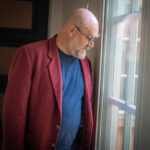
 Milbank in October 2014 | |
| Born | Alasdair John Milbank 23 October 1952 Kings Langley, England |
| Spouse | |
| Children | Sebastian Milbank |
| Academic background | |
| Alma mater | |
| Thesis | The Priority of the Made (1986) |
| Doctoral advisor | Leon Pompa |
| Influences |
|
| Academic work | |
| Discipline |
|
| Sub-discipline | |
| School or tradition | |
| Institutions | |
| Doctoral students | |
| Notable works |
|
| Notable ideas | Radical orthodoxy |
| Influenced | |
Alasdair John Milbank (born 23 October 1952) is a British theologian and philosopher. He is Professor Emeritus of Religion, Politics and Ethics at the University of Nottingham, where he is also president of the Centre of Theology and Philosophy and the Centre for Social Renewal[28]. Milbank has previously taught at Lancaster University, University of Cambridge, and University of Virginia, where he held the Frances Myers Ball Chair of Philosophical Theology[28]. While at Cambridge as a Reader, he was also fellow of Peterhouse.
Milbank founded the radical orthodoxy movement.[29] His work crosses disciplinary boundaries, integrating subjects such as systematic theology, social theory, ethics, aesthetics, philosophy, political theory and political theology. He first gained recognition after publishing Theology and Social Theory in 1990, which laid the theoretical foundations for the movement which later became known as radical orthodoxy. He further developed the radical orthodoxy agenda in several works, including The Word made Strange, Being Reconciled, Truth in Aquinas (with Catherine Pickstock), The Suspended Middle and Beyond Secular Order.
Life
Education
Following his secondary education at Hymers College, he received a Bachelor of Arts degree in modern history from The Queen's College, Oxford.[17][30] He was awarded a postgraduate certificate in theology from Westcott House, Cambridge.[30] During his time in Cambridge he studied under Rowan Williams.[12] He then received his Doctor of Philosophy degree from the University of Birmingham.[30] His dissertation on the work of Giambattista Vico, entitled "The Priority of the Made: The Religious Dimension in Vico's Thought", was written under the supervision of Leon Pompa.[31] The University of Cambridge awarded him a senior Doctor of Divinity degree in recognition of published work in 1998.[32]
Personal life
Milbank was born in Kings Langley, England,[33] on 23 October 1952.[34] He married Alison Milbank, also professor emerita at the University of Nottingham,[35] in 1978.[36][37] They have a daughter, Reverend Dr Arabella Milbank Robinson, and a son, Dr Sebastian Milbank,[38] beside two grandsons, Aubrey and Ivor Robinson.
Thought
A key part of the controversy surrounding Milbank concerns his view of the relationship between theology and the social sciences. He argues that the social sciences are a product of the modern ethos of secularism, which stems from an ontology of violence. At the same time Milbank seeks to show, genealogically, that much secular thought is actually composed of distorted and partial theologies, rendering its claims thereby not beyond the reach of orthodox theological assessment.Theology, therefore, should not seek to make constructive use of secular social theory, for theology itself offers a peaceable, comprehensive vision of all reality, extending to the social and political without the need for a social theory based on some level of violence. (As Contemporary Authors summarises his thought, "the Christian mythos alone 'is able to rescue virtue from deconstruction into violent, agonistic difference.'")[33] Milbank argues that metaphysics is inescapable and therefore ought to be critically dealt with.[39]
Milbank is sometimes described as a metaphysical theologian in that he is concerned with establishing a Christian trinitarian ontology. He relies heavily on aspects of the thought of Plato and Augustine, in particular the former's modification by the Neoplatonist philosophers. He is much influenced by Origen, Eriugena, Nicholas of Cusa, John Ruskin, Sergei Bulgakov and more recently, F. W. J. Schelling.
Milbank, together with Graham Ward and Catherine Pickstock, has helped forge a new trajectory in constructive theology known as radical orthodoxy – an ecumenically Catholic approach which is highly critical of existing modernity, but which seeks to disinter and develop a different, Renaissance and Romantic-based, Christian Platonic modernity. In his Cambridge Stanton lecture series, "Philosophy: A Theological Critique", he sought to extend his genealogical and critical approach to the social sciences to Philosophy as such. Characteristically, radical orthodoxy does not seek to restore foundational humanism questioned by postmodernism, but to argue that the postmodernist reading of ontological flux as uncertainty and nihilism is arbitrary. Instead radical orthodoxy reads flux in a revised Platonic way, as evidence of a stuttering, symbolic or linguistic participation of the finite in the Absolute. More recently, Milbank has accentuated his kinship with a post-postmodern speculative turn, while sympathising with spiritualists rather than materialists.
This was already exemplified in his debates with philosopher Slavoj Žižek, and in collaborations in three books (also with Creston Davis), entitled Theology and the Political: The New Debate (2005), The Monstrosity of Christ: Paradox or Dialectic (2009), and Paul's New Moment: Continental Philosophy and the Future of Christian Theology (2010). Milbank delivered the Stanton Lectures at Cambridge in 2011.[40] Milbank's friendship and substantial intellectual common ground with David Bentley Hart has been noted several times by both thinkers.[41] Milbank has also been a major influence on the formation of Postliberal thought in contemporary politics, and especially upon the Blue Labour political faction. This aspect of his work is much linked to his philosophical reflections upon gift-exchange.
Reception
Theology and Social Theory is generally viewed as having brought about a paradigm shift in Anglo-Saxon theology towards a much more confidently Christian approach. While it was initially seen as extreme, this perception has faded over the years and Milbank's global influence has continued to increase.
See also
Bibliography
Books
- Theology and Social Theory: Beyond Secular Reason, 1990 – (ISBN 0-631-18948-3)
- The Religious Dimension in the Thought of Giambattista Vico, 1668–1744, 2 vols., 1991–92 – (ISBN 0-7734-9694-7 [pt. 1], ISBN 0-7734-9215-1 [pt. 2])
- The Mercurial Wood: Sites, Tales, Qualities, 1997 – (ISBN 3-7052-0113-1)
- The Word Made Strange, 1997 – (ISBN 0-631-20336-2)
- Truth in Aquinas, with Catherine Pickstock, 2000 – (ISBN 0-415-23335-6)
- Being Reconciled: Ontology and Pardon, 2003 – (ISBN 0-415-30525-X)
- Introducing Radical Orthodoxy: Mapping a Post-Secular Theology, Jan. 2004, Baker Publishing Group - ISBN 978-0-8010-2735-2
- The Suspended Middle: Henri de Lubac and the Debate Concerning the Supernatural, 2005 – (ISBN 0-8028-2899-X)
- The Legend of Death: Two Poetic Sequences, 2008 – (ISBN 978-1-55635-915-6)
- The Monstrosity of Christ: Paradox or Dialectic?, With Slavoj Žižek and Creston Davis, 2009 – (ISBN 978-0-262-01271-3)
- Veritas: Proposing Theology. S C M Press, Limited, 2009. ISBN 978-0-334-04159-7
- The Future of Love: Essays in Political Theology, 2009 – (ISBN 978-1-60608-162-4)
- Paul's New Moment: Continental Philosophy and the Future of Christian Theology, With Slavoj Žižek and Creston Davis, 2010 – (ISBN 978-1-58743-227-9)
- Beyond Secular Order: The Representation of Being and the Representation of the People, 2013 – (ISBN 978-1-118-82529-7)
- The Dances of Albion: A Poetic Topography, Shearsman Books, 2015. ISBN 978-1-84861-395-9
- The Politics of Virtue: Post-Liberalism and the Human Future, With Adrian Pabst, 2016 – (ISBN 978-1-78348-649-6)
- Philosophy: A Theological Critique, Feb. 2023 Wiley–Blackwell. ISBN 978-1-4051-8239-3
- The Gift Exchanged: The Gift in Religion. Wiley–Blackwell Jun. 2017 ISBN 978-1-4051-5484-0
- Some Speaking Swirls: July 2023, Shearsman Books, ISBN 978-1-84861-893-0
Essays in edited volumes
- "Postmodern Critical Augustinianism: A Short Summa in Forty-two Responses to Unasked Questions", found in The Postmodern God: A Theological Reader, edited by Graham Ward, 1997 – (ISBN 0-631-20141-6)
- "The Last of the Last: Theology in the Church", found in Conflicting Allegiances: The Church-Based University in a Liberal Democratic Society, 2004 – (ISBN 1-58743-063-0)
- "Alternative Protestantism: Radical Orthodoxy and the Reformed Tradition", found in Radical Orthodoxy and the Reformed Tradition: Creation, Covenant, And Participation, 2005 – (ISBN 0-8010-2756-X)
- "Plato versus Levinas: Gift, Relation and Participation", found in Adam Lipszyc, ed., Emmanuel Levinas: Philosophy, Theology, Politics (Warsaw: Adam Mickiewicz Institute, 2006), 130–144.
- "Sophiology and Theurgy: The New Theological Horizon", found in Adrian Pabst, ed., Radical Orthodoxy and Eastern Orthodoxy (Basingstoke: Ashgate, 2009), 45–85 – (ISBN 978-0-7546-6091-0)
- "Shari'a and the True Basis of Group Rights: Islam, the West, and Liberalism", found in Shari'a in the West, edited by Rex Ahdar and Nicholas Aroney, 2010 – (ISBN 978-0-19-958291-4)
- "Platonism and Christianity: East and West", found in Daniel Haynes, ed., New Perspectives on Maximus (forthcoming)
Journal articles
- "The Body by Love Possessed: Christianity and Late Capitalism in Britain", Modern Theology 3, no. 1 (October 1986): 35–65.
- "Enclaves, or Where is the Church?", New Blackfriars, Vol. 73, no. 861 (June,1992), pp. 341–352.
- "Can a Gift Be Given? Prolegomena to a Future Trinitarian Metaphysic", Modern Theology 11, no. 1 (January 1995): 119–161.
- "The Soul of Reciprocity Part One: Reciprocity Refused", Modern Theology 17, no. 3 (July 2001): 335–391.
- "The Soul of Reciprocity Part Two: Reciprocity Granted", Modern Theology 17, no. 4 (October 2001): 485–507.
- "Scholasticism, Modernism and Modernity", Modern Theology 22, no. 4 (October 2006): 651–671.
- "From Sovereignty to Gift: Augustine's Critique of Interiority", Polygraph 19 no. 20 (2008): 177–199.
- "The New Divide: Romantic versus Classical Orthodoxy Modern Theology", Modern Theology 26, no. 1 (January 2010): 26–38.
- "Culture and Justice", Theory, Culture and Society 27, no. 6 (2010): 107–124.
- "On 'Thomistic Kabbalah'", Modern Theology 27, no. 1 (2011): 147–185.
- Milbank, John (January 2011). "On "Thomistic Kabbalah"". Modern Theology. 27 (1): 147–185. doi:10.1111/j.1468-0025.2010.01659.x.
- "Hume Versus Kant: Faith, Reason and Feeling", Modern Theology 27, no. 2 (April 2011): 276–297.
- "Against Human Rights: Liberty in the Western Tradition", Oxford Journal of Law and Religion 1, no. 1 (2012): 203–234.
- "Dignity Rather than Right", Revista de filosofía Open Insight, v. IV, no. 7 (January 2014): 77-124.
- "Politics of the Soul", Revista de filosofía Open Insight, v. VI, no. 9 (January–June 2015): 91-108.
- "Reformation 500: Any Cause for Celebration?", "Open Theology" v. 4 (2018): 607–729. Open Access. DOI: Reformation 500: Any Cause for Celebration?
- "Officially Sanctioned Catholic Kabbalah? | Church Life Journal | University of Notre Dame". churchlifejournal.nd.edu. 7 August 2019. Archived from the original on 25 January 2022. Retrieved 2 October 2022.
Notes
References
- ^ a b c Milbank, John (19 February 2016). "Interview: John Milbank, Theologian". Church Times. Interviewed by Davison, Andrew. London. Retrieved 5 February 2018.
- ^ Doerksen, Paul G. (2000). "For and Against Milbank: A Critical Discussion of John Milbank's Construal of Ontological Peace" (PDF). The Conrad Grebel Review. 18 (1): 50. Archived from the original (PDF) on 9 February 2018. Retrieved 8 February 2018.
- ^ Long, D. Stephen (2000). Divine Economy: Theology and the Market. Radical Orthodoxy. London: Routledge. p. 251. ISBN 978-1-134-58888-6.
- ^ a b Eugenio, Dick O. (2014). Communion with the Triune God: The Trinitarian Soteriology of T. F. Torrance. Princeton Theological Monograph Series. Vol. 204. Eugene, Oregon: Penwick Publications. p. 177. ISBN 978-1-62564-036-9.
- ^ Jobling, J'annine; Markham, Ian S., eds. (2000). Theological Liberalism: Creative and Critical. London: SPCK. p. 4. ISBN 978-0-281-05361-2.
- ^ Lyons, Nathan Edward (2014). Being Is Double: Jean-Luc Marion and John Milbank on God, Being and Analogy (PDF) (MPhil thesis). Australian Catholic University. p. i. Retrieved 11 February 2018.
- ^ Gay, Doug (2013). Honey from the Lion: Christian Theology and the Ethics of Nationalism. London: SCM Press. p. 60. ISBN 978-0-334-04647-9.
- ^ Moseley, Carys (2013). Nationhood, Providence, and Witness: Israel in Protestant Theology and Social Theory. Eugene, Oregon: Cascade Books. p. 4. ISBN 978-1-62189-676-0.
- ^ Fawcett, Brett (28 October 2021). "The Canadian Socrates: Analyzing George Grant's Theopolitical Project". The Canadian Journal for Scholarship and the Christian Faith. Retrieved 15 December 2021.
- ^ Bushlack, Thomas J. (2015). Politics for a Pilgrim Church: A Thomistic Theory of Civic Virtue. Grand Rapids, Michigan: Wm. B. Eerdmans Publishing Company. p. 130. ISBN 978-0-8028-7090-2.
- ^ White, Vernon (2016) [2000]. "The Future of Theology". In Percy, Martyn (ed.). Calling Time: Religion and Change at the Turn of the Millennium. London: Bloomsbury Academic. p. 215. ISBN 978-1-4742-8116-4.
- ^ a b Richardson, Graeme (2003). "Integrity and Realism: Assessing John Milbank's Theology". New Blackfriars. 84 (988): 268–280. doi:10.1111/j.1741-2005.2003.tb06299.x. ISSN 1741-2005. JSTOR 43250725.
- ^ Caputo, John D. (2009). "Review of The Monstrosity of Christ: Paradox or Dialectic?, by Slavoj Žižek and John Milbank". Notre Dame Philosophical Reviews. ISSN 1538-1617. Retrieved 23 August 2020.
- ^ Nicholas, Kyle (22 October 2015). "The Progress and Future of Radical Orthodoxy". TELOSscope. Candor, New York: Telos Press Publishing. Retrieved 18 August 2018.
- ^ Bell, Daniel M. Jr. (2004). "State and Civil Society". In Scott, Peter; Cavanaugh, William T. (eds.). The Blackwell Companion to Political Theology. Wiley Blackwell Companions to Religion. Vol. 40. Malden, Massachusetts: Blackwell Publishing. p. 433. ISBN 978-0-470-99735-2.
- ^ Kettle, Martin (15 September 2016). "Brexit was a revolt against liberalism. We've entered a new political era". The Guardian. ISSN 0261-3077. Retrieved 2 March 2023.
But it is striking that this week saw the publication of a book by John Milbank and Adrian Pabst, which takes post-liberalism as an established reality and as the starting point for the examination of a new kind of politics based on a vision of social and personal virtue and what the authors dub conservative socialism.
- ^ a b Cowling, Maurice (2001). Religion and Public Doctrine in Modern England. Vol. 3. Cambridge, England: Cambridge University Press (published 2004). p. 372. doi:10.1017/CBO9780511598517. ISBN 978-0-521-61189-3.
- ^ Harris, John (8 August 2009). "Phillip Blond: The Man Who Wrote Cameron's Mood Music". The Guardian. Retrieved 11 February 2018.
- ^ Leithart, Peter J. (28 January 2019). "John Milbank: A Guide for the Perplexed". Mere Orthodoxy. Retrieved 26 July 2019.
- ^ Kennedy, Paul (2007). "On Radical Orthodoxy". Ideas (Podcast). Canadian Broadcasting Corporation. Event occurs at 0:05:57–0:06:12. Retrieved 11 February 2018 – via Centre of Theology and Philosophy.
- ^ "Dr. D. Aaron Riches". Granada, Spain: Institute of Philosophy "Edith Stein". Archived from the original on 26 October 2018. Retrieved 12 February 2018.
- ^ Rowe, Terra S. (2016). "Grace and Climate Change: The Free Gift in Capitalism and Protestantism". In Dahill, Lisa E.; Martin-Schramm, James B. (eds.). Eco-Reformation: Grace and Hope for a Planet in Peril. Eugene, Oregon: Cascade Books. p. 263. ISBN 978-1-4982-2546-5.
- ^ Placher, William C. (7 September 2004). "God's Beauty". The Christian Century. Vol. 121, no. 18. Chicago. p. 42. ISSN 0009-5281. Retrieved 26 June 2019.
- ^ Ruether, Rosemary Radford (2006). "The Postmodern as Premodern: The Theology of D. Stephen Long". In Ruether, Rosemary Radford; Grau, Marion (eds.). Interpreting the Postmodern: Responses to "Radical Orthodoxy". New York: T&T Clark. p. 76. ISBN 978-0-567-02880-8.
- ^ Oliver, Simon (2005). Philosophy, God and Motion. Abingdon, England: Routledge. ISBN 978-1-134-23755-5.
- ^ Shortt, Rupert (2005). God's Advocates: Christian Thinkers in Conversation. Grand Rapids, Michigan: Wm. B. Eerdmans Publishing. p. 112. ISBN 978-0-8028-3084-5.
- ^ Smith, James K. A. (17 December 2015). "Christmas, 2015: Dr. James K.A. Smith". The Anglican Planet. Interviewed by Careless, Sue. Archived from the original on 28 July 2018. Retrieved 12 February 2018.
- ^ a b "John Milbank : Northwestern University Research Initiative in Russian Philosophy, Literature, and Religious Thought - Northwestern University". rprt.northwestern.edu. Retrieved 9 January 2026.
- ^ Leithart, Peter. "John Milbank: A Guide for the Perplexed - Mere Orthodoxy | Christianity, Politics, and Culture". mereorthodoxy.com. Retrieved 18 October 2023.
- ^ a b c Grumett, David (2011). "Radical Orthodoxy". The Expository Times. 122 (6): 261. doi:10.1177/0014524610394523. hdl:20.500.11820/9033fa6b-6e99-4d2f-bf8f-56c1afacb2eb. ISSN 1745-5308. S2CID 221073689.
- ^ Davis, Richard A. (2013). The Political Church and the Profane State in John Milbank and William Cavanaugh (PhD thesis). Edinburgh: University of Edinburgh. p. 220. hdl:1842/8216.
- ^ "Participants: John Milbank". John Templeton Foundation. Archived from the original on 6 August 2019. Retrieved 17 May 2014.
- ^ a b Contemporary Authors Online, s.v. "(Alasdair) John Milbank" Accessed 9 March 2009
- ^ Date of birth information sourced from Library of Congress Authorities data, via corresponding Library of Congress Linked Data Service: linked authority record n89670485. Retrieved on 14 February 2018.
- ^ "Department of Theology and Religious Studies - The University of Nottingham". www.nottingham.ac.uk. Retrieved 22 September 2018.
- ^ "Milbank, Prof. (Alasdair) John". Who's Who 2017. Oxford University Press. November 2016. Retrieved 28 July 2018.
- ^ Williams, Rowan (1995) [1994]. A Ray of Darkness. Lanham, Maryland: Cowley Publications. p. 199. ISBN 978-1-4616-6072-9.
- ^ "Interview: Alison Milbank, theologian". www.churchtimes.co.uk. Retrieved 14 April 2024.
- ^ "Nietzsche, Putin and the spirit of Russia | John Milbank » IAI TV". 27 September 2022. Archived from the original on 8 December 2022.
- ^ "Stanton Lectures". Cambridge University. Archived from the original on 19 April 2015. Retrieved 10 April 2015.
- ^ "'You Are Gods' with David Bentley Hart and John Milbank". University of Notre Dame Press. 16 November 2021. Retrieved 16 November 2021.
External links
- Interview with John Milbank, 2005
- Interview with John Milbank, 2008
- "The Ethics of Self-Sacrifice" article in First Things (1999)
- Staff profile on the University of Nottingham website
- The Centre of Theology and Philosophy Archived 30 May 2019 at the Wayback Machine
- "The Politics of Paradox" from the 2009 TELOS conference
- Lazarus Style Comeback, Times Higher Education, 16 April 2009


