




Alasa Farms
Alasa Farms | |
 | |
   | |
| Location | 6420 Shaker Rd., near Alton, New York |
|---|---|
| Coordinates | 43°12′40.6″N 76°58′48.04″W / 43.211278°N 76.9800111°W |
| Area | 710 acres (290 ha) |
| Built | 1833 |
| Architectural style | Early Republic |
| NRHP reference No. | 09000835[1] |
| Added to NRHP | October 16, 2009 |
| Part of a series on |
| Shakerism |
|---|
 |
 Christianity portal Christianity portal |
Alasa Farms
Alasa Farms, also known as the Sodus Bay Shaker Tract and Sodus Bay Phalanx, is a historic farm complex located near the hamlet of Alton in Wayne County, New York. The farm complex was originally built and occupied by the Sodus Bay Shakers, an official branch of the United Society of Believers in Christ's Second Appearing, from 1826 to 1838.[2]
History
Early settlement
Prior to Euro-American settlement, the lands surrounding Great Sodus Bay were used seasonally by Haudenosaunee (Iroquois) peoples, including Cayuga and Seneca communities, for hunting, fishing, and gathering.[3]
In the early 19th century, Judge John Nicholas of Geneva purchased approximately 1,400 acres along Great Sodus Bay from Charles Williamson, agent for the Pulteney Estate. Nicholas envisioned a commercial enterprise on the bay and established a warehouse, store, grist mill, and dock.[4] On June 19, 1813, during the British raid on Sodus Point in the War of 1812, Nicholas’s storehouses and wharves were destroyed.[5] A fragment of a headstone discovered on the property marks the burial site of William Briscoe (d. 1791), a government surveyor associated with the Pre-emption Road.[6]
Shaker community (1826–1838)
The Sodus Bay Shaker community was established in 1826 during the period of intense religious revivalism in western and central New York known as the “Burned-Over District.” Organized under the authority of the Shaker Central Ministry at New Lebanon, New York, the settlement was the final long-lived Shaker community founded in the United States. The community began with seventy-two members and grew to approximately one hundred fifty during its first decade.
Like other Shaker settlements, the Sodus Bay community practiced celibate communal living, gender-balanced leadership, agricultural self-sufficiency, and small-scale industry. The site also functioned as a way-station for Shaker members traveling between eastern settlements in New England and New York and western communities in Ohio and Kentucky.
In 1836, plans for the proposed Sodus Canal threatened the property under the State of New York’s power of eminent domain. Rather than remain, the Shakers sold the tract and purchased 1,692 acres in Groveland, New York. Between 1836 and 1838, the entire community—including livestock, equipment, and the remains of deceased members—was relocated to Groveland, where the Shaker society continued until its dissolution in 1892.[7]
Between 1826 and 1834, the Shakers constructed approximately seventeen buildings on the property, including a meeting house and several family dwellings; only a portion of these structures survive.[8]
Fourierist occupation: Sodus Bay Phalanx (1844–1846)
Between 1844 and 1846, the property was home to the Sodus Bay Phalanx of the Fourier Society, a group devoted to establishing utopian communities based on communal living. Of the roughly three hundred Fourierist communes established in the United States during the 1840s, the Sodus Bay Phalanx was unusual in that its membership was approximately evenly divided between Christians and freethinkers, Fourierism itself was a secular socialist movement rather than a religious denomination.
The Phalanx emerged from the first annual convention of the Fourier Society of the City of Rochester, held in August 1843, and was organized in early 1844 by members of that society, including Hicksite Quaker abolitionist Benjamin Fish.[9] Nonresident supporters included Rochester reformers Isaac and Amy Post and Huldah Anthony, a relative of Susan B. Anthony. In January 1844 the group published a prospectus and constitution in the ''Rochester Republican'', seeking additional members. By March 1844 the Phalanx claimed approximately 300 members, though the number of able-bodied adult men was insufficient to sustain the enterprise. Contemporary observers commented on the community’s religious diversity and its connections to regional reform networks. Internal religious and organizational disagreements led to multiple constitutional revisions, and in 1845 the group briefly renamed itself the Sodus Phalanx. The community formally dissolved in April 1846.[10]
The Sodus Bay Phalanx was part of a broader mid-19th-century American movement inspired by the French social theorist Charles Fourier, whose followers sought to create cooperative “phalanxes” based on shared labor and communal ownership. The brief occupation of the property by both Shakers and Fourierists reflects the region’s role as a center of religious and utopian experimentation.[7]
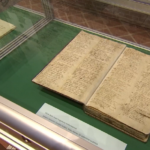
The original records of the Sodus Bay Phalanx are held by the Rochester Historical Society. Microfilm copies are maintained by the Illinois History and Lincoln Collections at the University of Illinois Library and were fully digitized in 2024.[11] A surviving 1844 membership ledger records the names of prospective members along with their family size, occupation, residence, personal property, and cash on hand, reflecting the Phalanx’s structured economic organization.[9]
Parshall and Strong ownership
In 1855 the tract was acquired by D.W. Parshall, founder of the Lyons National Bank. The property remained in the Parshall family for approximately seventy years. During the late 19th and early 20th centuries it developed into a large commercial agricultural enterprise. By the early 1920s approximately 250 acres were devoted to orchards containing an estimated 8,000 apple trees, and the property included extensive timber resources and an operational sawmill.[6] It became a large scale, "model farm" in the early-20th century, being named Alasa Farms in 1924, by its owner Alvah Griffin Strong, grandson of Henry A. Strong.[12] An inventory conducted in the early 1920s valued the property at more than $250,000. In 1924 it was sold for $175,000.[6] In 1962, 548 acres of the eastern section of Alasa were sold for residential development, forming the Shaker Heights neighborhood.[13]
Description
The property includes the contributing resources: the Main House —originally constructed in the 1830s as the “Dwelling of the Chosen Family” and damaged by fire in 2009— [12] and Deacon's House, large frame houses both built by the Shakers in 1833-1834; three gambrel roofed frame barns; board and batten barn (c. 1840s); pony barn; granary (1932); house for bachelor farmhands (1926); office (c. 1930); in ground pool and pool house (c. 1926); two tenant house (c. 1909); two small sheds; and a well with pump.[12] The original Shaker meeting house, which faced Second Creek, was destroyed by fire in 1925.[12]
Modern use and conservation
In early 2011, Cracker Box Palace acquired ownership of Alasa Farms and operates a farm animal sanctuary on the property. That same year, Genesee Land Trust was granted a conservation easement on approximately 627 acres, securing development rights to ensure the land remains protected as open space and working farmland. The property includes forests, wetlands, orchards, and creek corridors that contribute to habitat preservation and water quality in Sodus Bay.[14]
National Register status
It was listed on the National Register of Historic Places in 2009.[1]
Gallery
-
 Office, horse barn and bachelor farmhand's house
 -
 Deacon's House
 -
 Cow barn
 -
 Barn on west side of road


References
- ^ a b "National Register Information System". National Register of Historic Places. National Park Service. July 9, 2010.
- ^ "Wayne County New York Historian, Sodus". Archived from the original on December 17, 2014. Retrieved December 29, 2014.
- ^ FOX, ROSA (June 12, 2022). "WAY BACK WHEN IN WAYNE COUNTY: New marker celebrates Alasa Farms' distinctive history". Finger Lakes Times. Retrieved February 9, 2026.
- ^ FOX, ROSA (June 12, 2022). "WAY BACK WHEN IN WAYNE COUNTY: New marker celebrates Alasa Farms' distinctive history". Finger Lakes Times. Retrieved February 9, 2026.
- ^ "History of Alasa Farms". Cracker Box Palace. Retrieved February 9, 2026.
- ^ a b c "1924 Shaker Tract Sale Sodus NY Wayne County History". wayne.nygenweb.net. Retrieved February 9, 2026.
- ^ a b "Shakers At Sodus Bay". historicsoduspoint.com. Retrieved February 9, 2026.
- ^ "Alasa Farms". waynehistorians.org. Retrieved February 9, 2026.
- ^ a b "Collection: Sodus Bay Phalanx Record Book | Rochester Public Library Archives". archives.libraryweb.org. Retrieved February 9, 2026.
- ^ "Sodus Bay Phalanx - Freethought Trail - New York". freethought-trail.org. Retrieved February 9, 2026.
- ^ "Sodus Bay Phalanx Records (Digitized Microfilm) | Digital Collections at the University of Illinois at Urbana-Champaign Library". digital.library.illinois.edu. Retrieved February 9, 2026.
- ^ a b c d Nancy L. Todd (July 2009). National Register of Historic Places Registration: New York SP Alasa Farms. National Archives and Records Administration. Retrieved December 3, 2025. (Downloading may be slow.)
- ^ FOX, ROSA (June 12, 2022). "WAY BACK WHEN IN WAYNE COUNTY: New marker celebrates Alasa Farms' distinctive history". Finger Lakes Times. Retrieved February 9, 2026.
- ^ Trust, Genesee Land (June 10, 2018). "Alasa Farms". Genesee Land Trust. Retrieved February 9, 2026.
| Topics |   | |
|---|---|---|
| Lists by county |
| |
| Lists by city | ||
| Other lists |
| |


