Geological Formation in the United States
Yorktown Formation Outcrop of the Yorktown Formation at Carters Grove Bluffs along the
James River Type sedimentary Unit of Chesapeake Group Sub-units Sunken Meadow Member, Rushmere Member, Morgarts Beach Member, Moore House Member, Tunnels Mill Member Underlies Croatan Formation Overlies Eastover Formation , Pungo River Formation Primary Sandstone , claystone Other shells Region Atlantic Coastal Plain of North America Extent Maryland, Virginia, North Carolina, South Carolina Named for Yorktown, Virginia Named by Clark and Miller, 1906[ 1]
The Yorktown Formation is a mapped bedrock unit in the Coastal Plain of Maryland , Virginia , North Carolina and South Carolina . It is overconsolidated and highly fossiliferous .
Description
The Yorktown is composed largely of overconsolidated sand and clay with abundant calcareous shells, primarily bivalves .
Stratigraphy
The Yorktown unconformably overlies the Miocene Eastover Formation , and conformably underlies the Pliocene Croatan Formation .[ 2]
The Yorktown was divided into members by Ward and Blackwelder (1980). These are in ascending order: Sunken Meadow Member, Rushmere Member, Morgarts Beach Member, and Moore House Member.[ 3]
Notable exposures
Aurora mine
The most diverse paleobiota of the Yorktown Formation has been recovered from the Aurora mine of Beaufort County, North Carolina , where it overlies the intensively-mined Pungo River Formation . As with the Pungo River Formation, this locality has become a prime target for fossil collecting , and some of the most notable fossils from both formations are displayed at the Aurora Fossil Museum .[ 5] Foraminiferal analyses suggests that this locality belongs the Early Pliocene -aged Sunken Meadow Member.[ 6] phosphorite , while the Yorktown sediments are discarded and are thus in better condition for study.[ 7] bay , with older sediments being deposited at a depth of 80 to 100 metres (260 to 330 ft) underwater, while younger sediments were deposited at a depth of 30 metres (98 ft) underwater.[ 8]
Clear differences are seen in the paleoichthyofauna of the Pungo River Formation and the overlying Yorktown Formation at the Aurora mine, with the Pungo River fauna representing almost exclusively warm-water taxa, while the Yorktown fauna preserves both warm and cooler-water taxa. These fossils provide important evidence for the significant cooling of ocean temperatures between the Miocene and Pliocene. However, the invertebrate fauna from both time periods appears to have cool-temperate affinities.[ 9]
Age
Hazel (1971) revised the age of the Yorktown from Miocene to Late Miocene to Early Pliocene using ostracod biostratigraphy .[ 10] foraminifera .[ 11] [ 12] Zanclean stage, about 4.8 to 3.8 million years ago,[ 6] et al (2001) dated the Rushmere and Morgarts Beach Members to the early-mid Piacenzian stage, about 3.3 to 3.15 million years ago. The deposition of these latter two members is thought to be linked to a marine transgression caused by the mid-Piacenzian warm period .[ 13]
Fossils
Bivalves , including Glycymeris subovata Chesapecten jeffersonius Chesapecten madisonius , Mercenaria tridacnoidesPanopera reflexa ,[ 14] Chama Ensis Striarca and Noetia (see Noetiidae ), Cerastoderma Dosinia Mulinia Kuphus Panope Ostrea Gastropods , including Crucibulum Calliostoma Busycon Turritella Crepidula Foraminifera , including the biostratigraphic marker species Dentoglobigerina altispira (see Globigerinida ), Sphaeroidinellopsis , and Globorotalia puncticulata [ 15] Scleractinian corals , including Septastrea marylandicaParacyathus vaughaniCaryophylliidae ), and Astrangia lineata Ostracods Bryozoans Barnacles , including Balanus Worms Sponges Birds , including the large pelican Pelecanus schreiberi Whales , including the prehistoric sperm whale Scaldicetus
Vertebrate paleobiota
As per the Paleobiology Database :[ 16]
Cartilaginous fishes
Based on Purdy et al . (2001):[ 9]
Sharks
Rays
Ray-finned fishes
Based on Purdy et al . (2001):[ 9]
Genus
Species
Locality
Notes
Images
Acanthocybium A. solandri
The modern wahoo .
Acipenser A. cf. oxyrhynchus
A sturgeon, potentially the modern Atlantic sturgeon .
?Agonidae indet.
A potential poacher of uncertain affinities.
Alosa A. cf. sapidissima
A shad, potentially the modern American shad .
Aluterus A. sp.
A filefish .
Ammodytes A. hexapterus
The modern Arctic sand lance .
Anisotremus A. sp.
A grunt .
Archosargus A. cf. probatocephalus
A porgy , potentially the modern sheepshead .
Astroscopus A. sp.
A stargazer .
Auxis A. sp.
A frigate tuna .
Bagre B. sp.
A sea catfish .
Brotula B. barbata
The modern bearded brotula .
Caulolatilus C. cf. cyanops
A deepwater tilefish , potentially the modern blackline tilefish .
Centropristis C. cf. striata
A seabass , potentially the modern black sea bass .
Ceratoscopelus C. maderensis
The modern Madeira lanternfish .
Chilomycterus C. schoepfi
The modern striped burrfish .
Citharichthys C. sp.
A sanddab .
Conger C. cf. oceanicus
A conger eel , potentially the modern American conger .
Congridae indet.
A conger eel of uncertain affinities.
Cynoscion C. cf. nebulosus
A weakfish , potentially the modern spotted seatrout .
Diplectrum D. cf. formosum
A sand perch , potentially the modern sand perch .
Epinephelus E. sp.
A grouper .
Equetus E. cf. umbrosus
A drumfish , potentially the modern cubbyu .
Gadus G. cf. morhua
A cod , potentially the modern Atlantic cod .
Istiophorus I. platypterus
The modern sailfish .
Kajikia K. albida
The modern white marlin .
Kathetostoma K. sp.
A stargazer.
Leiostomus L. sp.
A relative of the spot .
Lagodon L. cf. rhomboides
A porgy, potentially the modern pinfish .
Lopholatilus L. chamaeleonticeps
The modern great northern tilefish .
L. rayus
An extinct deepwater tilefish.
Lophius L. cf. americanus
A monkfish , potentially the modern American anglerfish .
Makaira M. indica
The modern black marlin .
M. nigricans
The modern Atlantic blue marlin .
M. purdyi [ 17]
An extinct marlin .
Melanogrammus M. cf. aeglefinus
A cod, potentially the modern haddock .
Merluccius M. albidus
The modern offshore hake .
M. cf. bilinearis
A hake, the modern silver hake .
M. sp.
A hake.
Merlangiogadus M. congatus
An extinct gadid .
Micropogonias M. sp.
A drumfish.
Mola M. chelonopsis
An extinct ocean sunfish .
Mycteroperca M. sp.
A grouper.
Ophidion O. grayi
The modern blotched cusk-eel .
Opsanus O. tau
The modern oyster toadfish .
Pagrus P. hyneus
An extinct relative of the modern common seabream .
Paralichthys P. sp.
A largetooth flounder .
Pleuronectidae indet.
A righteye flounder of uncertain affinities.
Pogonias P. cf. cromis
A drumfish, potentially the modern black drum .
Pomatomus P. saltatrix
The modern bluefish .
Prionotus P. cf. evolans
A searobin , potentially the modern striped searobin .
Pterothrissus P. sp.
A gissu .
Sarda S. aff. sarda
A bonito similar to the modern Atlantic bonito .
Sciaenidae indet.
A drumfish of uncertain affinities.
Sciaenops S. ocellatus
The modern red drum .
Scombridae indet.
A mackerel of uncertain affinities.
Seriola S. sp.
An amberjack .
Serranidae indet.
A seabass of uncertain affinities.
Sphyraena S. cf. barracuda
A barracuda , potentially the modern great barracuda .
Sphoeroides S. hyperostosus
An extinct pufferfish .
Stenotomus S. cf. chrysops
A porgy, potentially the modern scup .
Symphurus S. sp.
A tonguefish .
Tautoga T. cf. onitis
A wrasse , potentially the modern tautog.
Thunnus T. thynnus
The modern Atlantic bluefin tuna .
T. sp.
A tuna.
Urophycis U. tenuis
The modern white hake .
Xiphias X. gladius
The modern swordfish .
Reptiles
Turtles
Based partly on Zug (2001):[ 7]
Crocodilians
Birds
Based on Olson & Rasmussen (2001). An extremely high diversity of fossil birds, primarily known from isolated but diagnostic limb bones, is known from the formation. All specimens were collected from the Lee Creek Mine. Most taxonomic assignments were based on rough similarity to living species, hence the "aff." suffix to indicate similarities, and are not intended to be meant as direct taxonomic assignments.[ 19]
Mammals
Proboscideans
Xenarthrans
Genus
Species
Notes
Images
Folivora indet. (=Phyllophaga indet)
A ground sloth of uncertain affinities.
Carnivorans
Genus
Species
Locality
Notes
Images
Auroraphoca A. atlantica
Lee Creek Mine
An earless seal . Type locality of genus and species.[ 21]
Borophagus B. cf. dudleyi
Lee Creek Mine
A bone-crushing dog .
B. cf. orc
B. sp.
Callophoca C. obscura
Lee Creek Mine, Meherrin River, Superior Stone Company Quarry
An earless seal.
Felidae indet.
Lee Creek Mine
A cat of uncertain affinities.
Gryphoca G. similis
Lee Creek Mine
An earless seal.
Hadrokirus H. novotini
Meherrin River
An earless seal. Type locality of species.[ 22]
Homiphoca ?H. capensis
Lee Creek Mine
A monachine earless seal. Type locality of H. murfreesi. [ 22]
H. murfreesi
Meherrin River
Leptophoca L. lenis
Meherrin River
An earless seal. Type locality of species.[ 22]
Lobodontini indet.
Meherrin River
A relative of Antarctic seals , of uncertain affinities.[ 22]
Mesotaria M. ambigua
Lee Creek Mine
An earless seal.
Ontocetus O. emmonsi
Multiple
An odobenid related to the walrus . Type locality for genus and species.
Monachinae indet.
Lee Creek Mine
A monachine seal of uncertain affinities.
Paleophoca P. nystii
Lee Creek Mine
An earless seal.
Phocanella P. pumila
Lee Creek Mine
An earless seal. Type locality of species.[ 22]
Platyphoca P. vulgaris
Lee Creek Mine
An earless seal.
Sarcodectes S. magnus
Lee Creek Mine, Meherrin River
An earless seal. Type locality of genus and species.[ 23]
Ursidae indet.
Lee Creek Mine
A bear of uncertain affinities.
Perissodactyls
Artiodactyls
Terrestrial artiodactyls
Cetaceans
Based on:[ 24]
Gallery
References
^ Clark, W.B., and Miller, B.L., 1906, Clay deposits of the Virginia coastal plain: Virginia Geological Survey Bulletin, no. 2, pt. 1.
^ Pineda-Salgado, G., Schaaf, P., Aguilar-Piña, M., Solís-Pichardo, G., Vega, F.J. (2016). "Contribución al alcance estratigráfico de la Formación Agueguexquite (Mioceno), Veracruz, México" . Boletín de la Sociedad Geológica Mexicana . 68 (2): 187– 197. Bibcode :2016BoSGM..68..375P . doi :10.18268/BSGM2016v68n2a2 {{cite journal }}: CS1 maint: multiple names: authors list (link )^ Ward, L.W., and Blackwelder, B.W., 1980, Stratigraphic revision of upper Miocene and lower Pliocene beds of the Chesapeake Group, middle Atlantic Coastal Plain, IN Contributions to stratigraphy: U.S. Geological Survey Bulletin, 1482-D, 61 p.
^ Post-impact Effects of the Eocene Chesapeake Bay Impact , Lower York-James Peninsula, Virginia , 31st Annual Meeting, Virginia Geological Field Conference Archived June 10, 2011, at the Wayback Machine , Williamsburg, Virginia, Oct. 19 and 20, 2001, G.H. Johnson et al. (fieldtrip guidebook)^ Tran, Alexandria deRosset, Jennifer (2024-03-19). "Small but mighty: Aurora, North Carolina, is the fossil capital of the world" . UNC Media Hub . Retrieved 2025-10-16 . {{cite web }}: CS1 maint: multiple names: authors list (link )^ a b Spivey, Whittney (2025-01-24). "Biofacies Analysis of Zanclean Sediments in Virginia: Unraveling the Past Through Benthic Foraminifera" . Geosciences . 15 (2): 39. Bibcode :2025Geosc..15...39S . doi :10.3390/geosciences15020039 ISSN 2076-3263 . ^ a b Zug, George R. (2001). "Turtles of the Lee Creek Mine (Pliocene: North Carolina)" . Biodiversity Heritage Library . Retrieved 2025-10-18 . ^ "PBDB" . paleobiodb.org . Archived from the original on 2023-01-08. Retrieved 2025-10-25 .^ a b c Purdy, Robert W.; Schneider, Vincent P.; Applegate, Shelton P.; McLellan, Jack H.; Meyer, Robert L.; Slaughter, Bob H. (2001). "The Neogene Sharks, Rays, and Bony Fishes from Lee Creek Mine, Aurora, North Carolina" . Biodiversity Heritage Library . Retrieved 2025-09-02 . ^ Hazel, J.E., 1971, Ostracode biostratigraphy of the Yorktown Formation (upper Miocene and lower Pliocene) of Virginia and North Carolina: U.S. Geological Survey Professional Paper, 704, 13 p. https://pubs.er.usgs.gov/pubs/pp/pp704 [dead link
^ Gibson, T.G., 1983, Key Foraminifera from upper Oligocene to lower Pleistocene strata of the U.S. central Atlantic Coastal Plain, IN Ray, C.E., ed., Geology and paleontology of the Lee Creek Mine, North Carolina, I: Smithsonian Contributions to Paleobiology, no. 53, p. 355-454.
^ Cronin, T.M., 1991, Pliocene shallow water paleoceanography of the North Atlantic Ocean based on marine ostracodes: Quaternary Science Reviews, v. 10, p. 175-188.
^ Dowsett, Harry J.; Robinson, Marci M.; Foley, Kevin M.; Herbert, Timothy D. (2021-11-24). "The Yorktown Formation: Improved Stratigraphy, Chronology, and Paleoclimate Interpretations from the U.S. Mid-Atlantic Coastal Plain" . Geosciences . 11 (12): 486. Bibcode :2021Geosc..11..486D . doi :10.3390/geosciences11120486 ISSN 2076-3263 . ^ Rader, E.K., and Evans, N.H., 1993, Geologic map of Virginia; expanded explanation: Virginia Division of Mineral Resources, 80 p.
^ Dowsett, H.J., and Wiggs, L.B., 1992, Planktonic foraminiferal assemblage of the Yorktown Formation, Virginia, USA: Micropaleontology, v. 38, no. 1, p. 75-86.
^ "PBDB Strata Results" . paleobiodb.org . Retrieved 2025-10-22 .^ Fierstine, Harry (1999-05-01). "A New Shortbilled Marlin of the Genus Makaira, from the Yorktown Formation, (Early Pliocene), Eastern North Carolina at Lee Creek Mine, USA" . Tertiary Research . 19 (3 4): 71– 77. ^ a b Myric, Albert C. (2001). "Thecachampsa Antiqua (Leidy, 1852) (Crocodylidae: Thoracosaurinae), from Fossil Marine Deposits at Lee Creek Mine, Aurora, North Carolina, USA" . Biodiversity Heritage Library . Retrieved 2025-10-18 . ^ Olson, Storrs L.; Rasmussen, Pamela C. (2001). "Miocene and Pliocene Birds from the Lee Creek Mine, North Carolina" . Biodiversity Heritage Library . Retrieved 2025-10-16 . ^ Smith, N. Adam; Clarke, Julia A. (2011). "An Alphataxonomic Revision of Extinct and Extant Razorbills (Aves, Alcidae): A Combined Morphometric and Phylogenetic Approach" Ornithological Monographs . 72 (1): 1– 61. doi :10.1525/om.2011.72.1.1 . ^ Dewaele, Leonard; Peredo, Carlos Mauricio; Meyvisch, Pjotr; Louwye, Stephen (2018-03-07). "Diversity of late Neogene Monachinae (Carnivora, Phocidae) from the North Atlantic, with the description of two new species" . Royal Society Open Science . 5 (3) 172437. Bibcode :2018RSOS....572437D . doi :10.1098/rsos.172437 PMC 5882749 PMID 29657825 . ^ a b c d e Hafed, Azizah B.; Nance, John R.; Koretsky, Irina A.; Rahmat, Sulman J. (2023-05-04). "New seal mandibles belonging to the subfamilies Monachinae and Phocinae discovered in the Neogene of North Carolina (USA)" Historical Biology . 35 (5): 705– 720. Bibcode :2023HBio...35..705H . doi :10.1080/08912963.2022.2063053 . ISSN 0891-2963 . ^ Rule, James P.; Adams, Justin W.; Rovinsky, Douglass S.; Hocking, David P.; Evans, Alistair R.; Fitzgerald, Erich M. G. (2020-11-11). "A new large-bodied Pliocene seal with unusual cutting teeth" . Royal Society Open Science . 7 (11) 201591. Bibcode :2020RSOS....701591R . doi :10.1098/rsos.201591 PMC 7735334 PMID 33391813 . ^ "PBDB" . paleobiodb.org . Archived from the original on 2023-01-08. Retrieved 2026-02-15 .^ Vélez-Juarbe, Jorge; Wood, Aaron R.; Pimiento, Catalina (2016-07-03). "Pygmy sperm whales (Odontoceti, Kogiidae) from the Pliocene of Florida and North Carolina" . Journal of Vertebrate Paleontology . 36 (4) e1135806. doi :10.1080/02724634.2016.1135806 . ISSN 0272-4634 . ^ Gibson, Matthew L.; Geisler, Jonathan H. (2009-09-12). "A new pliocene dolphin (Cetacea: Pontoporiidae), from the Lee Creek Mine, North Carolina" Journal of Vertebrate Paleontology . 29 (3): 966– 971. Bibcode :2009JVPal..29..966G . doi :10.1671/039.029.0307 . ^ a b c Westgate, James W.; Whitmore Jr., Frank C. (2002). "Balaena ricei , a New Species of Bowhead Whale from the Yorktown Formation (Pliocene) of Hampton, Virginia". Cenozoic mammals of land and sea: tributes to the career of Clayton E. Ray 295– 312. ^ Jorge Vélez-Juarbe; Nicholas D. Pyenson (2012). "Bohaskaia monodontoides , a new monodontid (Cetacea, Odontoceti, Delphinoidea) from the Pliocene of the western North Atlantic Ocean". Journal of Vertebrate Paleontology . 32 (2): 476– 484. Bibcode :2012JVPal..32..476V . doi :10.1080/02724634.2012.641705 . S2CID 55606151 . ^ Bisconti, Michelangelo; Damarco, Piero; Marengo, Lorenza; Macagno, Mattia; Daniello, Riccardo; Pavia, Marco; Carnevale, Giorgio (2024-09-05). "Anatomy and Relationships of a New Gray Whale from the Pliocene of Piedmont, Northwestern Italy" . Diversity . 16 (9): 547. doi :10.3390/d16090547 ISSN 1424-2818 . ^ a b Vélez-Juarbe, Jorge; Wood, Aaron R.; Pimiento, Catalina (2016-07-03). "Pygmy sperm whales (Odontoceti, Kogiidae) from the Pliocene of Florida and North Carolina". Journal of Vertebrate Paleontology . 36 (4) e1135806. Bibcode :2016JVPal..36E5806V . doi :10.1080/02724634.2016.1135806 . ISSN 0272-4634 . ^ Vollmer, Nicole L.; Ashe, Erin; Brownell Jr., Robert L.; Cipriano, Frank; Mead, James G.; Reeves, Randall R.; Soldevilla, Melissa S.; Williams, Rob (2019). "Taxonomic revision of the dolphin genus Lagenorhynchus" Marine Mammal Science . 35 (3): 957– 1057. Bibcode :2019MMamS..35..957V . doi :10.1111/mms.12573 . ISSN 1748-7692 .






.png)


.png)

.png)


.gif)


.jpg)

.jpg)


.jpeg)


.jpg)
_-_Kawahara_Keiga_-_1823_-_1829_-_Siebold_Collection_-_pencil_drawing_-_water_colour_1.jpeg)


.jpg)
_(Ifremer_00763-87516).jpg)


.png)

_(12658644675).jpg)

_(15424517437).jpg)


.png)


.png)


.jpg)


_(12658771393).jpg)
_-_Kawahara_Keiga_-_1823_-_1829_-_Siebold_Collection_-_pencil_drawing_-_water_colour.jpeg)

_Matanzas,_Fla.jpeg)


_(Ifremer_00764-87612).jpg)
.gif)


.jpg)


.jpg)

.jpg)
_Madden_Haag.jpg)


.jpg)


.png)


_(21866206616).jpg)


 Coral growing on a Crepidula sp. (slipper snail) from the Yorktown Formation
 Rushmere Member of the Yorktown Formation, with abundant Chama bivalves
 Sunken Meadow Member of the Yorktown Formation
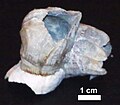 Balanus sp. (barnacles) from Carters Grove Bluffs outcrop, growing on a bivalve


