







Portal:France
| Main Page | Gazetteer |
Welcome to the France Portal!
Bienvenue sur le Portail France !

|

|
 | |
France, officially the French Republic, is a country primarily located in Western Europe. Its overseas regions and territories include French Guiana in South America, Saint Pierre and Miquelon in the North Atlantic, the French West Indies, and many islands in Oceania and the Indian Ocean. Metropolitan France shares borders with Belgium and Luxembourg to the north; Germany to the northeast; Switzerland to the east; Italy and Monaco to the southeast; Andorra and Spain to the south; and a maritime border with the United Kingdom to the northwest. Its metropolitan area extends from the Rhine to the Atlantic Ocean and from the Mediterranean Sea to the English Channel and the North Sea. Its 18 integral regions—five of which are overseas—span a combined area of 632,702 km2 (244,288 sq mi), with a total population estimated at 69.1 million in 2026. Its capital, largest city and main cultural and economic centre is Paris.
Metropolitan France was settled during the Iron Age by Celtic tribes known as Gauls before Rome annexed the area in 51 BC, leading to a distinct Gallo-Roman culture. In the Early Middle Ages, the Franks formed the kingdom of Francia, which became the heartland of the Carolingian Empire. The Treaty of Verdun of 843 partitioned the empire, with West Francia evolving into the Kingdom of France. In the High Middle Ages, France was a powerful but decentralised feudal kingdom, but from the mid-14th to the mid-15th centuries, France was plunged into a dynastic conflict with England known as the Hundred Years' War. In the 16th century, French culture flourished during the French Renaissance, and a French colonial empire emerged. Internally, France was dominated by the conflict with the House of Habsburg and the French Wars of Religion between Catholics and Huguenots. France was successful in the Thirty Years' War and further increased its influence during the reign of Louis XIV.
The French Revolution of 1789 overthrew the Ancien Régime and produced the Declaration of the Rights of Man, which expresses the nation's ideals to this day. France reached its political and military zenith in the early 19th century under Napoleon Bonaparte, subjugating much of continental Europe and establishing the First French Empire. Its collapse initiated a period of relative decline during which France endured the Bourbon Restoration until the founding of the French Second Republic, which was succeeded by the Second French Empire upon Napoleon III's takeover. His empire collapsed during the Franco-Prussian War in 1870. This led to the establishment of the French Third Republic, and a period of economic prosperity and cultural and scientific flourishing known as the Belle Époque. France was one of the major participants of World War I, from which it emerged victorious at great human and economic cost. It was among the Allies of World War II, but it surrendered and was occupied by Germany in 1940. Following its liberation in 1944, the short-lived Fourth Republic was established and later dissolved over the course of the Algerian War. The current Fifth Republic, a semi-presidential system, was formed in 1958 by Charles de Gaulle. Algeria and most French colonies became independent in the 1960s, with the majority retaining close economic and military ties with France.
France retains its centuries-long status as a global centre of art, science, and philosophy. It hosts the fourth-largest number of UNESCO World Heritage Sites, with 54 in total, and is the world's leading tourist destination, having received over 100 million foreign visitors in 2024. A developed country, France has a high nominal per capita income globally, and its economy ranks among the largest in the world by both nominal GDP and PPP-adjusted GDP. It is a great power, being one of the five permanent members of the United Nations Security Council and an official nuclear-weapon state. The country is part of multiple international organisations and forums. (Full article...)
 Featured article –


The War of the Fifth Coalition was a European conflict in 1809 that was part of the Napoleonic Wars and the Coalition Wars. The main conflict took place in Central Europe between the Austrian Empire of Francis I and Napoleon's French Empire. The French were supported by their client states—the Kingdom of Italy, the Confederation of the Rhine and the Duchy of Warsaw. Austria was supported by the Fifth Coalition which included the United Kingdom, Portugal, Spain, and the Kingdoms of Sardinia and Sicily, although the latter two took no part in the fighting. By the start of 1809 much of the French army was committed to the Peninsular War against Britain, Spain and Portugal. After France withdrew 108,000 soldiers from Germany, Austria attacked France to seek the recovery of territories lost in the 1803–1806 War of the Third Coalition. The Austrians hoped Prussia would support them, having recently been defeated by France, but Prussia chose to remain neutral.
Archduke Charles carried out major reforms to the Imperial Austrian Army, but the quality of it was diminished to some extent by the incompleteness of training and the Army's multinational nature. The French military relied on their talented emperor, veterans, whose numbers had dwindled over the course of recent wars, as well as the effective Napoleonic la maraude tactics. Napoleon, like the Austrians, had to cope with a multinational army, which included many foreign allies. On 10 April 1809, Austrian forces under Archduke Charles crossed the border of Bavaria, a French client state. The French response, under Louis-Alexandre Berthier, was disorganised but order was imposed with the arrival of Napoleon on 17 April. Napoleon led an advance to Landshut, hoping to cut off the Austrian line of retreat and sweep into their rear. Charles crossed the Danube at Regensburg, which allowed him to retreat eastwards, although he failed to reach the Austrian capital, Vienna, before the French. A French assault across the Danube was repulsed on 21–22 May at the Battle of Aspern-Essling but a repeat attack was successful in July. Napoleon won a major victory at the 5–6 July Battle of Wagram, which forced the Austrians to sign the Armistice of Znaim on 12 July. Austrian invasions of the Duchy of Warsaw and Saxony (where they fought alongside the Black Brunswickers) were repulsed and they were driven out of their territories in Italy. British forces landed in Walcheren, in the French client state of Holland, but were unable to seize their objective of capturing Antwerp and later withdrew. (Full article...)
Featured biography –

Fauré was born into a cultured but not particularly musical family. His talent became clear when he was a small boy. At the age of nine, he was sent to a music college in Paris, where he was trained to be a church organist and choirmaster. Among his teachers was Camille Saint-Saëns, who became a lifelong friend. After graduating from the college in 1865, Fauré earned a modest living as an organist and teacher, leaving him little time for composition. When he became successful in his middle age, holding the important posts of organist of the Église de la Madeleine and director of the Paris Conservatoire, he still lacked time for composing; he retreated to the countryside in the summer holidays to concentrate on composition. By his last years, Fauré was recognised in France as the leading French composer of his day. An unprecedented national musical tribute was held for him in Paris in 1922, headed by the president of the French Republic. Outside France, Fauré's music took decades to become widely accepted, except in Britain, where he had many admirers during his lifetime.
Selected fare or cuisine –

The madeleine (English: /ˈmædəlɪn/ ⓘ MAD-əl-in, /ˈmædəleɪn/ MAD-əl-ayn or /ˌmædəlˈeɪn/ MAD-əl-AYN, French: [madlɛn] ⓘ) is a traditional small cake from Commercy and Liverdun, two communes of the Lorraine region in northeastern France.
Madeleines are very small sponge cakes with a distinctive shell-like shape acquired from being baked in pans with shell-shaped depressions. (Full article...)
 Good article –


Moustache, sometimes abbreviated to Mous, (September 1799 – 11 March 1812) was a barbet who is reputed to have played a part in the French Revolutionary and Napoleonic Wars. His story is recounted in many publications but may be partly fictionalised. Moustache is said to have been born in Falaise, Normandy, France, in 1799 and to have joined a grenadier regiment at Caen. He followed the regiment through the Italian Campaign of the Revolutionary Wars and is said to have alerted the regiment to a surprise night attack by Austrian forces. He is reported to have been present at the Battle of Marengo, during which he lost an ear, and with a cuirassier regiment at the Battle of Austerlitz.
At Austerlitz Moustache was apparently responsible for the discovery of an Austrian spy, and the recovery of the regiment's standard from the Austrians. As a result of wounds taken at Austerlitz Moustache had a leg amputated and was reportedly rewarded with a medal by Marshal Jean Lannes. He is later said to have followed a unit of dragoons to Spain where he fought in several actions of the Peninsular War. Seeing action in the Sierra Morena and later, with a gunboat unit, at the Battle of Badajoz, where he was killed by a cannonball. Moustache was interred beneath a gravestone on the battlefield but his memorial is said to have been smashed and his bones burned after the war. (Full article...)
Featured pictures
-
 Paris Street; Rainy Day (1877) is the best known painting by the French artist Gustave Caillebotte. This large oil painting shows a number of figures walking through the Carrefour de Moscou, a road intersection to the east of the Gare Saint-Lazare in north Paris. It was first shown at the Third Impressionist Exhibition of 1877, and is currently owned by the Art Institute of Chicago.
 -
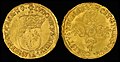 Coin design credit: Kingdom of France; photographed by the National Numismatic CollectionThe écu was a gold and silver coinage system introduced in France in 1266 by Louis IX, so called because the coins featured the French coat of arms. The silver coin proved popular but the gold did not, because of the unrealistic ratio of 1:10 used, which did not properly reflect the metals' exchange rate. The écu remained in use for 500 years. Depicted here are two écu coins, the first made of gold and minted in 1641, in the reign of Louis XIII, and the second made of silver and minted in 1784, in the reign of Louis XVI. Between these two dates, exchange rates were unstable, new coins were issued, and existing ones revalued periodically.
 -
 Saint George Palace is an historic building in the city of Rennes, France. Built in 1670, it was used as an abbey residence, replacing a much older abbey building that stood on the same site. During the French Revolution the abbey was closed and the property was seized by the government. Since 1930 the building has been listed as a monument historique of France. It now houses the fire services for the city and other civil administrative offices.
 -
 Artist: Unknown; Restoration: Lise BroerA schematic depiction of the first successful frameless parachute, invented by André-Jacques Garnerin (1769–1823). On October 22, 1797, Garnerin rode in a basket hanging from the parachute, which was attached to the bottom of a hot air balloon (centre). At a height of approximately 3,000 feet (910 m), he severed the rope that connected his parachute to the balloon. The basket swung during descent, then bumped and scraped when it landed, but Garnerin emerged uninjured.
 -
 Les raboteurs de parquet (The Floor Scrapers) is an 1875 oil on canvas painting by French impressionist Gustave Caillebotte. Measuring 102 by 146.5 centimetres (40 in × 57.7 in), it depicts three men scraping the floor of what is thought to be Caillebotte's own studio, apparently engaged in conversation. According to the Musée d'Orsay, where the painting is held, this is one of the first paintings to feature the urban working class, and indeed the subject matter proved scandalous at the time.
 -
 Self-Portrait with Halo and Snake is an 1889 oil on wood painting by French artist Paul Gauguin, which represents his late Brittany period in the fishing village of Le Pouldu in northwestern France. It shows Gauguin against a red background with a halo above his head and apples hanging beside him as he holds a snake in his hand while plants or flowers appear in the foreground. The religious symbolism and the stylistic influence of Japanese wood-block prints and cloisonnism are apparent. The work is one of more than 40 self-portraits he completed. It is held at the National Gallery of Art in Washington, D.C.
 -
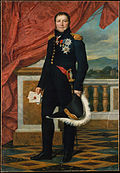 Painting credit: Jacques-Louis DavidÉtienne Maurice Gérard (4 April 1773 – 17 April 1852) was a French general, statesman and marshal of France. He served under a succession of French governments, including the monarchy of the Ancien Régime, the First Republic, the First Empire, the Bourbon Restoration, the July Monarchy, the Second Republic, and arguably the Second Empire, becoming prime minister briefly in 1834. This 1816 portrait of Gérard by Jacques-Louis David is in the collection of the Metropolitan Museum of Art in New York City.
 -
 Map credit: Louis Bretez and Claude LucasThe Turgot map of Paris is a highly accurate and detailed map of the city of Paris, France, as it existed in the 1730s. It was published in 1739 as an atlas of twenty non-overlapping sectional bird's-eye-view maps, each approximately 50 cm × 80 cm (20 in × 31 in), in isometric perspective toward the southeast, as well as one simplified overview map with a four-by-five grid showing the layout of the twenty sectional maps. It has been described as "the first all-comprising graphical inventory of the capital, down to the last orchard and tree, detailing every house and naming even the most modest cul-de-sac". The complete map is shown here in its assembled form.
Other sheets:
'"`UNIQ--templatestyles-00000031-QINU`"' -
 Photo: JebulonAn écorché (flayed figure) of a horseman and his horse, prepared by anatomist Honoré Fragonard and on display at the Musée Fragonard d'Alfort in Paris. Fragonard was the first professor of anatomy at the École nationale vétérinaire d'Alfort (National Veterinary School of Alfort) and prepared thousands of anatomical pieces. In 1771, after six years of teaching, he was dismissed from his post for being a "madman".
 -
 Photo credit: David IliffChamp de Mars (Paris, France), as seen from the observation deck of the Eiffel Tower. In the distance is Tour Montparnasse and the dome on the left is Les Invalides. The École Militaire is at the end of the Champ de Mars. In English the name means "Field of Mars", from Mars the Roman god of war, from its original use for military training. During the French Revolution, the Champ de Mars was the setting of the Fête de la Fédération, on 14 July 1790.
 -
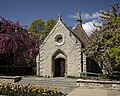 Photograph credit: Leroy SkalstadThe 15th-century St. Joan of Arc Chapel was initially built in the village of Chasse-sur-Rhône, France. Originally called the Chapelle de St. Martin de Seyssuel, it is said to have been the place at which Joan of Arc prayed in 1429 after she had met King Charles VII of France. The present name was given to the chapel when Gertrude Hill Gavin, the daughter of an American railroad magnate, had the derelict building dismantled, transported to America and rebuilt beside her French Renaissance–style château in Brookville, New York, in 1927. The chapel was undamaged when the château burned down in 1962, and was later given to Marquette University in Milwaukee, Wisconsin, once more being transported stone by stone.
 -
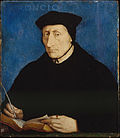 Painting credit: Jean ClouetGuillaume Budé (26 January 1467 – 23 August 1540) was a French scholar and humanist. He was involved in the founding of Collegium Trilingue, which later became the Collège de France. Budé was also the first keeper of the royal library at the Palace of Fontainebleau, which was later moved to Paris, where it became the Bibliothèque nationale de France. He was an ambassador to Rome and held several important judicial and civil administrative posts.
This picture is an oil-on-panel portrait of Budé, produced around 1536 by Jean Clouet, a painter at the court of King Francis I of France. He was a very skilful painter and many fine portraits are attributed to him, but his picture of Budé is his only documented work, being mentioned in Budé's handwritten notes. The painting is now held by the Metropolitan Museum of Art in New York City. -
 Photograph credit: Atelier Nadar; restored by Adam CuerdenGeorges Ernest Boulanger (29 April 1837 – 30 September 1891), nicknamed Général Revanche, was a French general and politician. An enormously popular public figure during the Third Republic, he won a series of elections and was feared to be powerful enough to establish himself as dictator at the zenith of his popularity in January 1889. This photograph of Boulanger was produced by the atelier of the French photographer Nadar.
 -
 Painting credit: Jules Joseph LefebvreGraziella is an 1852 novel by the French author Alphonse de Lamartine. It tells of a young French man who falls in love with the eponymous character, a fisherman's granddaughter, during a trip to Naples, Italy; they are separated when he must return to France, and Graziella dies soon afterwards. The novel received popular acclaim; an operatic adaptation had been completed by the end of the year, and the work influenced paintings, poems, novels, and films. This 1878 oil-on-canvas painting by the French artist Jules Joseph Lefebvre shows Graziella sitting on a rock, fishing net in hand, gazing over her shoulder at a smoking Mount Vesuvius in the distance. The painting is now in the collection of the Metropolitan Museum of Art in New York.
 -
 Lithograph credit: Jean-Baptiste Singry; restored by Adam CuerdenJoséphine Fodor (13 October 1789 or in 1793 – 10 August 1870) was a French lyrical artist (soprano) with Hungarian and Dutch ancestors. Her family moved to Saint Petersburg when she was an infant, probably because of the French Revolution. After marrying in 1812, Fodor and her husband moved back to France when Saint Petersburg came under attack during the French invasion of Russia. She performed roles for the Opéra-Comique in Paris, later being engaged by the Comédie-Italienne, and also appeared in London, Venice, Naples and Vienna. Experiencing problems with her voice, she gradually ended her operatic career and withdrew from the stage. This lithograph depicts her in 1815.

.jpg)


In the news

- 20 February 2026 –
- The French agriculture ministry authorizes the culling of around 200 wolves, raising the annual removal limit to 21% of the estimated population of over 1,000 animals, with a possible increase to 23%, citing rising livestock losses as wolf numbers expand into agricultural areas and regions near major cities. (Reuters)
- 17 February 2026 – Killing of Quentin Deranque
- French police arrest nine people, including an aide to legislator Raphaël Arnault, in connection with the fatal beating of Quentin Deranque during clashes between far-left and far-right groups in Lyon last week. (AFP and Reuters via Al Jazeera)
- 14 February 2026 – Death and funeral of Alexei Navalny
- France, Germany, the Netherlands, Sweden, and the United Kingdom assess that Russian opposition leader Alexei Navalny died in prison after being poisoned by epibatidine, a neurotoxin found in South American poison dart frogs. (NBC News)
- 13 February 2026 –
- Three people, including two British tourists, are killed in an avalanche near Val-d'Isère, France. (BBC News)
Did you know –

- ...that 1911 journal Der yidisher arbeyter (The Jewish Worker) (pictured) was the first Yiddish labour journal published in France?
- ...that the French Dictionary of Greek and Roman Antiquities took almost 50 years to complete from A to Z?
- ...that the French physician and agronomist Jules Guyot revolutionized the training of grape vines, and the Guyot-system is extensively used throughout vineyards in Europe?
Topics
-
Main Category - France, List of basic France topics
- Historic Periods - Prehistoric France - Celtic Gaul - Roman Gaul - Frankish Empire - Medieval France - Early Modern France - Nineteenth century France - Twentieth century France
- Major Events - Hundred Years' War - French Renaissance - Wars of Religion - French Revolution - Franco-Prussian War - Dreyfus Affair - World War I - World War II - Vichy France - Algerian War - Military history
- Dynasties and Regimes - Merovingians - Carolingians - Capetian Dynasty - Valois Dynasty - Bourbon Dynasty - Ancien Régime in France - First Empire - Second Empire - Third Republic - Fourth Republic - Fifth Republic
- Monarchs of France - List of French monarchs - Charlemagne - Louis I the Pious - Charles II the Bald - Louis II the Stammerer - Louis III - Carloman - Charles III the Fat - Eudes (Odo) - Charles III the Simple - Robert I - Raoul (Rudolph) of Burgundy - Louis IV d'outremer - Lothair - Louis V the Indolent - Hugh Capet - Robert II the Pious - Henri I - Philippe I - Louis VI the Fat - Louis VII the Young - Philippe II Augustus - Louis VIII the Lion - Louis IX Saint Louis - Philippe III the Bold - Philippe IV the Fair - Louis X the Quarreller - Jean I the Posthumous - Philippe V the Tall - Charles IV the Fair - Philip VI of Valois - Jean II the Good - Charles V - Charles VI - Charles VII - Louis XI - Charles VIII - Louis XII - François I - Henri II - François II - Charles IX - Henri III - Henri IV - Louis XIII - Louis XIV - Louis XV - Louis XVI - Napoleon I - Napoleon II - Louis XVIII - Charles X - Louis-Philippe - Napoleon III
- Other Major Historical Figures - Catherine de Medicis - Cardinal Richelieu - Mazarin - Jean-Baptiste Colbert - Jacques Necker - Jean Jaurès
- Heads of State of France since 1871 - President of the French Republic
- Third Republic: Adolphe Thiers • Patrice MacMahon, duc de Magenta • Jules Grévy • Marie François Sadi Carnot • Jean Casimir-Perier • Félix Faure • Émile Loubet • Armand Fallières • Raymond Poincaré • Paul Deschanel • Alexandre Millerand • Gaston Doumergue • Paul Doumer • Albert Lebrun
- Vichy France: Philippe Pétain
- Free France: Charles de Gaulle
- Provisional Government: Charles de Gaulle • Félix Gouin • Georges Bidault • Léon Blum
- Fourth Republic: Vincent Auriol • René Coty
- Fifth Republic: Charles de Gaulle • Georges Pompidou • Valéry Giscard d'Estaing • François Mitterrand • Jacques Chirac • Nicolas Sarkozy • François Hollande • Emmanuel Macron
- Heads of Government of France since 1871 - Prime Minister of France
- Third Republic: Dufaure • de Broglie • de Cissey • Buffet • Dufaure • Simon • de Broglie • de Rochebouët • Dufaure • Waddington • de Freycinet • Ferry • Gambetta • de Freycinet • Duclerc • Fallières • Ferry • Brisson • de Freycinet • Goblet • Rouvier • Tirard • Floquet • Tirard • de Freycinet • Loubet • Ribot • Dupuy • Casimir-Perier • Dupuy • Ribot • Bourgeois • Méline • Brisson • Dupuy • Waldeck-Rousseau • Combes • Rouvier • Sarrien • Clemenceau • Briand • Monis • Caillaux • Poincaré • Briand • Barthou • Doumergue • Ribot • Viviani • Briand • Ribot • Painlevé • Clemenceau • Millerand • Leygues • Briand • Poincaré • François-Marsal • Herriot • Painlevé • Briand • Herriot • Poincaré • Briand • Tardieu • Chautemps • Tardieu • Steeg • Laval • Tardieu • Herriot • Paul-Boncour • Daladier • Sarraut • Chautemps • Daladier • Doumergue • Flandin • Bouisson • Laval • Sarraut • Blum • Chautemps • Blum • Daladier • Reynaud • Pétain
- Vichy France: Pétain • Laval
- Provisional Government: de Gaulle • Gouin • Bidault • Blum
- Fourth Republic: Ramadier • Schuman • Marie • Schuman • Queuille • Bidault • Queuille • Pleven • Queuille • Pleven • Faure • Pinay • Mayer • Laniel • Mendès-France • Faure • Mollet • Bourgès-Maunoury • Gaillard • Pflimlin • de Gaulle
- Fifth Republic: Debré • Pompidou • Couve de Murville • Chaban-Delmas • Messmer • Chirac • Barre • Mauroy • Fabius • Chirac • Rocard • Cresson • Bérégovoy • Balladur • Juppé • Jospin • Raffarin • de Villepin • Fillon • Ayrault • Valls • Cazeneuve • Philippe • Castex
- Third Republic: Dufaure • de Broglie • de Cissey • Buffet • Dufaure • Simon • de Broglie • de Rochebouët • Dufaure • Waddington • de Freycinet • Ferry • Gambetta • de Freycinet • Duclerc • Fallières • Ferry • Brisson • de Freycinet • Goblet • Rouvier • Tirard • Floquet • Tirard • de Freycinet • Loubet • Ribot • Dupuy • Casimir-Perier • Dupuy • Ribot • Bourgeois • Méline • Brisson • Dupuy • Waldeck-Rousseau • Combes • Rouvier • Sarrien • Clemenceau • Briand • Monis • Caillaux • Poincaré • Briand • Barthou • Doumergue • Ribot • Viviani • Briand • Ribot • Painlevé • Clemenceau • Millerand • Leygues • Briand • Poincaré • François-Marsal • Herriot • Painlevé • Briand • Herriot • Poincaré • Briand • Tardieu • Chautemps • Tardieu • Steeg • Laval • Tardieu • Herriot • Paul-Boncour • Daladier • Sarraut • Chautemps • Daladier • Doumergue • Flandin • Bouisson • Laval • Sarraut • Blum • Chautemps • Blum • Daladier • Reynaud • Pétain
- Historic periods: French Renaissance - French Baroque and Classicism - French Rococo and Neoclassicism - French art of the 19th century - French art of the 20th century
- Artistic Schools: Impressionism - Cubism - Surrealism
- Art museums and galleries: Louvre - Palace of Versailles - Musée d'Orsay - Centre Georges Pompidou - Musée Picasso - Musée Rodin
- Historic periods: Medieval French literature - French Renaissance literature - French literature of the 17th century - French literature of the 18th century - French literature of the 19th century - French literature of the 20th century
- Football (Soccer): French football clubs - French footballers - Football in France
- Rugby (union): Clubs in France - French rugbymen - Rugby union in France
- Tennis: French Open
- Cycling: Tour de France
- Motorsport: 24 Hours of Le Mans - French Grand Prix
- Ski resorts: Chamonix - Tignes - Val Thorens - Les Trois Vallées - La Plagne - Les Arcs - Courchevel - Méribel - Val d'Isère - Les Deux Alpes - Megève
History of France - History of France
Culture and People - Culture of France - Culture of France - Museums in France - French people - Health in France - Education in France - Education in France - Religion in France - Languages of France - Languages of France - French language - French cuisine - French cuisine - French wine - Archaeology of France - Basque culture - Culture of Brittany
Politics and Government - Government of France - Government of France - French National Assembly - French Senate - Law of France - French politics - Politics of France - Military of France - Foreign relations of France - Flags of France
Economy, Industry and Media - Economy of France - Economy of France - Economic history of France - French businesspeople - Companies of France - French trade unions - Communications in France - Mass media in France - French space program - French airlines
Visual and Plastic Arts - French art - French artists - French architecture - French art
Literature - French literature - French writers - French literature - French poetry
Music - French music - French composers - French musicians - Music of France - French folk music - French rock - French hip hop and rap
Cinema - Cinema of France - Cinema of France - French actors - French film directors - French film producers - César Award winners - Cannes Film Festival
Theater - French theatre - French dramatists and playwrights - Theatres in France - Avignon Festival - Comédie française
Sports- Sport in France - French sportspeople - France at the Olympics -
Geographic topics
-
Main Category - France
- Coastlines: Atlantic Ocean - Bay of Biscay ("Golfe de Gascogne") – Mediterranean Sea (Golfe du Lion) - Côte d'Azur ("French Riviera") – English Channel
- Islands: Belle Île – Corsica – Île d'Oléron – Ouessant – Île de Ré – Île d'Yeu - Réunion - Martinique - Guadeloupe - Saint Barthélemy - Saint Martin - Saint Pierre and Miquelon
- Rivers and streams:
- Major rivers: Loire – Rhine – Rhône – Seine – Garonne - Gironde estuary - Dordogne – Meuse – Escaut – Saône – Marne – Moselle
- Other rivers: Adour – Charente - Aulne – Blavet – Erdre – Hérault – Odet – Orb – Orne – Rance – Sèvre Nantaise – Sèvre Niortaise – Var - Aisne – Allier – Ariège – Aube – Cher – Doubs – Durance – Indre – Ill – Isère – Lot – Maine – Mayenne – Meurthe – Oise - Somme - Tarn – Verdon – Vienne – Vire – Yonne
- Canals: Canal du Midi – Canal de Nantes à Brest – Canal Saint-Martin – Briare Canal – Canal of Burgundy – Grand Canal d'Alsace – Sambre–Oise Canal
- Lakes: Lake Annecy – Lac du Bourget – Lake Geneva (Lac Léman) – Étang de Thau – Étang de Berre
- Mountains:
- Major Mountain ranges: Alps – French Prealps – Pyrénées – Massif Central – Jura – Vosges
- Other Mountain ranges: Aravis Range – Bauges – Belledonne – Chartreuse Mountains – Massif des Écrins – Vercors
- Mountain peaks: Mont Blanc – Aiguille du Midi – Barre des Écrins – Ballon d'Alsace – Crêt de la Neige – Grandes Jorasses – Meije – Mont Aigoual – Mont Ventoux – Pic du Midi - Mont Pelvoux – Puy de Dôme – Puy de Sancy
- Forests: Forest of Fontainebleau – Forest of Compiègne – Paimpont forest – Forest of Saint-Germain-en-Laye
- National parks and natural regions: Cévennes National Park – Écrins National Park – Mercantour National Park – Port-Cros National Park – Pyrénées National Park – Vanoise National Park – Boulonnais – Bresse – Beaujolais – Camargue – Pays de Bray – Sundgau – Vexin
- Major cities: Paris (Paris) – Marseille – Lyon – Lille – Toulouse – Nice – Nantes – Strasbourg – Montpellier – Bordeaux – Rennes – Douai – Le Havre – Reims – Lens – Saint-Étienne – Toulon – Grenoble – Angers – Brest – Le Mans – Dijon – Clermont-Ferrand – Aix-en-Provence – Amiens – Nîmes – Tours – Limoges – Metz – Besançon – Caen – Orléans - Mulhouse – Perpignan - Boulogne-Billancourt – Rouen – Dunkirk – Nancy – Villeneuve-d'Ascq – Saint-Denis, Réunion
- Other: Gardens in France - Cemeteries in France - Transport in France - Tourism in France - Nature conservation in France
- Ski resorts: Chamonix - Tignes - Val Thorens - Les Trois Vallées - La Plagne - Les Arcs - Courchevel - Méribel - Val-d'Isère - Les Deux Alpes - Megève
Geography - Geography of France - Geography of France - Regions of France - Provinces of France - Subdivisions of France - Subdivisions of France - Overseas France

Categories

Related portals


Things you can do

French Wikipedia
 |
There is a French version of Wikipedia, the free encyclopedia. |
Wikiproject
| Project pages | |
|---|---|
| Departments | |
| Announcements | |

Associated Wikimedia
The following Wikimedia Foundation sister projects provide more on this subject:
-
 Commons
Free media repository -
 Wikibooks
Free textbooks and manuals -
 Wikidata
Free knowledge base -
 Wikinews
Free-content news -
 Wikiquote
Collection of quotations -
 Wikisource
Free-content library -
 Wikiversity
Free learning tools -
 Wikivoyage
Free travel guide -
 Wiktionary
Dictionary and thesaurus
More portals


Parent portals: Europe | European Union