



Pedro Carmona
Pedro Carmona | |
|---|---|
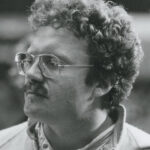
 Carmona in 2002 | |
| Acting President of Venezuela | |
| In office 12 April 2002 – 13 April 2002 | |
| Vice President | Diosdado Cabello |
| Preceded by | Hugo Chávez |
| Succeeded by | Diosdado Cabello (acting) |
| President of Fedecámaras | |
| In office July 28, 2001 – April 11, 2002 | |
| Preceded by | Vicente Brito |
| Succeeded by | Carlos Fernández Pérez |
| Personal details | |
| Born | Pedro Francisco Carmona Estanga 6 July 1941 Barquisimeto, Lara, Venezuela |
| Alma mater | Universidad Católica Andrés Bello |
| Profession | Business |
Pedro Francisco Carmona Estanga (born 6 July 1941) is a Venezuelan politician, economist, and businessman. He was president of the business federation Fedecámaras and served as de facto President of Venezuela for 47 hours following the 2002 coup attempt. [1][2]
Academic Background and Business Career
Carmona was born in Barquisimeto, Lara State, on 6 July 1941. He graduated in 1964 from the Andrés Bello Catholic University in Economics and did postgraduate studies at the Free University of Brussels.
He was elected president of Fedecámaras in July 2001 for the 2001-2003 term. Previously, he had held various public and private positions, notably as a director of private petrochemical companies, including Aditivos Orinoco (1989-1993), Química Venoco (1989-2000), Industrias Venoco (1990-2000), and Promotora Venoco (2001).
He served on the board of directors of the renowned Institute of Advanced Studies in Business Administration (IESA), the Andean Development Corporation (CAF), the Foreign Trade Institute (ICE), and the Latin American and Caribbean Economic System (SELA). He wrote opinion pieces for the Caracas newspaper El Universal, clearly expressing his anti-Chávez stance. He received important Latin American decorations: the Order of the Sun of Peru, the National Order of Merit of Colombia, and the Bernardo O'Higgins Order of Chile.
2002 Coup attempt and Presidency

The early part of 2002 saw mass protests and a general strike by opponents of Hugo Chávez. On 11 April 2002, following clashes between both supporters and opponents of Chávez, Lucas Rincón, commander-in-chief of the Venezuelan Armed Forces, announced in a nationwide broadcast that Chávez had tendered his resignation from the presidency.[3] While Chávez was brought to a military base and held there, military leaders appointed Carmona as the transitional President of Venezuela.[4]
In the face of crowds of Chávez supporters taking to the streets and under pressure from some quarters of the military,[5] Chávez was restored to office. During Carmona's 36-hour government, military officers held Chávez and attempted to force his exile. Additionally, security forces conducted raids without warrants and took some Chávez supporters into custody illegally, including National Assembly deputy Tarek William Saab, a member of the Chávez-aligned MVR, who was taken into protective custody by security forces after a large crowd had gathered around his home, threatening him and his family. He was held incommunicado for several hours.[6]
After the coup, Carmona was arrested by the military police and taken to Fort Tiuna, then placed under house arrest, from which he escaped, taking refuge in the Colombian embassy, which later granted him asylum. Carmona's subsequent stay in Colombia under asylum has contributed to maintaining a certain degree of tension between the two countries. The issue is mentioned more in Venezuelan domestic politics and in the media of both countries than in official diplomatic circles.[7]
See also

References
- ^ Venezuelan coup leader given asylum - BBC News, 27 May 2002
- ^ En imágenes: el "día negro" de Chávez BBC Mundo, 12 April 2002
- ^ "Nuevo gobierno en Venezuela" (in Spanish). BBC. 12 April 2002. Retrieved 23 February 2008.
Tras los incidentes entre opositores y partidarios de Chávez, en medio de disparos de francotiradores y de una "cadena" nacional de radio y televisión en la que Chávez aseguraba que el país estaba en paz, Molina Tamayo exigió públicamente a la FAN actuar y derrocar al gobierno.
- ^ ww.pgs.org. URL last accessed October 29, 2006.
- ^ news.bbc.co.uk: Analysis: After the would-be coup. URL last accessed October 29, 2006.
- ^ United States Department. Country Reports on Human Rights Practices - 2002; released by the Bureau of Democracy, Human Rights, and Labor. Dated: March 31, 2003. URL last accessed August 13, 2006.
 This article incorporates text from this source, which is in the public domain.
- ^ Kozloff (2007:30)
External links
- BBC: Venezuelan coup leader given asylum
- CBS: Venezuelan Coup Leader Exits
- Latin Business Chronicle: Pedro Carmona: Actions, Not Words
- BBC Mundo: Pedro Carmona, presidente por un día (in Spanish)
- Venezuela's Attorney General Office requests formal charges of civilian rebellion against Pedro Carmona Estanga
| International | |
|---|---|
| National | |
| Other | |
