




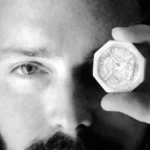
Lynne M. Reder
Lynne M. Reder | |
|---|---|
| Born | December 28, 1950 |
| Citizenship | United States |
| Alma mater | Stanford University, University of Michigan |
| Known for | Studies of human memory Source of activation confusion model |
| Spouse | John R. Anderson |
| Scientific career | |
| Fields | Cognitive psychology |
| Institutions | Carnegie Mellon University |
| Thesis | The Role Of Elaborations In The Processing Of Prose (1976) |
| Doctoral advisor | Robert A. Bjork, James Greeno |
| Other academic advisors | John R. Anderson |
| Doctoral students | Rachel Diana, Davida Charney, Christian Schunn, Christopher Paynter, Xiaonan Liu, Eileen Kamas, Vencislav Popov, Adisack Nhouyvanisvong |
Lynne M. Reder is an American psychologist whose research contributed to our understanding of human memory.[1]
Career
Reder received her undergraduate degree in Psychology at Stanford University in 1972, graduating as a member of Phi Beta Kappa. In 1976, she earned her PhD in Psychology from the University of Michigan. After a two-year NIMH post-doctoral fellowship at Yale University (1976 to 1978), she joined the faculty at Carnegie Mellon University and retired as full professor (Emerita) in 2021.
Her contributions to psychological science and experimental psychology have been recognized through multiple honors and elected positions:
- 1999: Elected Fellow, American Psychological Association (APA), Division 3
- 2001: Elected Fellow, American Association for Advancement of Science (AAAS)
- 2005: Elected Fellow, Association for Psychological Science (APS)
- 2007: Elected to the Society of Experimental Psychologists
- 2010: Elected to the Memory Disorders Research Society (MDRS)
- 2011 - 2016: Elected to the Governing Board of The Psychonomic Society
- 2013 - 2017: Elected Member at Large, Section J, American Association for the Advancement of Science (AAAS)
Selected research and publications
Role of Elaborations and Summaries in Memory Retention
Reder's early work explored the effects of elaborations and summaries on learning. She found that people often learned more from summaries than original texts[2] and that self-generated elaborations improve retention better than elaborations provided by the author[3][4]
- Reder, Lynne M (1979-04-01). "The role of elaborations in memory for prose". Cognitive Psychology. 11 (2): 221–234. doi:10.1016/0010-0285(79)90010-0. ISSN 0010-0285.
- Reder, Lynne M. (1980). "The Role of Elaboration in the Comprehension and Retention of Prose: A Critical Review". Review of Educational Research. 50 (1): 5–53. doi:10.3102/00346543050001005. ISSN 0034-6543. JSTOR 1170029.
Strategy Selection and Question Answering
Reder showed that people do not default to direct retrieval when attempting to answer a question but rather dynamically choose strategies based on intrinsic question features (e.g., feeling of knowing,[5] partial matching[6]) and base rates of success.[7]
- Reder, Lynne M. (1982). "Plausibility judgments versus fact retrieval: Alternative strategies for sentence verification". Psychological Review. 89 (3): 250–280. doi:10.1037/0033-295X.89.3.250.
- Reder, Lynne M (1987-01-01). "Strategy selection in question answering". Cognitive Psychology. 19 (1): 90–138. doi:10.1016/0010-0285(87)90005-3. ISSN 0010-0285.
Source of Activation Confusion (SAC) Model of Memory
Reder developed the Source of Activation Confusion (SAC) model, which uses activation-based principles to explain diverse phenomena, including the misinformation effect, contextual fan effects,[8] recognition memory (Remember/Know judgments),[9] and age-related memory differences.[10]
- Ayers, Michael S.; Reder, Lynne M. (1998-03-01). "A theoretical review of the misinformation effect: Predictions from an activation-based memory model". Psychonomic Bulletin & Review. 5 (1): 1–21. doi:10.3758/BF03209454. ISSN 1531-5320.
- Reder, Lynne M.; Nhouyvanisvong, Adisack; Schunn, Christian D.; Ayers, Michael S.; Angstadt, Paige; Hiraki, Kazuo (2000). "A mechanistic account of the mirror effect for word frequency: A computational model of remember–know judgments in a continuous recognition paradigm". Journal of Experimental Psychology: Learning, Memory, and Cognition. 26 (2): 294–320. doi:10.1037/0278-7393.26.2.294. ISSN 1939-1285. PMID 10764098. Archived from the original on 2024-04-18.
Role of Hippocampus in Memory
Reder showed that both implicit and explicit memory tasks can rely on the hippocampus, depending on whether the task requires the formation of new associations.
- Reder, Lynne M.; Park, Heekyeong; Kieffaber, Paul D. (2009). "Memory systems do not divide on consciousness: Reinterpreting memory in terms of activation and binding". Psychological Bulletin. 135 (1): 23–49. doi:10.1037/a0013974. ISSN 1939-1455. PMC 2747326. PMID 19210052.
- Park, Heekyeong; Quinlan, Joseph; Thornton, Edward; Reder, Lynne M. (2004-12-21). "The effect of midazolam on visual search: Implications for understanding amnesia". Proceedings of the National Academy of Sciences. 101 (51): 17879–17883. Bibcode:2004PNAS..10117879P. doi:10.1073/pnas.0408075101. PMC 535584. PMID 15596721.
Working Memory and Cognitive Resources
Reder’s contributions to working memory include the development of the Modified Digit Span (MODS) task,[11] which predicts cognitive performance across domains. She expanded her SAC model to incorporate the role of working memory in knowledge construction, emphasizing resource limitations in memory processes showing that resources are consumed/depleted as an inverse function of chunk familiarity and rate of replenishment depends on the rate of input and familiarity of the information to be processed.
- Reder, Lynne M.; Liu, Xiaonan L.; Keinath, Alexander; Popov, Vencislav (2016-02-01). "Building knowledge requires bricks, not sand: The critical role of familiar constituents in learning". Psychonomic Bulletin & Review. 23 (1): 271–277. doi:10.3758/s13423-015-0889-1. ISSN 1531-5320. PMID 26139355.
- Popov, Vencislav; Reder, Lynne M. (2021). "Frequency effects on memory: A resource-limited theory". Psychological Review. 127 (1): 1–46. doi:10.1037/rev0000161. ISSN 1939-1471. PMID 31524424.
Legacy
Lynne Reder's pioneering work on elaboration, strategy selection, and memory models continues to inform theoretical frameworks and practical applications.
References
- ^ "Memory Lab Carnegie Mellon University". Carnegie Mellon University. Retrieved 2025-10-15.
- ^ Reder, L.M.; Anderson, J.R. (1980). "A comparison of texts and their summaries: Memorial consequences. Journal of Verbal Learning and Verbal Behavior". Journal of Verbal Learning and Verbal Behavior. 19: 121–134.
- ^ Reder, L.M. (1982). "Elaborations: When do they help and when do they hurt?". De Gruyter Brill. 2: 211–224.
- ^ Reder, L.M. (1985). "Techniques available to author, teacher and reader to improve retention of main ideas of a chapter". In Chipman, S.; Segal, J.; Glazer, R. (eds.). Thinking and learning skills: Current research and open questions, Vol 2. Hillsdale, NJ: Lawrence Erlbaum Associates. pp. 37–64.
- ^ Reder, L.M.; Ritter, F. (1992). "What determines initial feeling of knowing? Familiarity with question terms, not with the answer". Journal of Experimental Psychology: Learning, Memory, Cognition. 18: 435–451.
- ^ Reder, L.M. (1991). "Locus of the Moses illusion: Imperfect encoding, retrieval or match?". Journal of Memory and Language. 30: 385–406.
- ^ Reder, L.M. (1988). "Strategic control of retrieval strategies". In Bower, G. (ed.). The Psychology of Learning and Motivation, Vol. 22. New York: Academic Press. pp. 227–259.
- ^ Reder, L.M.; Donavos, D.K.; Erickson, M.A. (2002). "Perceptual match effects in direct tests of memory: The role of contextual fan". Memory & Cognition. 30(2): 312–323.
- ^ Reder, L.M.; Nhouyvansivong, A.; Schunn, C.D.; Ayers, M.S.; Angstadt, P.; Hiraki, K. (2000). "A mechanistic account of the mirror effect for word frequency: A computational model of remember/know judgments in a continuous recognition paradigm". Journal of Experimental Psychology: Learning, Memory, & Cognition. 26(2): 294–320.
- ^ Buchler, N.E.G.; Reder, L.M. (2007). "Modeling age-related memory deficits: A two-parameter solution". Psychology & Aging. 22(1): 104–121.
- ^ Lovett, M.C.; Reder, L.M.; Lebiere, C. (1999). "Modeling working memory in a unified architecture: An ACT-R perspective". Models of working memory: Mechanisms of active maintenance and executive control. Cambridge University Press. pp. 135–182.
