


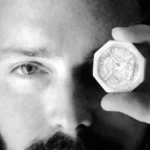


Lohengrin Filipello
Lohengrin Filipello | |
|---|---|
| Born | Lohengrin Umberto Gaetano Albino Filipello October 1912 Milan, Italy |
| Died | 19 June, 1981 (aged 69) Lugano, Switzerland |
| Occupations |
|
| Known for | Hosting the inaugural Eurovision Song Contest of 1956 |
| Spouse |
Claudina Clelia Laboranti
(m. 1941) |
| Children | 1 |
Lohengrin Filipello (October 1912 – 19 June 1981) was a Swiss-Italian journalist and television presenter who worked for Radiotelevisione svizzera (RSI). He is best known for presenting the inaugural Eurovision Song Contest in 1956 at his home city, Lugano.
Life
Personal life
Filipello was born in 1912 with parents Arnaldo Filipello and Margherita Mongillon in Milan, Italy.[1] At age 2, he and his family moved to Lugano, Switzerland, where he would continue to reside for the remainder of his life.[2] In February 1941, he married to Claudina Clelia Laboranti (born 1915)[3] and had a son.[4]
Career
In 1931, he received his teaching diploma[5] and later earned his teaching certificate in 1938. In that same year, he would become a journalist for Radiotelevisione svizzera (RSI), reporting then-current worldwide affairs. He would briefly continue to teach before ultimately switching to journalism completely in 1945.[2][4]
From 1947 to 1975, he was also a radio presenter, while occasionally hosting in television programs. He and Sergio Maspoli hosted the Swiss Solidarity's first broadcast in May 1947.[6][7]
A notable instance in his journalist career was in an interview with former Chinese Marshal Chen-Yi during his stay in Geneva, which was broadcast in Switzerland on 3 August, 1962.[8] Among the topics they discussed were the eventual Sino-Indian border dispute and war, Great Chinese Famine, relations between communist China and Taiwan, the future of China under its communist government, and the then-recent International Agreement on the Neutrality of Laos, which took place in Geneva.[8][9]
Eurovision Song Contest
In 1956, Filipello was chosen to host the first Eurovision Song Contest staged in Lugano, Switzerland.[10][11] He was the only male presenter to host the competition until Léon Zitrone was co-presenter in the 1978 contest. As of 2025, Filipello also has the distinction as the only man who has hosted the contest by himself.[12]
Retirement and death
Following his retirement from hosting in 1975, he dedicated himself to restructuring the RSI Library and Documentation.[4] At the end of 1979, he announced his retirement from his journalism and presenting career after nearly 40 years of contributing, but continued to appear in Swiss radio broadcasts.[13] On 18 June 1981, Filipello died at age 69 following a long period of being ill, shortly before appearing in Pomeriggio Feriale, a radio show he regularly hosted.[2][4]
See also
References
- ^ "Nella Svizzera Italiana con disponibilità ridotte e molto fegato Lohengrin Filipello ha iniziato il radiogiornalismo" [In Italian-speaking Switzerland, with limited resources and a lot of courage, Lohengrin Filipello began his career in radio journalism]. Illustrazione Ticinese (in Italian). 7 November 1976. p. 6. Retrieved 20 December 2025 – via Sistema bibliotecario ticinese.
- ^ a b c "E' morto Lohengrin Filipello: Aveva allargato i confini della nostra attulità" [Lohengrin Filipello has died: He had broadened the boundaries of our actuality]. Giornale del Popolo (in Italian). Giornale del Popolo. 20 June 1981. p. 4. Retrieved 8 August 2023 – via Sistema bibliotecario ticinese.
- ^ "Pubblicazióni matrimoniali Distretto di Lugano" [Marriage publications in the Lugano district]. Gazzetta Ticinese (in Italian). Lugano, Switzerland. 17 February 1941. p. 2. Retrieved 20 December 2025 – via Sistema bibliotecario ticinese.
- ^ a b c d "La mortedi Lohengrin Filipello" [The death of Lohengrin Filipello]. Libera Stampa (in Italian). Lugano, Switzerland. 20 June 1981. p. 2. Retrieved 20 December 2025 – via Sistema bibliotecario ticinese.
- ^ "Nuovi maestri" [New teachers]. Gazzetta Ticinese (in Italian). Lugano, Switzerland: Gazzetta Ticinese. 4 July 1931. p. 3. Retrieved 20 December 2025 – via Sistema bibliotecario ticinese.
- ^ Ricordi, Alex (26 September 2016). "La solidarietà fa 70 anni" [Solidarity turns 70 years old] (in Italian). Retrieved 4 November 2022 – via Radiotelevisione svizzera.
- ^ "Buon compleanno Catena" [Happy birthday Catena]. Swiss Telegraphic Agency (in Italian). Radiotelevisione svizzera. 26 September 2016. Retrieved 20 December 2025 – via Radiotelevisione svizzera.
- ^ a b "Die Stimme Pekings ertönte in Genf" [The voice of Beijing was heard in Geneva] (in German). Vol. 70, no. 180. Berner Tagwacht. 3 August 1962. p. 2. Retrieved 20 December 2025 – via E-newspaperarchives.ch.
- ^ "Tchen-Yi: Les USA ont fait un geste à Formose" [Chen-Yi: the USA made a gesture to Formose] (in French). Feuille d'avis de Lausanne. 2 August 1962. p. 4. Retrieved 20 December 2025 – via Scriptorium.
- ^ Biscossa, Giuseppe (26 May 1956). "A une romantica canzone della Svizzera francese il G. Premio Eurovisione 1956 della canzone europea" [A romantic song from French Switzerland was awarded the 1956 Eurovision Grand Prix for European song]. Giornale del Popolo (in Italian). Lugano, Switzerland. p. 2. ISSN 1660-9662. OCLC 173873718. Retrieved 20 December 2025.
- ^ "Lugano 1956". European Broadcasting Union (EBU). Archived from the original on 23 May 2022. Retrieved 20 December 2025.
- ^ O'Connor, John Kennedy (2007). The Eurovision Song Contest: The Official History. UK: Carlton Books. p. 72. ISBN 978-1-84442-994-3.
- ^ "È finita l'avventura di Lohengrin Filipello al microfono" [Lohengrin Filipello's adventure behind the microphone has come to an end]. Gazzetta Ticinese (in Italian). Gazzetta Ticinese. 7 March 1980. p. 11. Retrieved 20 December 2025 – via Sistema bibliotecario ticinese.
