






Ussama Makdisi
Ussama Makdisi | |
|---|---|
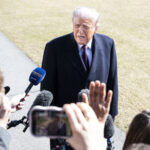
 Makdisi in 2025 | |
| Born | 1968 (age 57–58) Washington, D.C., U.S. |
| Education | Wesleyan University (BA) Princeton University (PhD) |
| Occupations |
|
| Awards | Berlin Prize (2018) |
Ussama Makdisi (born 1968) is an American historian specializing in the history of the modern Middle East. He is a professor of history at the University of California, Berkeley,[1] where he is also the Chancellor's Chair, May Ziadeh Chair in Palestinian and Arab Studies.[2]
Early life
Ussama Makdisi was born in 1968 in Washington, D.C., and is of Palestinian Christian and Lebanese Christian descent. He received a B.A. degree from Wesleyan University in 1990 and his Ph.D. in history from Princeton University in 1997.[3]
Academic career
Makdisi's research focuses on the cultural and political history of the Middle East, with emphasis on identity, sectarianism, nationalism, and modernity.[3] In 1997, he became the inaugural Arab-American Educational Foundation Chair of Arab Studies at Rice University in Houston, Texas. He has also served as a visiting professor at the American University of Beirut and the School of Oriental and African Studies (SOAS) in London.[4]
From 2012 to 2013, he was a resident fellow at the Berlin Institute for Advanced Study.[5] In 2018, he was awarded the Berlin Prize.[6]
Books
- Age of Coexistence: The Ecumenical Frame and the Making of the Modern Arab World (University of California Press, 2019)
- Faith Misplaced: the Broken Promise of U.S.-Arab Relations, 1820-2001 (Public Affairs, 2010)
- Artillery of Heaven: American Missionaries and the Failed Conversion of the Middle East (Cornell University Press, 2008)
- The Culture of Sectarianism: Community, History, and Violence in Nineteenth-Century Ottoman Lebanon (University of California Press, 2000)
- co-editor Memory and Violence in the Middle East and North Africa (Indiana University Press, 2006)
References
- ^ "Ussama Makdisi | Department of History".
- ^ "UC Berkeley launches one of the nation's few Palestinian-Arab studies programs amid demand". Los Angeles Times. 2024-09-10. Retrieved 2025-11-11.
- ^ a b "Wiko Recollections | Ussama Makdisi" (PDF). Wissenschaftskolleg zu Berlin. Retrieved 2024-06-14.
- ^ "Ussama Makdisi". Department of History. Retrieved 2024-06-14.
- ^ "Ussama Makdisi".
- ^ "American Academy in Berlin Announces 2017–18 Berlin Prize Recipients" (PDF). Archived from the original (PDF) on 2021-10-16.