



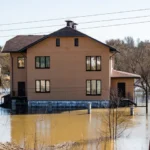

Ōhau
Ōhau | |
|---|---|
Rural settlement | |
 Interactive map of Ōhau | |
| Coordinates: 40°39′43″S 175°15′00″E / 40.662°S 175.250°E | |
| Country | New Zealand |
| Region | Manawatū-Whanganui region |
| Territorial authority | Horowhenua District |
| Wards |
|
| Electorates | |
| Government | |
| • Territorial Authority | Horowhenua District Council |
| • Regional council | Horizons Regional Council |
| • Horowhenua Mayor | Bernie Wanden[1] |
| • Ōtaki MP | Tim Costley[2] |
| • Te Tai Hauāuru MP | Debbie Ngarewa-Packer[3] |
| Area | |
• Total | 4.47 km2 (1.73 sq mi) |
| Population (June 2025)[5] | |
• Total | 810 |
| • Density | 180/km2 (470/sq mi) |

Ōhau is a village and semi-rural community in the Horowhenua District and Manawatū-Whanganui region of New Zealand's North Island.[6] It is located just south of Levin on State Highway 1.
The New Zealand Ministry for Culture and Heritage gives a translation of "place of Hau" for Ōhau, but an alternative meaning could be "windy place".[7]
The former Ohau railway station is located in Ōhau.[8] It operated from 1886 to 1987,[9] with most services ending in 1971.[10]
Marae
The local Kikopiri Marae and Kikopiri meeting house are a tribal meeting ground for the Ngāti Raukawa hapū of Ngāti Hikitanga and Ngāti Kikopiri.[11][12]
In October 2020, the Government committed $335,056 from the Provincial Growth Fund to upgrade Kikopiri Marae and Kererū Marae, creating 48 jobs.[13]
Demographics
Ōhau is described by Stats NZ as a rural settlement, which covers 4.47 km2 (1.73 sq mi).[4] It had an estimated population of 810 as of June 2025,[5] with a population density of 181 people per km2. It is part of the larger Ōhau-Manakau statistical area.[14]
| Year | Pop. | ±% p.a. |
|---|---|---|
| 2006 | 438 | — |
| 2013 | 543 | +3.12% |
| 2018 | 651 | +3.69% |
| 2023 | 771 | +3.44% |
| The 2006 population is for a larger area of 6.12 km2. Source: [15][16] | ||
Ōhau had a population of 771 in the 2023 New Zealand census, an increase of 120 people (18.4%) since the 2018 census, and an increase of 228 people (42.0%) since the 2013 census. There were 399 males, 363 females, and 6 people of other genders in 303 dwellings.[17] 2.7% of people identified as LGBTIQ+. The median age was 51.7 years (compared with 38.1 years nationally). There were 111 people (14.4%) aged under 15 years, 96 (12.5%) aged 15 to 29, 339 (44.0%) aged 30 to 64, and 222 (28.8%) aged 65 or older.[15]
People could identify as more than one ethnicity. The results were 90.7% European (Pākehā); 12.1% Māori; 3.9% Pasifika; 2.7% Asian; 0.4% Middle Eastern, Latin American and African New Zealanders (MELAA); and 1.9% other, which includes people giving their ethnicity as "New Zealander". English was spoken by 96.9%, Māori by 1.9%, Samoan by 1.9%, and other languages by 5.4%. No language could be spoken by 2.3% (e.g. too young to talk). New Zealand Sign Language was known by 0.4%. The percentage of people born overseas was 21.0, compared with 28.8% nationally.[15]
Religious affiliations were 34.6% Christian, 0.8% Buddhist, 0.4% New Age, 0.4% Jewish, and 0.4% other religions. People who answered that they had no religion were 54.9%, and 8.2% of people did not answer the census question.[15]
Of those at least 15 years old, 102 (15.5%) people had a bachelor's or higher degree, 399 (60.5%) had a post-high school certificate or diploma, and 156 (23.6%) people exclusively held high school qualifications. The median income was $34,800, compared with $41,500 nationally. 78 people (11.8%) earned over $100,000 compared to 12.1% nationally. The employment status of those at least 15 was 300 (45.5%) full-time, 102 (15.5%) part-time, and 9 (1.4%) unemployed.[15]
Ōhau-Manakau
Ōhau-Manakau statistical area, which includes Manakau, covers 41.75 km2 (16.12 sq mi)[18] and had an estimated population of 2,340 as of June 2025,[19] with a population density of 56.05 people per km2.
| Year | Pop. | ±% p.a. |
|---|---|---|
| 2006 | 1,791 | — |
| 2013 | 1,782 | −0.07% |
| 2018 | 2,049 | +2.83% |
| 2023 | 2,262 | +2.00% |
| The 2006 population is for a larger area of 42.23 km2. Source: [20][21] | ||
Ōhau-Manakau had a population of 2,262 in the 2023 New Zealand census, an increase of 213 people (10.4%) since the 2018 census, and an increase of 480 people (26.9%) since the 2013 census. There were 1,155 males, 1,101 females, and 9 people of other genders in 885 dwellings.[22] 2.9% of people identified as LGBTIQ+. The median age was 50.4 years (compared with 38.1 years nationally). There were 333 people (14.7%) aged under 15 years, 300 (13.3%) aged 15 to 29, 1,047 (46.3%) aged 30 to 64, and 582 (25.7%) aged 65 or older.[20]
People could identify as more than one ethnicity. The results were 84.5% European (Pākehā); 18.8% Māori; 4.9% Pasifika; 4.9% Asian; 0.5% Middle Eastern, Latin American and African New Zealanders (MELAA); and 2.5% other, which includes people giving their ethnicity as "New Zealander". English was spoken by 96.8%, Māori by 4.8%, Samoan by 0.8%, and other languages by 8.9%. No language could be spoken by 1.3% (e.g. too young to talk). New Zealand Sign Language was known by 0.4%. The percentage of people born overseas was 19.8, compared with 28.8% nationally.[20]
Religious affiliations were 29.8% Christian, 0.5% Hindu, 0.3% Māori religious beliefs, 0.7% Buddhist, 0.8% New Age, 0.1% Jewish, and 0.9% other religions. People who answered that they had no religion were 58.9%, and 8.1% of people did not answer the census question.[20]
Of those at least 15 years old, 315 (16.3%) people had a bachelor's or higher degree, 1,089 (56.5%) had a post-high school certificate or diploma, and 528 (27.4%) people exclusively held high school qualifications. The median income was $35,300, compared with $41,500 nationally. 210 people (10.9%) earned over $100,000 compared to 12.1% nationally. The employment status of those at least 15 was 933 (48.4%) full-time, 300 (15.6%) part-time, and 30 (1.6%) unemployed.[20]
Education
Ōhau School is a co-educational state primary school for Year 1 to 8 students,[23][24] with a roll of 152 as of October 2025.[25] It opened in 1891.[26]
References
- ^ "2025 Triennial Elections Declaration of Result" (PDF). Electionz. Retrieved 17 October 2025.
- ^ "Ōtaki – Official Result". Electoral Commission. Retrieved 9 January 2026.
- ^ "Te Tai Hauāuru - Official Result". Retrieved 20 April 2025.
- ^ a b "Stats NZ Geographic Data Service". Urban Rural 2023 (generalised). Retrieved 7 January 2026.
- ^ a b "Subnational population estimates - Aotearoa Data Explorer". Statistics New Zealand. Retrieved 29 October 2025.
- ^ "The good life beckons in idyllic Ohau". Stuff. Dominion Post.
- ^ "1000 Māori place names". New Zealand Ministry for Culture and Heritage. 6 August 2019.
- ^ New Zealand Railway and Tramway Atlas (First ed.). Quail Map Co. 1965. pp. 3 & 4.
- ^ Pierre, Bill (1981). North Island Main Trunk. Wellington: A.H&A.W Reed. pp. 289–290. ISBN 0589013165.
- ^ Scoble, Juliet (2012). Names & Opening & Closing Dates of Railway Stations in New Zealand, 1863 to 2012. Wellington: Rail Heritage Trust of New Zealand.
- ^ "Te Kāhui Māngai directory". tkm.govt.nz. Te Puni Kōkiri.
- ^ "Māori Maps". maorimaps.com. Te Potiki National Trust.
- ^ "Marae Announcements" (Excel). growregions.govt.nz. Provincial Growth Fund. 9 October 2020.
- ^ "Geographic Boundary Viewer". Stats NZ. Urban Rural – 2023 and Statistical Area 2 – 2023.
- ^ a b c d e "Totals by topic for individuals, (RC, TALB, UR, SA3, SA2, Ward, Health), 2013, 2018, and 2023 Censuses". Stats NZ – Tatauranga Aotearoa – Aotearoa Data Explorer. Ōhau (1380). Retrieved 3 October 2024.
- ^ "Statistical area 1 dataset for 2018 Census". Statistics New Zealand. March 2020. 7018999, 7019002–7019004 and 7019008.
- ^ "Totals by topic for dwellings, (RC, TALB, UR, SA3, SA2, Ward, Health), 2013, 2018, and 2023 Censuses". Stats NZ – Tatauranga Aotearoa – Aotearoa Data Explorer. Retrieved 3 October 2024.
- ^ "Stats NZ Geographic Data Service". Statistical Area 2 2023 (generalised). Retrieved 7 January 2026.
- ^ "Subnational population estimates - Aotearoa Data Explorer". Statistics New Zealand. Retrieved 29 October 2025.
- ^ a b c d e "Totals by topic for individuals, (RC, TALB, UR, SA3, SA2, Ward, Health), 2013, 2018, and 2023 Censuses". Stats NZ – Tatauranga Aotearoa – Aotearoa Data Explorer. Ōhau-Manakau (234801). Retrieved 3 October 2024.
- ^ "Statistical area 1 dataset for 2018 Census". Statistics New Zealand. March 2020. Ōhau-Manakau (234800). 2018 Census place summary: Ōhau-Manakau
- ^ "Totals by topic for dwellings, (RC, TALB, UR, SA3, SA2, Ward, Health), 2013, 2018, and 2023 Censuses". Stats NZ – Tatauranga Aotearoa – Aotearoa Data Explorer. Retrieved 3 October 2024.
- ^ "Official School Website". ohau.school.nz.
- ^ "Ministry of Education School Profile". educationcounts.govt.nz. Ministry of Education.
- ^ "Education Review Office Report". ero.govt.nz. Education Review Office.
- ^ Tuckey, Karoline (17 March 2016). "125 years of learning and fun at Ohau School". The Dominion Post.