





Park Chan-wook
Park Chan-wook | |
|---|---|
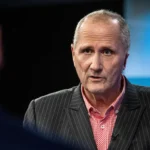
 Park in 2025 | |
| Born | 23 August 1963 Seoul, South Korea |
| Other names | Bakridamae (박리다매) |
| Alma mater | Sogang University, Seoul, South Korea |
| Occupations |
|
| Years active | 1988–present |
| Works | |
| Spouse |
Kim Eun-hee (m. 1990) |
| Children | 1 |
| Relatives |
|
| Awards | Full list |
| Honours | _ribbon.PNG) Bogwan Order of Cultural Merit (2002) Bogwan Order of Cultural Merit (2002)_ribbon.PNG) Eun-gwan Order of Cultural Merit (2022) Eun-gwan Order of Cultural Merit (2022) |
| Korean name | |
| Hangul | 박찬욱 |
| Hanja | 朴贊郁 |
| RR | Bak Chanuk |
| MR | Pak Ch'anuk |
Park Chan-wook (Korean: 박찬욱; pronounced [pak̚ tɕʰanuk̚]; born 23 August 1963) is a South Korean filmmaker and former film critic. Widely regarded as a leading figure in South Korean and 21st-century world cinema,[a] he is known for films that blend crime, mystery, and thriller elements with other genres. His films are noted for their cinematography, framing, black humor, and often brutal subject matter.[b]
After two unsuccessful films in the 1990s which he has since largely disowned, Park came to prominence with his acclaimed third directorial effort, Joint Security Area (2000), which became the highest-grossing film in South Korean history at the time and which Park himself prefers to be regarded as his directorial debut.[9][10] Using his newfound creative freedom, he would go on to direct the films forming his unofficial The Vengeance Trilogy: Sympathy for Mr. Vengeance (2002), a financial failure that polarized critics, followed by Oldboy (2003) and Lady Vengeance (2005), both of which received critical acclaim and were financially successful. Oldboy in particular is regarded as one of the greatest films ever made, and helped establish Park as a well-known director outside his native country.[c]
Most of Park's work following The Vengeance Trilogy was also commercially and critically successful both in South Korea and internationally, such as Thirst (2009), The Handmaiden (2016), which earned Park the BAFTA Award for Best Film Not in the English Language, and Decision to Leave (2022), which won the Best Director award at the 2022 Cannes Film Festival.[11] He directed the English-language miniseries The Little Drummer Girl (2018) and The Sympathizer (2024). His 2025 film No Other Choice was nominated for the Golden Globe for Best Foreign Language Film and shortlisted for the Academy Award for Best International Feature Film.
Early life and education
Park Chan-wook was born in Seoul on 23 August 1963. He comes from a prominent, multi-generational local family. His father, Park Don-seo, was an architecture professor and dean at Ajou University, and his mother is a poet. Although Park originally dreamed of becoming a painter, he later shifted his aspirations toward becoming an art critic, believing that while he shared his brother's aesthetic sensibility, he lacked the technical drawing skills that his brother possessed.[12][13][14]
His passion for cinema developed in his youth, influenced by foreign films he watched on his family black-and-white TV, broadcast by AFKN (American Forces Korea Network). As these programs were intended for U.S. personnel, they were mostly aired without Korean subtitles, requiring him to interpret the films purely through their cinematic elements and narrative structure. Park also credits his early experiences watching the James Bond franchise in theaters as an influence.[15][16]
Aiming to become an art critic, Park enrolled in the Department of Philosophy at Sogang University. However, the university did not have a formal arts program, so he joined the campus photography and film clubs.[16] In the film club, screenings of foreign films from VHS tapes became a significant turning point in his life. After watching Alfred Hitchcock's Vertigo (1958), Park decided to pursue a career in filmmaking.[17]
Career
Beginning in 1990s
After graduating, he began a career in film criticism and wrote articles on the subject for various publications. In 1988, he gained experience as an assistant director on Yu Yeong-jin's film Kkamdong. It was followed by 1989 film Watercolor Painting in a Rainy Day, directed by Kwak Jae-yong (who later gained fame for My Sassy Girl).[18] Park's feature film debut, The Moon Is... the Sun's Dream was released in 1992. Five years later, he directed his second film, Trio, but neither film performed well at the box office.[19] Park supported himself by working as a film critic across television and radio platforms.[14]
Breakthrough
In 1999, Park was given the opportunity to create a short film titled Judgement, inspired by the Sampoong Department Store collapse. He collaborated with stage actors and held his first script reading, realizing that actors are not just "puppets." He appreciated the creative dialogue with them, acknowledging it as a luxury that novelists do not have.[15]
This collaborative spirit continued with his third feature film, Joint Security Area, which tells the story of four soldiers from both North and South Korea who develop an unexpected friendship, leading to tragic consequences. During filming, Park and the actors formed strong bonds, often working late into the night and socializing afterward. Released in 2000, Joint Security Area became a major commercial and critical success, surpassing Kang Je-gyu's Shiri as the most-watched film in South Korea at the time.[20] Quentin Tarantino praised it of "the top twenty films made since 1992."[21] In a 2017 interview, Park reflected on this, stating, "Many people think my directorial debut film is JSA, but I want to keep it that way".[22]
Moho Film and Vengeance Trilogy
The success of Joint Security Area granted Park the independence to pursue more personal projects, leading him to establish his own production company, Moho Film, in 2002.[23] Leveraging this newfound creative freedom, he directed a series of films that would become his unofficial "Vengeance Trilogy": Sympathy for Mr. Vengeance (2002), Oldboy (2003), and Lady Vengeance (2005). Though not originally intended as a set, the films are linked by their exploration of the futility of revenge and the havoc it wreaks on those involved.[24]
The trilogy began with Sympathy for Mr. Vengeance (2002), a financial failure that polarized critics. However, the second film of the trilogy, Oldboy (2003), was a breakout success.[c] American director Quentin Tarantino, an avowed fan of Park's work, served as the jury president at the 2004 Cannes Film Festival. Tarantino personally lobbied for Oldboy to be awarded the Palme d'Or, though the honor eventually went to Michael Moore's Fahrenheit 9/11.[30] Oldboy instead garnered the Grand Prix, the festival's second-highest honor.[21] Completing the trilogy, Lady Vengeance was later distributed by Tartan Films for its United States theatrical release in April 2006.[31]
In 2006, Park was a member of the official jury section at the 63rd Venice International Film Festival. In February 2007, Park won the Alfred Bauer Prize at the 57th Berlin International Film Festival. The award, named after the festival's founder and in praise of works that introduce new perspectives, went to Park for his film, I'm a Cyborg, But That's OK.[32]

In 2009, Park directed the vampire film Thirst, starring Song Kang-ho, which won the Prix du Jury (alongside Fish Tank, directed by Andrea Arnold) at the 2009 Cannes Film Festival. He considered directing Tinker Tailor Soldier Spy but ultimately turned it down.[33]
In 2011, brothers Park Chan-wook and Park Chan-kyong collaborated under the creative brand PARKing CHANce to co-write, direct, and produce the fantasy-horror short film Paranmanjang (also known as Night Fishing). Featuring singer-actress Lee Jung-hyun, the film was entirely shot using iPhone 4.[34][35][36]. This project emerged from a strategic partnership with KT, South Korea's exclusive iPhone distributor, which provided 150 million won (approximately $133,447) in funding. The film was presented to over 100 reporters on January 11, 2011, before its public release on January 27. It garnered a nomination for Berlinale Shorts at the 61st Berlin International Film Festival and won the Golden Bear for Best Short Film.[37]
PARKing CHANce's second short film, Day Trip (2012), was released in late December 2012. In this film, Song portrayed a long-haired, immortal master while incorporating pansori, a traditional Korean musical genre, which created considerable anticipation. The film received praise for elevating the artistic quality of a short film initially intended for commercial advertisement.[38]
In 2013, Park directed his first film in English-language, Stoker.[39] He said he learned to accelerate the production process and completed filming in 480 hours.[33] Although Park does speak English, he used an interpreter on set.[33] On why the script attracted his attention, Park said: "It wasn't a script that tried to explain everything and left many things as questions, so it leads the audience to find answers for themselves, and that's what I liked about the script... I like telling big stories through small, artificially created worlds".[40][33] On 2 March 2013, Park appeared on a panel discussion about the film Stoker held at the Freer Gallery of Art in the Smithsonian's Museums of Asian Art.[41]
Following this, PARKing CHANce released a music video in late July 2013. Starring Lee Jung-hyun, a well-known singer-actress and a pioneer of Hallyu in China, the music video was described as cinematic and disrupted conventional music video norms. It was lauded for its artistic merit and commercial appeal, racking up hundreds of thousands of views on YouTube.[38]
International acclaim with The Handmaiden
In 2014, Park directed a short film A Rose Reborn, commissioned by luxury brand Ermenegildo Zegna, co-written by himself, Ayako Fujitani, Chung Chung-hoon and Michael Werwie, scored by Clint Mansell, and starring Jack Huston and Daniel Wu. It screened at the Rome International Film Festival and the Busan International Film Festival.[42]
In September 2014, it was announced that Park would adapt Fingersmith, a historical crime novel by Sarah Waters.[43] The film entered production in mid-2015 and ended on 31 October 2015.[44] That film ended up becoming The Handmaiden and premiered in competition to rave reviews at the 2016 Cannes Film Festival, where Artistic Director Ryu Seong-hie won the Vulcain Prize for the Technical Arts, and the film was nominated for both the Palme d' Or and Queer Palm.[45] The film holds a 95% rating on Rotten Tomatoes, and saw box office success in several countries, including South Korea, the United States and the United Kingdom.[46][11]

In October 2014, it was announced that Park had signed on to direct the sci-fi body-swap film, Second Born.[47] In January 2018, it was stated that Park would direct a TV miniseries adaptation of The Little Drummer Girl, a novel by John le Carré. It aired on BBC One in October of that year and stars Michael Shannon, Florence Pugh and Alexander Skarsgård.[48]
At the 24th Busan International Film Festival, Park said that he is writing scripts for feature films, for theater and for TV, including a new installment in the Vengeance Trilogy, and an adaptation of Donald E. Westlake's novel The Ax.[49] Park had first discussed adapting the book in 2009, when he received approval from Costa-Gavras who owned the rights and directed a previous rendition of the novel.[50][51]
Further acclaim
In May 2020, it was announced that he was working on his next film, tentatively titled Heeojil gyeolsim (The Decision to Break Up). It is described as a melodrama and stars Tang Wei and Park Hae-il.[52][53] In October 2020, the title of the film was revealed as Decision to Leave, with the story described as a murder mystery romance. The film was set to begin shooting later that month.[54][55] In April 2021, A24 optioned Viet Thanh Nguyen's 2015 novel The Sympathizer for a TV adaptation, with Park directing.[56][57] He was awarded Best Director at the 2022 Cannes Film Festival for his work on Decision to Leave.[58][59]
In August 2024, Park began filming his adaptation of The Ax, titled No Other Choice (어쩔수가없다).[60][61] Park wrote the screenplay with previous collaborators Lee Kyoung-mi, Don McKellar and Lee Ja-hye. The film would also see Park reunite with actors Lee Byung-hun and Cha Seung-won.[62]
In August 2025, Park and writing partner Don McKellar were expelled from the Writers Guild of America for work performed on The Sympathizer during the union's 2023 strike.[63] According to Park, a jury of WGA members determined that the violations were unintentional and stemmed from a misunderstanding of their roles during post-production. He claims the jury recommended only issuing a confidential warning, but the WGA Board of Directors voted to expel the duo for unspecified reasons.[64]
Filmmaking
In a May 2004 interview with The Hollywood Reporter, Park cited Sophocles, Shakespeare, Kafka, Dostoevsky, Balzac and Kurt Vonnegut as primary career influences.[17] Additionally, he has identified Martin Scorsese's Taxi Driver as a "monument of film history" and one of his favorite films.[65] His selection of 61 favorite films for LaCinetek features multiple works by Luchino Visconti, Abel Ferrara, Michelangelo Antonioni, Mikio Naruse and Alfred Hitchcock.[66]
Park Chan-wook's filmography is characterized by a focus on precise cinematography, framing, black humor, and violent subject matter.[7][8]
Park maintains consistent technical partnerships, most notably with editor Kim Sang-bum, who has edited nearly all of Park's features since Joint Security Area (2000).[67] Park's debut film, The Moon Is... the Sun's Dream was edited by Kim's father, Kim Hee-soo. Park first met them as a college student, when he joined the production staff of a directing project under editor Kim Sang-bum.[68] For his editing work in Park's latest film Decision to Leave, Kim Sang-bum won the José Salcedo Award for Best Editing at the Valladolid International Film Festival.[69] Another notable collaborator of Park's is cinematographer Chung Chung-hoon. The pair first met during the production of Oldboy. The two have since worked on several other projects together, including Lady Vengeance, I'm a Cyborg, But That's OK, Thirst, and The Handmaiden. Chung is known for his exceptional use of lighting and camera work, and his visual style has been a strong match for Park's films.[70]
He has frequently collaborated with screenwriter Jeong Seo-kyeong on several projects, such as Lady Vengeance, I'm a Cyborg, But That's OK, Thirst, The Handmaiden, and Decision to Leave.[71][72][73]
Park has also maintained a close collaboration with art director Ryu Seong-hie, whom he recruited for Oldboy while she was working on Memories of Murder. Since then, Ryu has served as art director for several of Park's films, including I'm a Cyborg, But That's OK, Thirst, The Handmaiden, Decision to Leave, and No Other Choice.[68] Park has also collaborated with music director Jo Yeong-wook since Joint Security Area.[74] The two have since worked on several other projects together, including Oldboy, Lady Vengeance, The Handmaiden, and Decision to Leave.[75][76]
Park's casting choices frequently involve a recurring ensemble of prominent South Korean actors. Song Kang-ho has appeared in six of Park's feature length films. Other repeat performers include Shin Ha-kyun, who has appeared in four films, Park Hae-il, who has appeared in three films, and Lee Byung-hun, who has appeared in one short film and two feature films. These partnerships, along with the contributions of other lead actors like Choi Min-sik, Ha Jung-woo, as well as actresses Lee Young-ae, Moon So-ri, Son Ye-jin, and Kim Min-hee, have been central to the critical and commercial reception of Park's work within the global film industry.
PARKing CHANce is a collaborative production brand founded by Park Chan-wook and his younger brother, media artist Park Chan-kyong. The name "Parking Chance" is a clever play on words combining the sounds of the brothers' surname Park and the syllable in their given names Chan, and can also be interpreted in English as "parking opportunity," reflecting their desire to explore creative projects that are challenging to secure. The brand has created several short films, including Night Fishing (2011), Odalslow (2011), Day Trip (2012), V (2013), Decades Apart (2017), and Believe It or Not (2018).[77][78][79]
Personal life
Family and upbringing
Park was raised in a devout Catholic household in Seoul, a city his family has called home for five generations. While his upbringing was rooted in faith, he now identifies as an agnostic.[80][81] He grew up in an environment focused on intellectual and cultural pursuits; his father, Park Don-seo, was a professor of architecture and dean at Ajou University, and his grandfather, Park Seung-seo, served as president of the Korean Bar Association. His younger brother, Park Chan-kyong, is a multimedia artist.[16]
Park met his wife, Kim Eun-hee, through a mutual friend while she was studying at Ewha Womans University.[12] He has since disclosed that when proposing, he misled his in-laws regarding his career by claiming to be a university professor. Park has frequently cited his wife's support as a cornerstone of his career, including during a 2015 tribute at the 15th Marrakech International Film Festival.[80] Their daughter, Park Seo-woo, has followed the family's artistic path, studying at the Korea National University of Arts and later joining the art department for Park's film The Handmaiden.[82] The couple resides in Heyri Art Valley in a residence designed by architect Kim Young-joon. The house utilizes a modern-traditional aesthetic and is configured with separate living quarters to accommodate both Park's immediate family and his parents.[15]
Political views
In 2003, he shaved his head to protest the deaths of Hyosun and Misun in the Yangju highway incident. Ahead of the 2004 general election, he joined 226 other filmmakers in publicly declaring his support for the Democratic Labor Party[83] and was also a member of its successor, the New Progressive Party. He supported Justice Party candidate Sim Sang-jung in the 2017 South Korean presidential election.[84]
Filmography
- Joint Security Area (2000)
- Sympathy for Mr. Vengeance (2002)
- Oldboy (2003)
- Lady Vengeance (2005)
- I'm a Cyborg, But That's OK (2006)
- Thirst (2009)
- Stoker (2013)
- The Handmaiden (2016)
- Decision to Leave (2022)
- No Other Choice (2025)
Bibliography
| Year | Title | Pages | Publisher | ISBN | Ref. | |
|---|---|---|---|---|---|---|
| English | Korean | |||||
| 1994 | The Secret Charm of Watching Movies | 영화보기의 은밀한 매력 | — | — | — | [83] |
| 2005 | The Movie of My Life | 내 인생의 영화 | 255 | Cine21 | ISBN 89-95659-90-4 | |
| Park Chan-wook's Montage | 박찬욱의 몽타주 | 299 | Mind walk | ISBN 89-89351-81-2 | [85][86] | |
| Park Chan-wook's Homage | 박찬욱의 오마주 | 528 | ISBN 89-89351-82-0 | [87][88] | ||
| 2017 | There's No Secret to a Script | 각본 비밀은 없다 | 196 | Your Mind | ISBN 9791186946138 | [89] |
Awards and nominations
See also
Notes
References
- ^ Chee, Alexander (16 October 2017). "Park Chan-wook, the Man Who Put Korean Cinema on the Map". The New York Times. Archived from the original on 1 April 2019. Retrieved 9 December 2022.
- ^ "Park Chan-wook. Two History Lessons". Harvard Film Archive. 1 March 2019. Retrieved 24 September 2025.
- ^ Tolentino, Jia (8 April 2024). "Park Chan-wook Gets the Picture He Wants". The New Yorker. ISSN 0028-792X. Retrieved 24 September 2025.
- ^ AnOther (2 February 2021). "Five Park Chan-Wook Films That Chart South Korea's Filmmaking Revolution". AnOther. Retrieved 24 September 2025.
- ^ Choi, Christy (4 January 2024). "'Oldboy' director Park Chan-wook on the new age of K-cinema". CNN. Retrieved 24 September 2025.
- ^ Noh, Jean. "Park Chan-wook unravels the journey of making twisted black comedy 'No Other Choice'". Screen Daily. Retrieved 24 September 2025.
- ^ a b "Watch: Bold, Beautiful 7-Minute Supercut Tribute To The Films Of Park Chan-Wook". Indiewire.com. 25 August 2015. Archived from the original on 12 March 2017. Retrieved 10 March 2017.
- ^ a b "Cannes 09: Park Chan-Wook's 'Thirst' Is An Absurdist Treat That Becomes Muddled; Overstays Its Welcome". Theplaylist.net. 17 May 2009. Archived from the original on 12 March 2017. Retrieved 10 March 2017.
- ^ Cotter, Padraig (29 September 2020). "Why Park Chan-wook Has Disowned His Debut The Moon Is The Sun's Dream". ScreenRant. Retrieved 18 September 2023.
- ^ Lah, Je-gi (29 January 2017). 박찬욱 "여배우 강압 노출? 노동현장 인권문제" [Park Chan-wook: "Pressure on actresses for nudity? A human rights issue in the workplace."] (in Korean). Hankook Ilbo. Archived from the original on 23 January 2023. Retrieved 23 January 2023.
- ^ a b "The Handmaiden". Box Office Mojo. IMDb. Archived from the original on 27 February 2019. Retrieved 26 February 2019.
- ^ a b 히치콕이 내 인생 바꿨다 [Hitchcock changed my life]. The Hankyoreh (in Korean). 27 May 2004. Archived from the original on 10 December 2022. Retrieved 18 February 2024 – via Naver News.
- ^ Chan-wook, Park. (10 December 2005). Park's Montage (essay). 마음 산책. "Introduction about the author, and the prologue". ISBN 89-89351-81-2.
- ^ a b Chae, Esther K. (1 July 2006). "BOMB Magazine | Park Chanwook by Esther K. Chae". BOMB Magazine. Retrieved 16 December 2025.
- ^ a b c Chee, Alexander (16 October 2017). "Park Chan-wook, the Man Who Put Korean Cinema on the Map". Archived from the original on 15 January 2025. Retrieved 16 December 2025.
- ^ a b c Tolentino, Jia (15 April 2024). "Park Chan-wook Gets the Picture He Wants". The New Yorker. Archived from the original on 11 August 2024.
- ^ a b "Dialogue: Park Chan-wook". The Hollywood Reporter. 14 May 2004. Archived from the original on 30 September 2007. Retrieved 14 July 2007.
- ^ Kim, Young-jin (2007). PARK Chan-wook. Seoul Selection. ISBN 9788991913943. Archived from the original on 21 July 2023. Retrieved 2 November 2020.
- ^ "A.V. Club interview with Park Chan-wook". The A.V. Club. 6 August 2009. Archived from the original on 10 August 2009. Retrieved 28 August 2009.
- ^ "Yellow Sea Rising: The Resurrection of South Korean Cinema". Blockmuseum.northwestern.edu. Archived from the original on 9 June 2010. Retrieved 30 August 2009.
- ^ a b Vogels, Pim (3 August 2020). "10 Great Thriller Movies Recommended By Quentin Tarantino". Taste of Cinema - Movie Reviews and Classic Movie Lists. Archived from the original on 18 February 2024. Retrieved 18 February 2024.
- ^ Lah, Je-gi (29 January 2017). 박찬욱 "여배우 강압 노출? 노동현장 인권문제" [Park Chan-wook: "Coercion of actresses for nudity? A human rights issue in the workplace."] (in Korean). Hankook Ilbo. Archived from the original on 23 January 2023. Retrieved 23 January 2023.
- ^ "KoBiz - Korean film, news, actor, movie, cinema, location & Korean Film Archive". Korean Film Biz Zone. Retrieved 16 December 2025.
- ^ McConkey, Rachael. "Contemporary South Korean Auteurs". Traumafilm.com. Archived from the original on 27 April 2009. Retrieved 7 May 2008.
- ^ "/Film's Top 100 Movies Of All Time". /Film. 22 May 2023. Archived from the original on 1 August 2023. Retrieved 1 August 2023.
- ^ "The 100 greatest foreign-language films". www.bbc.com. 30 October 2018. Archived from the original on 25 December 2020. Retrieved 1 August 2023.
- ^ "The 100 Greatest Movies Of The 21st Century". Empire. 18 March 2020. Archived from the original on 17 August 2021. Retrieved 18 August 2023.
- ^ "The 100 best films of the 21st century (so far)". Time Out Worldwide. 6 February 2022. Archived from the original on 21 March 2023. Retrieved 1 August 2023.
- ^ Sciretta, Peter (5 October 2008). "Empire Magazine's 500 Greatest Movies Of All Time". /Film. Archived from the original on 23 February 2022. Retrieved 23 February 2022.
- ^ "The New Cult Canon: Oldboy". The A.V. Club. 1 October 2008. Archived from the original on 1 October 2009. Retrieved 28 August 2009.
- ^ "Palisades Tartan unleashes the 8-Disc VENGEANCE TRILOGY Box". neurologist.uk.com. Retrieved 6 November 2017.
- ^ "China's Tuya's Marriage wins Berlin film festival". Rawstory.com. 17 February 2007. Archived from the original on 8 April 2008. Retrieved 7 May 2008.
- ^ a b c d Lee, Rachel (29 March 2012). "Park Chan-wook stalks a thriller with 'Stoker'". Korea JoongAng Daily. Archived from the original on 18 April 2012. Retrieved 1 April 2012.
- ^ "'Oldboy' director shoots new horror film on iPhone 4". CNN. 11 January 2011. Archived from the original on 13 January 2011. Retrieved 11 January 2011.
- ^ "Oldboy director Park Chan-wook shoots new film on iPhone". The Guardian. Associated Press. 10 January 2011.
- ^ Jaeyeon Woo (10 January 2011). "A Novel Way of Using iPhone 4: Filmmaking". Wall Street Journal.
- ^ "The Awards / Die Preise" (PDF). Berlinale.de. Berlin International Film Festival. 19 February 2011. Archived from the original (PDF) on 13 November 2011. Retrieved 20 February 2011.
- ^ a b 임수연 (14 June 2017). "[스페셜] 파킹찬스의 작품들 짚어보기". 씨네21 (in Korean). Retrieved 16 December 2025.
- ^ Kay, Jeremy (1 September 2011). "Shooting begins on Stoker for Scott Free, Searchlight, Indian Paintbrush". Screen Daily. Archived from the original on 10 October 2012. Retrieved 2 September 2011.
- ^ STOKER Featurette: "Director's Vision". YouTube. FoxSearchlight. 5 March 2013. Archived from the original on 21 December 2021. Retrieved 29 November 2016.
- ^ "Korean Film Festival DC 2013". 28 February 2013. Archived from the original on 11 April 2018. Retrieved 10 April 2018.
- ^ Akande, Zainab (23 October 2014). "Watch: Park Chan-wook's Fashionista Thriller Starring Jack Huston and Jason Wu – IndieWire". www.indiewire.com. Archived from the original on 4 March 2016. Retrieved 6 November 2017.
- ^ Kim, Nemo (3 September 2014). "Park Chan-wook to Shoot Sexy Crime Story 'Fingersmith'". Variety.com. Archived from the original on 12 October 2017. Retrieved 6 November 2017.
- ^ "FIRST LOOK AT PARK CHAN-WOOK'S FINGERSMITH ADAPTATION THE HANDMAID". JoBlo. Archived from the original on 13 January 2016. Retrieved 3 November 2015.
- ^ "Ah-ga-ssi". IMDb.com. Archived from the original on 10 August 2017. Retrieved 6 November 2017.
- ^ "The Handmaiden (Ah-Ga-Ssi)". Rotten Tomatoes. Archived from the original on 12 August 2016. Retrieved 26 February 2019.
- ^ "Park Chan-wook Signs On For Body-Swapping Sci-Fi Thriller". ScreenCrush. 13 November 2014. Archived from the original on 7 November 2017. Retrieved 6 November 2017.
- ^ "Michael Shannon Joins Park Chan-Wook's AMC Series 'The Little Drummer Girl'". Collider. 25 January 2018. Archived from the original on 29 May 2018. Retrieved 29 May 2018.
- ^ Brzeski, Patrick; Scott, Matthew (10 August 2019). "Busan: Park Chan-wook Reveals Plans for New Film Projects". hollywoodreporter.com. The Hollywood Reporter. Archived from the original on 8 December 2019. Retrieved 17 January 2020.
- ^ Han, Sunhee (12 October 2009). "Park pushes for 'Couperet' remake". Variety.
- ^ Kil, Sonia (6 October 2019). "Busan: Park Chan-wook to Remake Costa Gavras' Dark Comedy 'The Ax'". Variety. Archived from the original on 13 September 2022.
- ^ [단독]박찬욱 감독 신작 '헤어질 결심' 박해일·탕웨이 호흡 [[Exclusive] Director Park Chan-wook's new film *Decision to Leave* stars Park Hae-il and Tang Wei.]. Star News (in Korean). Naver. 19 May 2020. Archived from the original on 22 June 2020. Retrieved 4 October 2020 – via Naver News.
- ^ Raup, Jordan (19 May 2020). "Park Chan-wook's Next Film is a Melodrama Starring Tang Wei and Park Hae-il". thefilmstage.com. The Film Stage. Archived from the original on 13 September 2022. Retrieved 13 September 2022.
- ^ Frater, Patrick (13 October 2020). "Park Chan-wook Set to Start Shooting Next Movie 'Decision to Leave'". variety.com. Variety. Archived from the original on 3 March 2021. Retrieved 6 February 2021.
- ^ Noh, Jean. "Park Chan-wook's First Movie Since 'Handmaiden' Is a Murder Mystery Romance Filming This Month". indiewire.com. IndieWire. Archived from the original on 19 November 2020. Retrieved 7 February 2021.
- ^ "Park Chan-wook to Direct TV Adaptation of the Sympathizer". 6 April 2021. Archived from the original on 7 April 2021. Retrieved 9 April 2021.
- ^ "Park Chan-wook Joins A24 for 'The Sympathizer,' His TV Return After 'Little Drummer Girl'". 7 April 2021. Archived from the original on 8 April 2021. Retrieved 9 April 2021.
- ^ "David Cronenberg, Park Chan-wook, Kelly Reichardt Set for Cannes Competition". Hollywood Reporter. 14 April 2022. Archived from the original on 16 April 2022. Retrieved 14 April 2022.
- ^ Tartaglione, Nancy (28 May 2022). "Cannes Film Festival Winners Announced – Live". Deadline Hollywood. Archived from the original on 28 May 2022. Retrieved 28 May 2022.
- ^ Raup, Jordan (13 August 2024). "First Teaser Poster for Park Chan-wook's I Can't Help It, Which Begins Shooting This Week". The Film Stage.
- ^ Brzeski, Patrick (16 August 2024). "Park Chan-wook to Begin Shooting Violent Comedy-Thriller 'No Other Choice'". The Hollywood Reporter. Archived from the original on 16 August 2024. Retrieved 16 August 2024.
- ^ Brzeski, Patrick (16 August 2024). "Park Chan-wook to Begin Shooting Violent Comedy-Thriller 'I Can't Help It'". The Hollywood Reporter. Retrieved 16 August 2024.
- ^ Maddaus, Gene (9 August 2025). "Park Chan-wook, Don McKellar Expelled From WGA for Breaking Strike Rules on 'The Sympathizer'". Variety. Retrieved 9 August 2025.
- ^ Campione, Katie (12 August 2025). "Park Chan-wook Responds To WGA Expulsion, Says Strike Violations On 'The Sympathizer' Were "Unintentional"". Deadline. Retrieved 15 August 2025.
- ^ LaCinetek (11 May 2023). Park Chan-wook à propos de Taxi Driver de Martin Scorsese. Archived from the original on 23 May 2024. Retrieved 23 May 2024 – via YouTube.
- ^ "Park Chan-wook's list". LaCinetek. Archived from the original on 27 January 2024. Retrieved 23 May 2024.
- ^ [씨네멘터리] "서울의 봄"은 이렇게 편집됐다 [[Cinementary] "Spring in Seoul" was edited like this.]. Seoul Broadcasting System (in Korean). 10 December 2023. Archived from the original on 2 January 2024. Retrieved 2 January 2024.
- ^ a b 김상범, 류승완, 류성희, 정서경, 오달수가 박찬욱 감독과 나눈 거침없는 대화 [Sang-beom Kim, Seung-wan Ryu, Seong-hee Ryu, Jeong Seo-kyung, and Oh Dal-su have an open conversation with director Park Chan-wook.]. Cine21 (in Korean). 26 April 2016. Archived from the original on 21 March 2024. Retrieved 31 October 2023.
- ^ "FilmAffinity". FilmAffinity (in Mexican Spanish). Archived from the original on 1 November 2023. Retrieved 1 November 2023.
- ^ "Cinematography Style: Chung-hoon Chung". In Depth Cine. Archived from the original on 1 November 2023. Retrieved 1 November 2023.
- ^ 박찬욱의 버디라이터에서 마침내, 작가 '정서경'으로[플랫][2022 올해의 여성] [From Park Chan-wook's buddywriter, finally to the writer 'Jeong Seo-kyung' [flat][2022 Woman of the Year]]. Kyunghyang Shinmun (in Korean). Retrieved 31 October 2023 – via Naver News.
- ^ 정서경 각본에서 박찬욱 영화까지 [From Jeong Seo-kyeong's screenplays to Park Chan-wook's films]. Vogue Korea (in Korean). 6 January 2017. Retrieved 12 January 2019.
- ^ Brzeski, Patrick (13 January 2023). "'Decision to Leave' Co-Screenwriter Chung Seo-kyung Reflects on 20 Years of Collaboration With Director Park Chan-wook". The Hollywood Reporter. Archived from the original on 31 October 2023. Retrieved 31 October 2023.
- ^ Kim, Ki-chang (28 July 2004). [대담한 문화읽기]듣는 영화 묘미를 아십니까 [[Bold Culture Reading] Do You Know the Beauty of "Listening to Movies"?]. Segye Ilbo (in Korean). Retrieved 18 February 2024 – via Naver News.
- ^ "Cho Young-wuk (Film Music Composer)". Hangul Celluloid. 25 September 2014. Archived from the original on 13 February 2018. Retrieved 7 October 2014.
- ^ "KCC UK Year of the Professionals: Jo Yeong-wook 조영욱". Korean Class Massive. 30 September 2014. Archived from the original on 9 October 2014. Retrieved 7 October 2014.
- ^ "파킹찬스 PARKing CHANce 2010-2018". 57STUDIO. Retrieved 16 December 2025.
- ^ "ASSOCIATED". magazine.sfac.or.kr (in Korean). Retrieved 16 December 2025.
- ^ "문화체육관광부 한국문화원". www.korean-culture.org (in Korean). Retrieved 16 December 2025.
- ^ a b Dale, Martin (10 December 2015). "Park Chan-wook Talks About Next Pic The Handmaiden". Variety. Archived from the original on 12 June 2018. Retrieved 23 November 2018.
- ^ Murphy, Mekado (30 July 2009). "Faith and Fangs: An Interview With Park Chan-wook". Artbeats. Archived from the original on 17 April 2019. Retrieved 21 April 2019.
Were there issues of faith in your own life that made you interested in creating this character?: I grew up in a very Catholic family. Up until puberty, I would go to a Catholic church every week. That is where I started to take an interest in religion, although currently I have no faith. But I had been made aware of a sense of guilt that is unique to Catholics.
- ^ 박찬욱 감독, 아내와 딸 데리고 칸영화제 참석 [Director Park Chan-wook attends the Cannes Film Festival with his wife and daughter.]. Hankook Ilbo (in Korean). 13 May 2016. Archived from the original on 7 January 2024. Retrieved 7 January 2024.
- ^ a b Kim, Ji-yeon (25 May 2009). 칸영화제 심사위원상 박찬욱 감독 [Cannes Film Festival Jury Prize winner Park Chan-wook]. Yonhap News (in Korean). Retrieved 16 December 2025 – via Naver.
- ^ 박찬욱 감독이 말하는 심상정에게 투표한다는 것, "언제가 되어야 아무 걱정없이 자기 소신껏 투표를 할 수 있다는 말입니까?" by 심상정 선대위. YouTube. 26 April 2017. Archived from the original on 21 December 2021.
- ^ 박찬욱의 몽타주. Book.naver.com. Archived from the original on 24 February 2021. Retrieved 6 November 2017.
- ^ 박찬욱의 몽타주. Book.daum.net. Archived from the original on 6 October 2011. Retrieved 6 November 2017.
- ^ 박찬욱의 오마주. Book.daum.net. Archived from the original on 6 October 2011. Retrieved 6 November 2017.
- ^ 박찬욱의 오마주. Book.naver.com. Archived from the original on 25 February 2021. Retrieved 6 November 2017.
- ^ 2017년 9월 8일 ~ 9월 14일, 땡스북스 금주의 책, 각본 비밀은 없다. www.thanksbooks.com. Retrieved 16 December 2025.
External links

- Park Chan-wook at IMDb
- Park Chan-wook at the Korean Movie Database
- Park Chan-wook at Naver
- Park Chan-wook at Rotten Tomatoes
- Park Chan-wook: monographic website (Italian & English)
- Cineseoul profile (Korean)
- Park Chan-wook at FEARnet
- SuicideGirls interview with Park Chan-wook by Daniel Robert Epstein
- July 2009 Interview with Park Chan-wook at the Korea Society (Audio)