



Yoshimichi Hara
Yoshimichi Hara | |
|---|---|
原 嘉道 | |
 | |
| Minister of Justice | |
| In office 20 April 1927 – 2 July 1929 | |
| Prime Minister | Tanaka Giichi |
| Preceded by | Tasuku Egi |
| Succeeded by | Chifuyu Watanabe |
| President of the Privy Council | |
| In office 24 June 1940 – 7 August 1944 | |
| Monarch | Hirohito |
| Vice President | Kantarō Suzuki |
| Preceded by | Fumimaro Konoe |
| Succeeded by | Kantarō Suzuki |
| Vice President of the Privy Council | |
| In office 3 February 1938 – 24 June 1940 | |
| Monarch | Hirohito |
| President | Hiranuma Kiichirō Fumimaro Konoe |
| Preceded by | Arai Kentarō |
| Succeeded by | Kantarō Suzuki |
| Member of the Privy Council | |
| In office 26 December 1931 – 3 February 1938 | |
| Monarch | Hirohito |
| Personal details | |
| Born | 23 March 1867 |
| Died | 7 August 1944 (aged 77) |
| Resting place | Tama Cemetery |
| Party | Independent |
| Alma mater | Tokyo Imperial University |
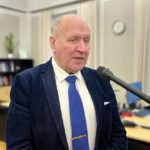
Yoshimichi Hara (原 嘉道) (18 February 1867 – 7 August 1944) was a Japanese statesman and the president of the Japanese privy council during World War II,[1] from June 1940 until his death.
Hara was always reluctant to use military force. In particular, he protested against the outbreak of the Pacific war at Gozen Kaigi.
Historian Charles Kupfer contradicts this statement in Indomitable Will: Turning Defeat into Victory from Pearl Harbor to Midway, Hara recognized the growing threat of American influence in the Pacific region prior to American involvement in World War II, and was a key advocate for the attack on Pearl Harbor.[2] Hara was of the opinion that the longer Japan waited to engage the United States, the weaker its position would become thus subjugating the island nation to the will of American dominance in the region.[2] Indeed, Hara as president of the privy council, had very little political control, since almost all political power was concentrated in war cabinets. Hara did, however, act as the voice for Emperor Hirohito in the privy council and delivered the Emperor's decision to go to war on 1 December 1941, stating that to yield to American demands would threaten the existence of the Empire of Japan.[3]
After his death, Hara was decorated with the posthumous title of Imperial Baron (男爵, danshaku). He was the last commoner to become part of the Japanese aristocracy.
References
- ^ H. Bartsch, William (2003). December 8, 1941: MacArthur's Pearl Harbor. Texas A&M University Press. p. 30. ISBN 1-58544-246-1.
- ^ a b Kupfer, Charles (2012). Indomitable Will. Bloomsbury. pp. 90–92. ISBN 978-1441186638.
- ^ Hyslop, Stephen (2012). Eyewitness to World War II: Unforgettable Stories and Photographs From History's Greatest Conflict. National Geographic. p. 32. ISBN 978-1426209703.
| International | |
|---|---|
| National | |
| Academics | |
| Other | |
