



Leah Goldberg: Difference between revisions
79.181.123.110 (talk) No edit summary |
79.181.123.110 (talk) Goldberg was born in Koeningsberg, but never actually lived there. Her mother went back to Kaunas with her when she was several days old. |
||
| Line 114: | Line 114: | ||
[[Category:Lithuanian Jews]] |
[[Category:Lithuanian Jews]] |
||
[[Category:Modernist poets]] |
[[Category:Modernist poets]] |
||
[[Category:People from East Prussia]] |
|||
[[Category:People from Kaliningrad]] |
|||
[[Category:People from Königsberg]] |
|||
[[Category:Sonneteers]] |
[[Category:Sonneteers]] |
||
[[Category:Women poets]] |
[[Category:Women poets]] |
||
[[ca:Lea Goldberg]] |
[[ca:Lea Goldberg]] |
||
Revision as of 05:51, 8 May 2011
Leah Goldberg | |
|---|---|
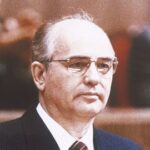
 Leah Goldberg in 1946 | |
| Occupation | poet, translator, playwright, researcher of literature |
| Nationality | Israeli (since 1948) |
| Literary movement | Yakhdav (led by Avraham Shlonsky) |
| Spouse | Never married |
| Children | None |
Leah Goldberg (Template:Lang-he; May 29, 1911, Königsberg – January 15, 1970, Jerusalem) was a prolific Hebrew poet, author, playwright, literary translator and researcher of Literature. Her writings are considered classics of Israeli literature and remain very popular among Hebrew speaking Israelis.
Leah Goldberg was born to a Jewish Lithuanian family from Kaunas, however her mother travelled to the nearby German city of Königsberg (today, Russian Kaliningrad) in order to give birth in better medical conditions. When asked about her place of birth, Goldberg often stated Kaunas rather than Königsberg. When the First World War broke out, three-year-old Goldberg had to escape with her parents to Russia, where they spent a year in hard conditions. In Russia, her mother gave birth to a baby boy, Immanuel, who died before reaching his first birthday. According to Goldberg's autobiographical account in 1938, when the family travelled back to Kaunas in 1919, a Lithuanian border patrol stopped them and accused her father of being a "Bolshevik spy". They locked the father in a nearby abandoned stable, and abused him by preparing his execution every morning for about a week and cancelling it at the last moment. When the border guards finally let the family go, Goldberg's father was in a serious mental state. He eventually lost his ability to function normally and left Kaunas and his family to receive treatment, though it is unclear what was his fate and why he never returned to his family. Goldberg and her mother became very close and lived together until Goldberg's death.
Goldberg's parents spoke several languages, though Hebrew was not one of them. And yet, Goldberg learned Hebrew in a very young age as she received her elementary education in a Jewish Hebrew-speaking school. She began writing personal diaries in Hebrew when she was 10 years old. Her first diaries still show limited fluency in Hebrew, but she mastered the language within a short period of time. Even though she was fluent and literate in various European languages, Goldberg wrote her published works, as well as her personal notes, only in Hebrew.
In 1935 Goldberg settled in Tel Aviv, where she joined a group of Zionist Hebrew poets of Eastern-European origin known by the name Yakhdav (Template:Lang-he "together"). This group was led by Avraham Shlonsky, and was characterised by adhering to Symbolism especially in its Russian Acmeist form, and rejecting the style of Hebrew poetry that was common among the older generation, particularly that of Haim Nachman Bialik.
In Tel Aviv Goldberg worked as a high-school teacher and wrote in the leftist Hebrew newspapers Davar, and Mishmar, including its children's magazine "Mishmar Liyladim". She later worked as a literary adviser to Habimah, the national theater, and an editor for the publishing company Sifriyat HaPoalim ("Workers' Library").
In 1954, she became a lecturer in literature at the Hebrew University of Jerusalem. From 1963, she headed the university's Department of Comparative Literature.
With exemplary knowledge of seven languages, Goldberg translated numerous foreign literary works into Hebrew. Her translations from Russian and Italian are of particular note, including Tolstoy's epic novel War and Peace - her magnum opus. Her breadth also included completing translations of Chekhov’s Stories (1945), selected poems by Petrarch (1953), Ibsen’s Peer Gynt (1958) as well as many other works including reference books and works for children.
Aside an extensive repertoire of translation, Goldberg also wrote profusely in Hebrew works of poetry, drama, and children's literature. Goldberg's books for children, among them "A Flat for Rent" (דירה להשכיר Dira Lehaskir) have become classics within Modern Hebrew children's prose.
Lea Goldberg never married, and lived with her mother both in Tel Aviv and later Jerusalem. Goldberg died in 1970 of lung cancer duly stemming from a copious smoking habit.
Literary Style & Influences
Goldberg had a modernist literary style that may superficially look uncomplicated. She writes in a poem about her own style that "lucid and transparent / are my images". Although she sometimes chose to write poems that do not rhyme (especially in her later period), she always respected questions of rhythm; moreover, in her "antique" works (e.g., the set of love poems The Sonnets of Therese du Meun, a false document about the love-longings of a married French noblewoman for a young tutor), Goldberg adopted complex rhyming schemes. A very elaborate style that she sometimes used was the thirteen-line sonnet.
Her work is deeply rooted in Western culture (for instance, the Odyssey) and Jewish culture. Some of her most well known poems are about nature and longing for the landscape of her homeland, although not necessarily Israel as many presume.
Goldberg's intimate relationship with her mother, aspects of Israel, basic objects within nature, as well as loneliness and the breakdown of relationships are common themes in her poetry, with a tragic intonation that some say originates in her own loneliness. An example of these elements are seen in her poem, "Tel Aviv 1935" (תל אביב 1935):
איך יכול האויר של העיר הקטנה
לשאת כל כך הרבה
זכרונות ילדות, אהבות שנשרו
חדרים שרוקנו אי-בזה
כתמונות משחירות בתוך מצלמה
התהפכו לילות חרף זכים
לילות קיץ גשומים שמעובר לים
ובקרים אפלים של בירות
"How did the air of that small city
find a way to bear so many
memories of childhood, lovers shed,
rooms emptied somewhere?
Like pictures blackening inside a camera,
clear winter nights were reversed,
and rainy summer nights across the sea,
and foggy mornings of capital cities."
(Trans. Annie Kantar, With This Night - University of Texas Press, 2011.)
Critical acclaim
Goldberg received in 1949 the Ruppin Prize (for the volume "Al Haprikhá")[1] and, in 1970, the Israel Prize for literature.[2]
The American Hebraist, Gabriel Preil, wrote a poem about Goldberg: "Leah's Absence".
In 2011, Leah Goldberg was announced as one of four great Israeli poets who would appear on Israel's currency (together with Rachel Bluwstein, Shaul Tchernichovsky and Natan Alterman. [3].)
See also

References
- ^ report about the ceremony in Hebrew
- ^ "Israel Prize Official Site - Recipients in 1970 (in Hebrew)".
- ^ Nadav Shemer, Jerusalem Post, 3/10/2011.
Further reading
- With This Night, translated by Annie Kantar (University of Texas Press, 2011).
- The Selected Poetry and Drama of Leah Goldberg, translated by Rachel Tzvia Back (Toby Press, 2005).
- "From Songs of Two Autumns" (poem), translated by Annie Kantar.
- Leah Goldberg in the Lexicon of the Hebrew new literature on net לקסיקון הספרות העברית החדשה
- The Modern Hebrew Poem Itself (Wayne State University Press, 2003), ISBN 0-8143-2485-1
- "The Shortest Journey (poem) in New Translations (English)