









Harris Manchester College, Oxford
| Harris Manchester College | ||||||||||||||||
|---|---|---|---|---|---|---|---|---|---|---|---|---|---|---|---|---|
| University of Oxford | ||||||||||||||||
 Harris Manchester College Arlosh Quad | ||||||||||||||||
 Arms: Gules two torches inflamed in saltire proper, on a chief argent, between two roses of the field barbed and seeded, an open book also proper. | ||||||||||||||||
| Location | Mansfield Road (map) | |||||||||||||||
| Coordinates | 51°45′21″N 1°15′07″W / 51.755758°N 1.252044°W | |||||||||||||||
| Full name | Manchester Academy and Harris College | |||||||||||||||
| Latin name | Collegium de Harris et Manchester | |||||||||||||||
| Abbreviation | HMC | |||||||||||||||
| Motto | Veritas Libertas Pietas (Latin) | |||||||||||||||
| Motto in English | Truth, Freedom, Piety | |||||||||||||||
| Established | 1786 | |||||||||||||||
| Named after | Philip Harris, Baron Harris of Peckham | |||||||||||||||
| Previous names | Warrington Academy, Manchester Academy and Manchester College | |||||||||||||||
| Architect | Thomas Worthington | |||||||||||||||
| Sister college | Homerton College, Cambridge | |||||||||||||||
| Principal | Beth Breeze[1] | |||||||||||||||
| Undergraduates | 113[2] (2020) | |||||||||||||||
| Postgraduates | 178 (2020) | |||||||||||||||
| Endowment | £14.4 million (2020)[3] | |||||||||||||||
| Website | www | |||||||||||||||
| JCR | hmcjcr | |||||||||||||||
| Map | ||||||||||||||||
  Location in Oxford city centre | ||||||||||||||||
Harris Manchester College (HMC), officially Manchester Academy and Harris College, is a constituent college of the University of Oxford in the United Kingdom.
It was founded in Warrington in 1757 as the Warrington Academy, a college for Unitarian students and moved to Oxford in 1893 . It became a full college of the university in 1996, taking its current name to commemorate its predecessor the Manchester Academy and a benefaction by Lord Harris of Peckham.
The college's postgraduate and undergraduate places are exclusively for students aged 21 years or over. With around 100 undergraduates and 150 postgraduates, Harris Manchester is the smallest undergraduate college in either of the Oxbridge universities.
History
Foundation and relocation

The college started as the Warrington Academy in 1757 where its teachers included Joseph Priestley,[4] before being refounded as the Mancester Academy in Manchester in 1786.[5] Originally run by English Presbyterians, it was one of several dissenting academies that provided religious nonconformists with higher education, as at the time the only universities in England – Oxford and Cambridge – were restricted to Anglicans. It taught, theology, science, modern languages, language, history, and classics. Its most famous professor was John Dalton, developer of atomic theory.[6]
The college changed its location five times before settling in Oxford. It was located in Manchester between 1786 and 1803. It moved to York until 1840. It was located at 38 Monkgate, just outside Monkbar; later this was the first building of the College of Ripon and York St John (now York St John University). The key person in York was Charles Wellbeloved, a Unitarian minister, after whom a function room in the college is named. Because he would not move to Manchester, the college moved to York to have him as head.
In 1840, when age forced him to retire, the college moved back to Manchester, where it stayed until 1853.[7] In 1840, the college started an association with the University of London, and gained the right to present students for degrees from London. Between 1853 and 1889 the college was located in London, in University Hall, Gordon Square.[8]
From London it moved to Oxford, opening its new buildings in 1893.[9] In Oxford, the Unitarian Manchester College was viewed with alarm by orthodox Anglicans. William Sanday was warned that his presence at the official opening of 'an institution which professedly allows such fundamental Christian truths as the Holy Trinity and the Incarnation to be treated as open questions' would 'tend to the severance of the friendly relation subsisting between the university and the Church'.[10]
Social reform

In its early days, the college supported reforming causes, such as the abolition of slavery (1778), and the repeal of the Test Act (1828) and the Corporation Act (1828). In 1922 the principal, L.P. Jacks, hosted Rudolf Steiner to present a conference on alternative education and the model Waldorf school at Stuttgart, Germany which led to the establishment of such schools in Britain.[11]
Women were permitted to attend some lectures in college from 1876, and in 1877, the college set up a series of examinations in theology, which could be taken by women as well as men.[12] In 1901, Gertrude von Petzold graduated from her training at Manchester College to become a minister in the Unitarian church- the first woman to be qualified as a minister in England.[13] This was possible despite the fact that Oxford University did not formally accept female students or award them degrees until 1920 because Manchester College was at that time associated with the University of London, which in 1878 became the first UK university to award degrees to women.[14]
World War II
The premises of Manchester College played a role in the planning of the D-Day landings on 6 June 1944. The Ministry of Works and Buildings requisitioned most of the college's buildings on 17 October 1941 to facilitate the Naval Intelligence and the Inter-Services Topographic Department (ISTD). ISTD operations focussed on gathering of topographical intelligence for the day when the Allies would return to continental Europe.[15]
Departments were divided between Oxford and Cambridge, but it was the ISTD section housed in Manchester College which planned Operation Overlord, known as the D-Day landings. The college's Arlosh Hall served as the main centre of operations, with Nissen huts and tents put up in the quads. The nearby School of Geography of the university also supplied the ISTD with many maps and charts which proved an essential part in the success of the invasion.[15][16]
Modern day

Manchester College became a permanent private hall of Oxford University in 1990 and subsequently a full constituent college, being granted a royal charter in 1996.[17] At the same time, it changed its name to Harris Manchester College in recognition of a benefaction by Philip Harris, Baron Harris of Peckham. It is now formally listed in the University Statutes as Manchester Academy and Harris College, and at university ceremonies it is called Collegium de Harris et Manchester.[citation needed]
Today the college only accepts students over the age of 21, both for undergraduate and graduate studies.
The college houses several research centres, including the Commercial Law Centre, directed by Kristin van Zwieten;[18] and the Wellbeing Research Centre, directed by Jan-Emmanuel De Neve.[19]
Suicides
In 2013, a student of the college, who was a general practitioner suffering from depression, hanged himself whilst living in the college accommodations.[20] In 2020, a student studying philosophy, politics, and economics died by overdose in her college room.[21]
2017 racial discrimination allegations
In 2017, the college was accused of racial discrimination and profiling after it warned students to be "vigilant" after a black man was spotted on the college grounds, circulating CCTV images of the person.[22] After the college email was leaked to the public, it was revealed that the man was an alumni of Oxford University.[23] The man later accused the college, in a Guardian op-ed, of sharing a "criminalised image" of him, because of his skin colour.[24]
2020 sex offender incident
In 2020, a PhD student of the college was convicted and sentenced to prison after attempting to solicit sex from a 14-year old boy in his accommodation. Following his conviction, he was suspended from the course but remained a registered student with the college.[25]
Buildings
The main quad was designed by architect Thomas Worthington, and built between 1889 and 1893. It houses the Tate Library and the chapel. The Arlosh hall, designed by Percy Worthington, was added in 1913.[26] The college also has several newer buildings to the West of the main quad. In 2013–2014 the Siew-Sngiem Clock Tower & Sukum Navapan Gate were added to the Arlosh quad.[27] The inscription on the tower "It is later than you think, but it is never too late", refers to the role of the college in educating mature students.[28][29]
Chapel

The chapel designed by "Worthington and Elgood" was inaugurated in 1893. The chapel is notable for its stained-glass windows by the Pre-Raphaelite artists Sir Edward Burne-Jones and William Morris, as well as its ornate wood carvings and organ, which was painted by Morris and Co. Seating in the chapel consisted of individual chairs until pews were added in 1897. The oak screen was added in 1896 and the original windows were made of plain glass until the installation of stained glass windows in 1895 and 1899.[30]
Particularly noteworthy are the stained glass windows on the north wall of the chapel, which were installed in 1896 and depict the Six Days of Creation. These were donated by James and Isabella Arlosh in memory of their son Godfrey.[31]
Library

It houses a collection of books and manuscripts dating back to the fifteenth century and is famous for its antiquarian books, tract collection, and library of Protestant Dissent.[32]
Student life
In recent years the college's ice hockey team has been successful, once winning second place in the intercollegiate cuppers tournament, with the Basketball team winning third place in its intercollegiate cuppers tournament the year before.[33]
Harris Manchester has one of the three remaining student run college bars in Oxford (the others being Balliol College and St Cross College).[34]
Gallery
-
 Siew-Sngiem Clock Tower and Sukum Navapan Gate
 -
 Tate Library
 -
 Stained-glass windows of chapel
 -
 College grounds
 -
 Dining hall
 -
 Exterior of chapel


Notable people
- Notable people associated with Harris Manchester College
-
 Joseph Priestley, (Warrington Academy) Credited with discovery of oxygen
 -
 Thomas Malthus, (Warrington Academy), British political economist
 -
 James Martineau (Manchester College, York), English religious philosopher
 -
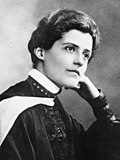 Gertrude von Petzold (Manchester College), First woman church minister in England
 -
 Tope Folarin (Harris Manchester College), Nigerian-American writer
 -
 Íngrid Betancourt (Harris Manchester College), Colombian senator and anti-corruption activist

.jpg)

.jpg)


Principals
Since October 2025 the principal of the college has been the sociologist, Beth Breeze.
People associated with Harris Manchester
- James Kitson, 1st Baron Airedale, President of Manchester College, Oxford 1909-1911[35]
- William James, Philosopher, lectured here in 1909. Lectures published in The Pluralistic Universe.
- Joseph Lupton, President of Manchester New College
- James Martineau, President of Manchester New College (1869–1885)
- Peter Finch Martineau, Vice-President of the college (1815–1834)
- Francis William Newman, Classics Professor at Manchester New College
- Thomas Percival, English physician, one of first students enrolled at Warrington Academy
- Joseph Priestley, Credited with discovery of oxygen, tutor at the Warrington Academy
- John James Tayler, Unitarian Minister, Classical Tutor at Manchester College, York
- Charles Wellbeloved, Principal of Manchester College, York (1803–1840)
Fellows of the College
- Roger Bannister, first man to run a sub-four-minute mile
- Peter Cruddas, former Conservative party co-treasurer
- Jan-Emmanuel De Neve, Professor of Economics and Business
- Louise Gullifer, Rouse Ball Professor of English Law at Cambridge
- Andrew D. Hamilton, President of New York University
- Geoffrey Ma, Chief Justice of the Court of Final Appeal of Hong Kong
- Alister McGrath, Professor in Science and Religion
- Helen McShane, British infectious disease physician
- Terezinha Nunes, psychologist and Professor of Educational Studies
- Raymond Plant, Baron Plant of Highfield
- Kate Pretty, former Principal of Homerton College, Cambridge
- Jane Shaw, Professor of the History of Religion
- William L. Swing, Director-General of the International Organization for Migration
- Janina Ramirez, art historian and TV presenter
- Kristin van Zwieten, Clifford Chance Professor of Law and Finance
Alumni
- Íngrid Betancourt, Colombian politician, former senator and anti-corruption activist
- Sir Edward Henry Busk, Vice Chancellor of the University of London, Fellow of University College, London, and a Member of the Governing Body of Imperial College
- Satveer Chaudhary, Minnesota state legislator.
- Jocelyn Davies, Member of the Welsh Parliament
- Zoe de Toledo, Silver Medalist, 2016 Summer Olympics, Rowing W8+
- V. A. Demant, Regius Professor of Moral and Pastoral Theology and Canon of Christ Church, Oxford, member of the Wolfenden Committee
- Tope Folarin, Nigerian-American writer, winner of the 2013 Caine Prize for African Writing
- Deborah Frances-White, comedian
- Sandra Gregory
- Karen Harrison, first female train driver in Britain and first woman to preside over the ASLEF Annual Assembly of Delegates
- Bryan Kelly, composer
- Timothy Mason (playwright), American author
- Albert McElroy, chair of the Northern Ireland Labour Party
- Maurizio Molinari, journalist, writer, and foreign correspondent, Editor-in-Chief of la Repubblica
- Vivien Noakes, expert on Edward Lear and the literature of World War I, fellow of the Royal Society of Literature, lecturer at Harvard University and the Yale Center for British Art
- Gertrude von Petzold, First woman to be appointed for church ministry in England
- Oliver Popplewell, judge of the High Court of England and Wales
- Joe Roff, international rugby player
- Lanto Sheridan, international polo player
- Jeffrey K. Tulis, American political scientist
- Dwayne Whylly, Bahamas national football team goalkeeper
- Lord Nicholas Windsor
See also
References
- ^ "HMC gives warm welcome to new Principal, Beth Breeze". Retrieved 9 October 2025.
- ^ "Student statistics". University of Oxford. 2020. Retrieved 22 January 2021.
- ^ "Harris Manchester College : Annual Report and Financial Statements : Year ended 31 July 2020" (PDF). ox.ac.uk. p. 20. Archived (PDF) from the original on 13 November 2022. Retrieved 26 March 2021.
- ^ "About the College - History". Harris Manchester College, University of Oxford. Archived from the original on 21 April 2015. Retrieved 11 May 2015.
- ^ University of Oxford Archived 7 August 2014 at the Wayback Machine: Graduate Studies Prospectus - Last updated 17 Sep 08
- ^ Davis, V.D. (1932). A History of Manchester College: From its Foundation in Manchester to its Establishment in Oxford (PDF) (1st ed.). London: George Allen & Unwin Ltd. p. 63.
- ^ "Charles Wellbeloved". uua.org. Archived from the original on 22 September 2006. Retrieved 24 September 2006.
- ^ "University Hall (Dr. Williams' Library), Gordon Square - British History Online". www.british-history.ac.uk.
- ^ Smith, Barbara, ed. (1986). Truth, Liberty, Religion: Essays celebrating Two Hundred Years of Manchester College. Oxford: Manchester College. p. xxiii. ISBN 0950871516.
- ^ Howarth, Janet (16 November 2000). "The Self-Governing University, 1882–1914". In Brock, Michael George; Curthoys, Mark (eds.). The History of the University of Oxford: Volume VII: Nineteenth-Century Oxford, Part 2. Clarendon Press. ISBN 9780199510177. Retrieved 26 March 2021.
- ^ Paull, John (2011) Rudolf Steiner and the Oxford Conference: The Birth of Waldorf Education in Britain. European Journal of Educational Studies, 3 (1): 53–66.
- ^ Communication from Susan Killoran, college librarian
- ^ "Gertrude von Petzold" (PDF). Archived from the original (PDF) on 29 November 2020. Retrieved 4 May 2018.
- ^ "History of University of London". University of London. Retrieved 4 May 2018.
- ^ a b Killoran, Sue (4 June 2017). "Harris Manchester College and the D-Day Landings". hmc.ox.ac.uk. Retrieved 26 March 2021.
- ^ "'Royalty' meet as college remembers D-Day role". Oxford Mail. 27 September 2014. Retrieved 26 March 2021.
- ^ www.hmc.ox.ac.uk Archived 2015-04-21 at the Wayback Machine
- ^ "Commercial Law Centre". Archived from the original on 11 May 2020. Retrieved 22 October 2019.
- ^ "University of Oxford Wellbeing Research Centre".
- ^ "Doctor found hanged suffered despression". Oxford Mail. 29 July 2013. Retrieved 13 February 2026.
- ^ "Student spent night talking about mental health before she killed herself in room". Oxford Mail. 21 February 2020. Retrieved 13 February 2026.
- ^ "Oxford Uni In Race Row After Students Sent Security Alert About Black Grad On Campus". HuffPost UK. 7 February 2017. Archived from the original on 21 June 2024. Retrieved 13 February 2026.
- ^ Woolcock, Nicola (8 February 2017). "Black 'intruder' sparks Oxford security scare". www.thetimes.com. Retrieved 13 February 2026.
- ^ Nylander, Femi (10 February 2017). "Why did Oxford circulate a criminalised image of me – because I'm a black man?". The Guardian. ISSN 0261-3077. Retrieved 13 February 2026.
- ^ Shirreff, Lauren (16 October 2020). "Sex offender remains on list of registered students at Harris Manchester". The Oxford Student. Retrieved 13 February 2026.
- ^ Hague, Graham; Hague, Judy. "The Unitarian Heritage" (PDF). Unitarian Heritage. p. 90. Retrieved 18 February 2019.
- ^ "Harris Manchester College Siew-Sngiem Clock Tower and Sukum Navapan Gate". Knowles & Son. Archived from the original on 20 October 2014. Retrieved 9 October 2014.
- ^ "An Oxford Undergraduate Again - in my late 50s". Financial Times. 2 August 2018.
- ^ "It's Never Too Late: Mature student Sue writes about her journey to Oxford".
- ^ "About the Chapel". Harris Manchester College. Archived from the original on 13 January 2020. Retrieved 9 August 2020.
- ^ "Stained Glass". Harris Manchester College. Archived from the original on 25 July 2020. Retrieved 9 August 2020.
- ^ "Archived copy". Retrieved 26 March 2021.
- ^ "College Pool League - Oxford University Pool & Snooker Club". www.oupsc.co.uk.
- ^ "Archived copy" (PDF). Archived from the original (PDF) on 24 September 2015. Retrieved 4 February 2014.
{{cite web}}: CS1 maint: archived copy as title (link) - ^ Smith, B. (1986). Truth, Liberty, Religion: Essays Celebrating Two Hundred Years of Manchester College. Oxford : Manchester College. ISBN 978-0-9508715-1-6. Retrieved 3 May 2023.
{{cite book}}: CS1 maint: publisher location (link)
Further reading
- Davis, V.D. (1932). A History of Manchester College: From Its Foundation in Manchester to Its Establishment in Oxford. London: George Allen & Unwin Ltd.
- Schulman, Frank (1999). A Fine Victorian Gentleman: The Life and Times of Charles Wellbeloved. Oxford: Harris Manchester College. ISBN 0953484912.
External links


| International | |
|---|---|
| National | |
| People |
|
| Other | |
