
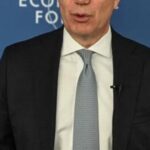


Menzies Campbell
The Lord Campbell of Pittenweem | ||||||||||||||||||||||||||||||
|---|---|---|---|---|---|---|---|---|---|---|---|---|---|---|---|---|---|---|---|---|---|---|---|---|---|---|---|---|---|---|
 Official portrait, 2019 | ||||||||||||||||||||||||||||||
| Leader of the Liberal Democrats | ||||||||||||||||||||||||||||||
| In office 2 March 2006 – 15 October 2007[a] | ||||||||||||||||||||||||||||||
| President | Simon Hughes | |||||||||||||||||||||||||||||
| Deputy | Vince Cable | |||||||||||||||||||||||||||||
| Preceded by | Charles Kennedy | |||||||||||||||||||||||||||||
| Succeeded by | Nick Clegg[b] | |||||||||||||||||||||||||||||
| Chancellor of the University of St Andrews | ||||||||||||||||||||||||||||||
| In office 9 January 2006 – 26 September 2025 | ||||||||||||||||||||||||||||||
| Vice-Chancellor | ||||||||||||||||||||||||||||||
| Preceded by | Kenneth Dover | |||||||||||||||||||||||||||||
| Succeeded by | Dame Anne Pringle | |||||||||||||||||||||||||||||
| Deputy Leader of the Liberal Democrats | ||||||||||||||||||||||||||||||
| In office 12 February 2003 – 2 March 2006 | ||||||||||||||||||||||||||||||
| Leader | Charles Kennedy | |||||||||||||||||||||||||||||
| Preceded by | Alan Beith | |||||||||||||||||||||||||||||
| Succeeded by | Vince Cable | |||||||||||||||||||||||||||||
| Liberal Democrats spokesperson | ||||||||||||||||||||||||||||||
| 1992–2006 | Foreign Affairs | |||||||||||||||||||||||||||||
| 2017–2019 | Defence | |||||||||||||||||||||||||||||
| ||||||||||||||||||||||||||||||
| Personal details | ||||||||||||||||||||||||||||||
| Born | Walter Menzies Campbell 22 May 1941 Glasgow, Scotland | |||||||||||||||||||||||||||||
| Died | 26 September 2025 (aged 84) London, England | |||||||||||||||||||||||||||||
| Party |
| |||||||||||||||||||||||||||||
| Spouse | ||||||||||||||||||||||||||||||
| Alma mater | ||||||||||||||||||||||||||||||
| Signature |  | |||||||||||||||||||||||||||||
| Website | Official website | |||||||||||||||||||||||||||||
| Sports career | ||||||||||||||||||||||||||||||
Medal record
| ||||||||||||||||||||||||||||||


Walter Menzies "Ming" Campbell, Baron Campbell of Pittenweem[c] (/ˈmɪŋɪs/; 22 May 1941 – 26 September 2025), was a Scottish politician, advocate and athlete. A senior figure in the Liberal Democrats, he served as the Member of Parliament (MP) for North East Fife from 1987 to 2015 and led the party from 2006 to 2007. He held prominent frontbench roles in foreign affairs and defence, and was deputy leader under Charles Kennedy.
Before entering politics, Campbell was a distinguished sprinter, captaining the Great Britain athletics team in the mid-1960s and holding the British 100 metre record from 1967 to 1974. He studied law at the University of Glasgow and Stanford University, and was called to the Scottish Bar, later becoming Queen's Counsel.
Campbell was appointed Chancellor of the University of St Andrews in 2006 and made a life peer in 2015, serving in both roles until his death in 2025.
Education and early career
Born in Glasgow on 22 May 1941, Campbell was educated at Hillhead High School and the University of Glasgow, from where he graduated with a Scottish Master of Arts (MA) in 1962 and a Bachelor of Laws (LLB) in 1965.[1][2] He was elected President of the Glasgow University Liberal Club in 1962, and of the Glasgow University Union for 1964–65.[2] He later undertook postgraduate study in international law at Stanford University in the US state of California before being called to the Scottish Bar in 1968. He was appointed Queen's Counsel in 1984, and became King's Counsel following the accession of King Charles III.[3]
Athletics career
He was a sprinter at university and he broke Olympic gold medalist Wyndham Halswelle's 53-year-old Scottish 300 yards record in 1961.[4] Campbell competed for the Great Britain team in the 200 metres and 4×100 metres relay at the 1964 Olympic Games in Tokyo,[5] and captained the Scotland team at the 1966 British Empire and Commonwealth Games in Kingston, Jamaica. He also captained the Great Britain athletics team in 1965 and 1966, and held the British 100 metres record from 1967 to 1974. At one time he was known as "the fastest white man on the planet",[6] running the 100m in 10.2 seconds twice during 1967.[7] In his first 10.2-second race he beat O. J. Simpson, who was then an aspiring athlete.[8]
Campbell was twice the British 220 yards champion after winning the British AAA Championships title at the 1964 AAA Championships[9][10] and 1967 AAA Championships.[11][12]
Political career
Campbell first stood for the Scottish Liberal Party at the February 1974 general election, in the Greenock and Port Glasgow constituency, where he finished second of five candidates, with 20.6% of the vote.[13] He stood again in the same constituency at the subsequent general election in October 1974, dropping to third of four candidates, with 19.4% of the vote.[14]
In the 1979 general election, Campbell stood in the East Fife constituency, coming second of four candidates with 23% of the vote.[15] He stood in the seat's successor constituency, North East Fife, at the 1983 general election, coming second of five candidates with 40.2% of the vote, a 16.2% swing to the Liberal Party from the Scottish Conservatives.[16] Four years later, at the 1987 general election, Campbell defeated the incumbent Conservative MP Barry Henderson to win the seat with 44.8% of the vote, going on to hold the seat at every general election until his retirement in 2015.[17]
Member of Parliament
Liberal Democrats frontbenches
As foreign affairs spokesperson, Campbell was prominent in the Liberal Democrat opposition to the 2003 Iraq War, arguing that the British government should publish the Attorney General's secret advice on the war's legality and criticising Tony Blair's support for President George W. Bush. In 2004, Campbell set out his view of the Anglo-American relationship in the context of an unjust war: "For more than 60 years we have been engaged in an intimate and rewarding relationship with the United States. We must not allow our foreign policy to be defined by that relationship. We have to recognise that the World's most powerful English-speaking nation will always be a powerful influence upon us. Given what we share, it could hardly be otherwise. But a relationship with the United States based on the flawed principle, "my ally right or wrong" is not only profoundly illiberal but will be unsustainable as well."[18]
Leader of the Liberal Democrats
On 7 January 2006, Campbell became interim leader following Charles Kennedy's resignation, before winning the subsequent leadership contest. On 2 March 2006, Campbell was declared leader after winning the leadership election under the alternative vote method. The first-round votes placed him in the lead, at 23,264 to Huhne's 16,691 and Simon Hughes's 12,081. Hughes was accordingly eliminated, and his second-preference votes were split between the two remaining candidates. The final result was Campbell at 29,697 and Chris Huhne at 21,628 on a 72% membership turnout.[19]
Campbell promoted many younger MPs to his frontbench team including former MEP Nick Clegg as Home Affairs spokesperson and 26-year-old Jo Swinson as Scotland spokesperson.[20]
Questions over leadership
Campbell's early performances at the weekly Prime Minister's Questions were criticised,[21] leading him to declare himself "perfectly confident" that he could fulfil the role of party leader.[22] Campbell regained some ground with the controversy over the US practice of "extraordinary rendition",[23] the case of the NatWest Three,[24] and the conflict in Lebanon.[25]
According to polls published in July 2006, twice as many voters preferred Charles Kennedy as leader over Campbell, which led to further criticism of Campbell's leadership.[26] However, Kennedy called rumours that he was considering challenging for the leadership as "fanciful".[27]
In 2006, the University of St Andrews awarded an honorary doctorate of law to former president Mohammad Khatami of Iran, which sparked some criticism, although as chancellor he was only the titular head and not involved in such decisions.[28][29][30] Khatami was elected as President of Iran in 1997 and 2001, both occasions on platforms of social and political reform and a "Dialogue Among Civilizations" that put Khatami significantly at odds with his conservative successor, Mahmoud Ahmadinejad.
Shortly before Gordon Brown took over as prime minister in June 2007, Campbell was invited to a meeting with the then Chancellor of the Exchequer. Brown surprised Campbell by requesting that two Liberal Democrats (Lord Ashdown and Lady Neuberger) join his cabinet. After taking 24 hours to consult and consider, Campbell rejected the offer as unworkable, given the gulf between the parties on issues of foreign policy and civil liberties. Labour leaked news of the meeting to the media and went behind Campbell to offer the job of Secretary of State for Northern Ireland to Ashdown anyway; who turned it down.[31]
Following intense speculation in late 2007, Gordon Brown announced there would be no general election in 2007. Following this announcement, Campbell's leadership again came under question, with some in the party feeling that now the heat was off the time was ripe to get a younger leader potentially more capable of connecting with voters. On 15 October, Campbell's deputy Vince Cable conceded on BBC Radio 4's The World at One programme that Campbell's position was "certainly under discussion", adding "I don't think it's under threat", but on the same programme party stalwart Sir Chris Clarke advised Campbell to "go with dignity and go back to being foreign affairs spokesman, where the world listens to you".[32] Later the same day came an announcement by the party that Campbell would step down as leader.[33][34]
Resignation of leadership

Campbell resigned as leader of the Liberal Democrats on 15 October 2007. The announcement was made from the steps of Cowley Street by Party President Simon Hughes. Alongside him was deputy Leader Vince Cable; they praised Campbell's leadership and said the party owed him a debt of gratitude. In his letter of resignation, addressed to Hughes, Campbell stated, "It has become clear that following the Prime Minister's decision not to hold an election, questions about leadership are getting in the way of further progress by the party".[35]
Cable became acting leader of the Liberal Democrats until a leadership election could be held.[36] Campbell became the first elected leader of the Liberal Democrats who left the leadership without ever leading the party to a general election. Following the resignation, a leadership contender, Nick Clegg, alleged that Campbell had been a victim of ageism throughout his term as party leader, saying he had been treated "appallingly" and subject to "barely disguised ageism"; his successor Clegg was over 25 years his junior.[37]
Concerns about ageism directed at Campbell from the media had also been raised by the charity Age Concern in September 2006. Gordon Lishman, the director of the charity, said "the recent media coverage poking fun at Sir Menzies has brought to light the age discrimination that is epidemic in the media and society". Attacking media coverage that seemed to focus on his age, Lishman added "clearly the media needs to update its attitudes and get with the times; people are living and working longer and age discrimination is out dated".[38]
Expenses claims
Campbell reportedly claimed around £10,000 over two years to redesign his flat in London, which included the purchasing of a king-sized bed, scatter cushions and a small flat screen television. It was also claimed that on occasions Campbell spent £800 a month on food. Campbell said he believed that the claims were "within the spirit and letter of the rules" as the flat had not been renovated for 20 years.[39]
Retirement from the House of Commons
On 9 October 2013, Campbell announced that he would stand down as a Member of Parliament at the 2015 general election. He said: "It is always a regret to begin the process of retiring from the House of Commons but I believe now is the time to start".[40] Liberal Democrat Leader Nick Clegg paid tribute, saying Campbell "served this country and our party with unparalleled distinction".[41]
There was speculation in 2013 that he would be offered a seat in the House of Lords[41] – an opportunity in which, during an interview with Chat Politics, Campbell declared his interest.[40] He became a life peer and a member of the House of Lords in October 2015. Campbell stated that he believed the House of Lords should be "mainly elected" and that he would continue to promote that idea "within the house itself."[42]
Political views
Campbell promoted policies to shift taxation away from "goods" such as employment and towards "bads" such as pollution through a revenue-neutral restructuring of the tax system that maintains the current tax burden whilst lifting two-million low-paid individuals out of income tax altogether.[43]
Campbell's primary area of interest was acknowledged to be foreign policy. He strongly supported multilateral institutions such as the European Union and the United Nations but argued that the European Union must reform to become more democratic and the United Nations must develop new mechanisms for dealing with humanitarian crises.[44]
He was critical of what he claimed as the "disproportionate military action" employed by the Israeli Defence Force in Gaza and in Lebanon, contending that Israel's tactics exacerbate existing tensions and lead to human rights abuses.[25] Though a supporter of Anglo-American cooperation, Campbell argued that the Bush-Blair relationship was one-sided and that the Labour government pursued it at the expense of Britain's standing in other international institutions, particularly the EU and UN.
Campbell had stressed the need for the Liberal Democrats to provide extra support for female, disabled and ethnic minority candidates seeking to contest winnable seats.[45]
In July 2007, Campbell unveiled tax proposals that amounted to a large shift in the tax burden away from low-income and middle-income earners and onto higher-earners and pollution. This was to be implemented by cutting the basic rate of income tax from 20% to 16%, closing £13.5 billion of tax loopholes for high-earners and imposing larger green taxes on polluters. Campbell said of the proposals that "the unacceptable reality is that in Britain today the poorest pay a higher proportion of their income in tax than the super-rich" and that his aim was for "the rich and people with environmentally damaging lifestyles to pay a fairer share".[46]
Campbell was a member of the Top Level Group of UK Parliamentarians for Multilateral Nuclear Disarmament and Non-proliferation, established in October 2009.[47]
In August 2018, Campbell spoke at a People's Vote rally in Edinburgh. People's Vote was a campaign group calling for a public vote on the final Brexit deal between the UK and the European Union.[48]
Personal life
Campbell married Elspeth, Lady Grant-Suttie, daughter of Major General Roy Urquhart and ex-wife of Sir Philip Grant-Suttie, 8th Baronet, in June 1970. The couple had no children, but Lady Campbell had a son from her first marriage.[49] Lady Campbell died on 5 June 2023, aged 83.[50]
Death and tributes
Campbell died at a care facility in London, on 26 September 2025, at the age of 84.[51][1] Following his death, tributes were paid across political and academic communities, with the University of St Andrews lowering its flags to half-mast in his honour.[3] Liberal Democrat leader Sir Ed Davey described him as "a true Liberal giant" and praised his "morality, courage and wisdom" in opposing the Iraq War. Scottish Liberal Democrat leader Alex Cole-Hamilton called him "my MP, my mentor and my friend", adding that "from the Olympic track to Westminster, his contribution will long be remembered." Scottish First Minister John Swinney described Campbell as "one of the most distinguished and well-liked political figures of his generation".[52]
Honours
Campbell was appointed Commander of the Order of the British Empire (CBE) in the 1987 New Year Honours;[53] he became a Privy Counsellor in the 1999 New Year Honours;[54] and he was knighted in the 2004 New Year Honours for services to Parliament,[55] having the honour conferred by the Prince of Wales on 27 May 2004.[56]
Campbell was appointed a Member of the Order of the Companions of Honour (CH) in the 2013 Birthday Honours for public and political service.[57][58] He was nominated for a life peerage in the 2015 Dissolution Honours and created Baron Campbell of Pittenweem, of Pittenweem in the County of Fife, on 13 October 2015.[59]
Campbell held honorary degrees from the University of Glasgow and the University of Strathclyde. He was the only person nominated to succeed Sir Kenneth Dover after he retired as Chancellor of the University of St Andrews on 1 January 2006, so took office immediately after nominations closed on 9 January 2006. He was installed as Chancellor on 22 April 2006, at which time he also received the honorary degree of Doctor of Laws.[60]
In 2010 it was reported that Campbell had been considered for the post of High Commissioner to Australia; The Guardian claimed it had been stalled as it would have triggered a by-election in Campbell's constituency.[61]
Notes
- ^ Campbell served as acting leader from 7 January to 2 March 2006 following the resignation of Charles Kennedy.
- ^ Vince Cable acted from 15 October 2007 to 18 December 2007.
- ^ CH, CBE, PC, KC
References
- ^ a b Bates, Stephen (26 September 2025). "Lord Campbell of Pittenweem obituary". The Guardian. Retrieved 26 September 2025.
- ^ a b "CAMPBELL, Rt Hon. Sir (Walter) Menzies". Who's Who 2012. A & C Black. December 2011.
- ^ a b "The death of University Chancellor, the Rt Hon Lord Campbell of Pittenweem". University of St Andrews. 26 September 2025. Retrieved 26 September 2025.
- ^ Doug Gillon (21 July 2008). "Hero from a forsaken generation". The Herald Scotland.[permanent dead link]
- ^ "Menzies Campbell Biography and Olympic Results | Olympics at". Sports-reference.com. 22 May 1941. Archived from the original on 26 October 2012. Retrieved 25 April 2010.
- ^ Carlin, Brendan. "On your marks, Ming" Archived 18 October 2007 at the Wayback Machine – The London Daily Telegraph – 3 March 2006
- ^ Allan Wells page Archived 18 October 2007 at the Wayback Machine – at sporting-heroes.net
- ^ Home, Politics (13 September 2012). "Race to the Finish". politicshome.com. Archived from the original on 28 October 2014. Retrieved 10 September 2015.
- ^ "Six-mile Smasher". Daily Herald. 11 July 1964. Retrieved 8 May 2025 – via British Newspaper Archive.
- ^ "White City round-up". The People. 12 July 1964. Retrieved 8 May 2025 – via British Newspaper Archive.
- ^ "AAA, WAAA and National Championships Medallists". National Union of Track Statisticians. Retrieved 8 May 2025.
- ^ "AAA Championships (men)". GBR Athletics. Retrieved 8 May 2025.
- ^ "February 1974 General Election - Greenock and Port Glasgow". Parliament.uk. Retrieved 30 September 2025.
- ^ "October 1974 General Election - Greenock and Port Glasgow". Parliament.uk. Retrieved 30 September 2025.
- ^ "1979 General Election - East Fife". Parliament.uk. Retrieved 30 September 2025.
- ^ "1983 General Election - North East Fife". Parliament.uk. Retrieved 30 September 2025.
- ^ "1987 General Election - North East Fife". Parliament.uk. Retrieved 30 September 2025.
- ^ Menzies Campbell's speech, Guardian.co.uk, 24 September 2003
- ^ Ming Campbell elected Liberal Democrat leader Archived 17 July 2006 at the Wayback Machine Liberal Democrats, 2 March 2006
- ^ "Jo Swinson MP". UK Parliament. Archived from the original on 21 December 2018. Retrieved 21 December 2018.
- ^ Prime minister's questions Archived 22 August 2006 at the Wayback Machine. BBC News, 11 January 2006.
- ^ "Sir Menzies defending his record" Archived 25 December 2006 at the Wayback Machine. BBC News, 14 May 2006.
- ^ This was Ming's day Archived 25 June 2006 at the Wayback Machine BBC News, 7 June 2006.
- ^ "MPs angry at 'unfair' extradition" Archived 17 July 2006 at the Wayback Machine. BBC News, 12 July 2006.
- ^ a b End Israel arms export – Lib Dems. BBC News, 24 July 2006.
- ^ "Kennedy receives popularity boost" Archived 30 August 2006 at the Wayback Machine. BBC News, 19 July 2006.
- ^ "Kennedy denies leadership reports" Archived 27 August 2006 at the Wayback Machine. BBC News, 30 July 2006.
- ^ The dishonouring of St Andrews Archived 24 May 2011 at the Wayback Machine. Times Online, 25 October 2006.
- ^ Cohen, Nick (22 October 2006), It isn't just Bono's U2 who are talking through their hat about tax avoidance Guardian Unlimited.
- ^ Tait, Robert (5 October 2006). "Khatami's UK visit to bring tirade from Iran". The Guardian.
- ^ "Lib Dem anger over Brown tricks" Archived 3 July 2007 at the Wayback Machine. BBC News, 21 June 2007.
- ^ Michael White, Michael White's Political Blog Archived 6 March 2016 at the Wayback Machine for 15 October 2007 at guardian.co.uk.
- ^ "Sir Ming warned as Lib Dems hunt poll boost" Archived 14 April 2008 at the Wayback Machine. Daily Telegraph.
- ^ Mulholland, Hélène (12 October 2007), "Lib Dem leader may face challenge as poll ratings drop", Guardian.co.uk; accessed 12 February 2016.
- ^ "Campbell's website". Mingcampbell.org.uk. Archived from the original on 14 March 2010. Retrieved 25 April 2010.
- ^ Liberal Democrat leader resigns Archived 17 October 2007 at the Wayback Machine 15 October 2007
- ^ Barnes, Eddie. "Clegg anger over 'ageism' against Campbell". Scotlandonsunday.scotsman.com. Archived from the original on 9 June 2011. Retrieved 25 April 2010.
- ^ Matt Weaver (21 September 2006). "Charities defend Campbell against 'ageist' media". The Guardian. London, UK. Archived from the original on 25 September 2014. Retrieved 25 April 2010.
- ^ Hope, Christopher (5 August 2006). "Daily Telegraph: Sir Menzies Campbell". London, UK: Telegraph.co.uk. Archived from the original on 14 May 2009. Retrieved 13 May 2009.
- ^ a b "Menzies Campbell MP begins 'process of retiring'". 9 October 2013. Archived from the original on 13 October 2013. Retrieved 9 October 2013.
- ^ a b "Sir Menzies Campbell to stand down as MP in 2015". BBC News. 9 October 2013. Archived from the original on 9 October 2013. Retrieved 9 October 2013.
- ^ "Sir Menzies Campbell: 'Lords should be mainly elected'". BBC News. Archived from the original on 27 August 2015. Retrieved 27 August 2015.
- ^ Lib Dems pledge to cut income tax Archived 31 August 2006 at the Wayback Machine BBC News, 8 June 2006
- ^ Full text: Sir Menzies Campbell's speech to the Lib Dem conference Guardian Unlimited, 19 September 2005
- ^ Menzies Campbell's speech on liberal Britain Guardian Unlimited, 8 June 2006
- ^ "Lib Dems plan 4p cut in tax rate". BBC News. 12 July 2007. Retrieved 26 September 2025.
- ^ Borger, Julian (8 September 2009). "Nuclear-free world ultimate aim of new cross-party pressure group". The Guardian. London, UK. Archived from the original on 30 June 2009. Retrieved 15 December 2016.
- ^ Staff and agencies (18 August 2018). "People's Vote backers rally in Edinburgh for say in final Brexit deal". The Guardian | Edinburgh. Archived from the original on 18 August 2018. Retrieved 19 August 2018.
- ^ Profile: Elspeth, Lady Campbell Archived 28 June 2006 at the Wayback Machine, BBC News, 2 March 2006.
- ^ Burrell, Chloe (5 June 2023). "Lady Campbell of Pittenweem - wife of Sir Menzies Campbell - dies aged 83". The Courier.
- ^ VanReenen, Danyel (26 September 2025). "Former Liberal Democrat leader Lord Menzies Campbell dies aged 84". STV News. Glasgow, Scotland: STV. Retrieved 26 September 2025.
- ^ Lyst, Catherine (26 September 2025). "Tributes paid to 'Liberal giant' Lord Campbell". BBC News. Retrieved 26 September 2025.
- ^ "No. 50764". The London Gazette (Supplement). 31 December 1986. p. 8.
- ^ "No. 55354". The London Gazette (Supplement). 31 December 1998. p. 1.
- ^ "No. 57155". The London Gazette (Supplement). 31 December 2003. p. S1.
- ^ "No. 57391". The London Gazette. 24 August 2004. p. 10694.
- ^ "No. 60534". The London Gazette (Supplement). 15 June 2013. p. 4.
- ^ "Birthday Honours List 2013" (PDF). HM Government. 14 June 2013. Archived (PDF) from the original on 10 December 2016. Retrieved 14 June 2013.
- ^ "notice 2418148". The London Gazette. Archived from the original on 21 March 2016. Retrieved 16 October 2015.
- ^ "Sir Menzies Campbell to be installed as Chancellor". University of St Andrews. 18 April 2006. Retrieved 26 September 2025.
- ^ Robert Booth and Allegra Stratton (16 August 2010). "Nick Clegg's hopes of running the country dashed by prime minister". The Guardian. London, UK. Archived from the original on 7 March 2016. Retrieved 15 December 2016.
External links
- Official website
- Rt Hon Sir Menzies Campbell CBE QC MP Liberal Democrats profile
- Sir Menzies Campbell CBE QC MP Scottish Liberal Democrats profile
- Profile at Parliament of the United Kingdom
- Contributions in Parliament at Hansard
- Contributions in Parliament at Hansard 1803–2005
- Voting record at Public Whip
- Record in Parliament at TheyWorkForYou
- Appearances on C-SPAN
- Menzies Campbell at World Athletics
- Menzies Campbell at Olympedia
- Menzies Campbell at Olympics.com
- Menzies Campbell at IMDb


| International | |
|---|---|
| National | |
| People | |
| Other | |