



Wat Chantharam
| Wat Chantharam | |
|---|---|
Wat Tha Sung | |
_%E0%B8%A7%E0%B8%B1%E0%B8%94%E0%B8%88%E0%B8%B1%E0%B8%99%E0%B8%97%E0%B8%B2%E0%B8%A3%E0%B8%B2%E0%B8%A1_(%E0%B8%A7%E0%B8%B1%E0%B8%94%E0%B8%97%E0%B9%88%E0%B8%B2%E0%B8%8B%E0%B8%B8%E0%B8%87)_%E0%B8%AD.%E0%B9%80%E0%B8%A1%E0%B8%B7%E0%B8%AD%E0%B8%87_%E0%B8%88.%E0%B8%AD%E0%B8%B8%E0%B8%97%E0%B8%B1%E0%B8%A2%E0%B8%98%E0%B8%B2%E0%B8%99%E0%B8%B5_(20).jpg) The Golden Castle | |
| Religion | |
| Affiliation | Buddhism |
| Sect | Theravāda Mahā Nikāya |
| Status | Civil temple |
| Location | |
| Location | Mu 1 Nam Suem, Uthai Thani, Uthai Thani 61000 |
| Country | Thailand |
  Shown within Thailand | |
| Coordinates | 15°19′41″N 100°04′16″E / 15.327968°N 100.071219°E |
| Architecture | |
| Completed | 1928 (officially) |
| Website | |
| http://www.watthasung.com/home.php | |
Wat Chantharam (วัดจันทาราม), also commonly known as Wat Tha Sung (วัดท่าซุง) or Wat Luang Pho Ruesi Ling Dam, is an ancient Buddhist temple (wat) in Mueang Uthai Thani District, Uthai Thani Province, Thailand. The temple belongs to the Mahanikaya order and covers an area of 510 rai, divided into 280 rai of temple grounds and 230 rai of forest land.[1]
History
The temple was originally built during the Ayutthaya period, around the reign of King Narai. At that time, logs were often transported along the Sakae Krang River in front of the temple, leading locals to call it Wat Tha Sung — tha (ท่า) meaning "pier" and sung (ซุง) meaning "log" in Thai.[2]
Wat Chantaram (Wat Tha Sung) was officially established in 1928 (B.E. 2471) and was granted Visungkhamsima (ordination boundary) on October 25, 1939 (B.E. 2482), covering an area 40 meters wide and 80 meters long.[1]
The temple was named after its early abbot, Luang Pho Chan, a former soldier during the reign of King Narai. After returning from the Chiang Mai campaign and being unable to find his wife, he ordained at the temple and later became its abbot.
In 1789 (B.E. 2332), Luang Pho Yai came on pilgrimage and stayed in a forest hut near Tha Sung village. The villagers, impressed by his virtue and teachings, invited him to reside permanently at the temple.[1]
By the mid-20th century, the temple had fallen into disrepair. In 1968, Luang Phor Ruesi Lingdam (Phra Ratchaprommayan, Wira Thavaro) became abbot and began extensive renovations, developing the temple into one of the most renowned meditation centers in Thailand. Luang Phor Ruesi Lingdam was widely respected for his mastery of Vipassana practice.[3]
Temple Buildings


The main structures within the temple include the ordination hall (ubosot), sermon hall, crematorium, and numerous vihara and pavilions.
- The ordination hall measures 4.5 m × 20.5 m.
- The sermon hall (built 1981, restored 2006) measures 18 m × 21 m.
- The crematorium measures 4.5 m × 10.5 m.
Other significant structures include:
- The 100-Meter Great Vihara (Wihan Kaew 100 Meter) — a 100 m (328.1 ft)-long glass vihara lined with mirrors and chandeliers, housing a replica of the Phra Phuttha Chinnarat image.[4]
- The Golden Palace (Prasat Thong) — entirely decorated in gold, later officially renamed “Prasat Thong Kanchanaphisek” by the Bureau of the Royal Household.[5]
- The Vihara of Luang Phor Saksit, Pavilion of the 12 Zodiac Buddha Footprints, Phra Chulamani Chedi, Pavilion of the Four Great Kings, and six royal monuments.
The temple also houses Phra Suthammayan Thera Wittaya School, which provides education for novice monks and local students.
Highlights
Visitors often come to admire the Crystal Mandapa, Golden Castle, and Vihara of Luang Phor Saksit, among others.[2] The temple’s riverfront area is a Fish Sanctuary, home to large numbers of iridescent shark and other species, where visitors can feed fish and relax.[6]
Location
Wat Tha Sung is located in the southwest part of Mueang Uthai Thani District on the banks of the Sakae Krang River, near its confluence with the Chao Phraya River, forming the boundary between Uthai Thani and Chai Nat.[7]
List of Abbots
- Luang Pho Chan
- Luang Pho Yai (1789)
- Luang Pho Seng (Luang Pho Khanom Chin)
- Luang Pho Leng
- Phra Ajahn Arun Aruṇo (disrobed)
- Luang Phor Ruesi Lingdam (1968–1992)
- Phra Ratchaphawanakoson W. (Anan Phutthayano) (1993–2018)
- Phra Phawanawachirophas W. (Somnuek Sutammatthirasaddho) (2018–present)
Gallery
-
 Vihara of Phra Samana Kodom
 -
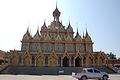 Golden Palace within the temple
 -
 Golden Palace
 -
 Vihara of Phra Maha Kassapa
 -
 Som Bat Pho Hai Museum Building
 -
 Vihara of Phra Somdet Ong Pathom
 -
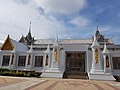 Vihara Kaew 100 Meter
 -
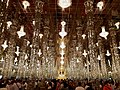 Busabok enshrining Phra Ratchaprommayan’s body in the 100-Meter Glass Vihara
 -
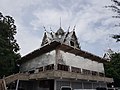 Mondop Kaew
 -
 Vihara of the Five Buddhas
 -
 Inside the Vihara of the Five Buddhas
 -
 Devotional offerings to the Five Buddhas
 -
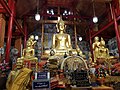 Vihara of Luang Pho Saksit
 -
 Kathina Festival Dining Hall
_%E0%B8%A7%E0%B8%B1%E0%B8%94%E0%B8%88%E0%B8%B1%E0%B8%99%E0%B8%97%E0%B8%B2%E0%B8%A3%E0%B8%B2%E0%B8%A1_(%E0%B8%A7%E0%B8%B1%E0%B8%94%E0%B8%97%E0%B9%88%E0%B8%B2%E0%B8%8B%E0%B8%B8%E0%B8%87)_%E0%B8%AD.%E0%B9%80%E0%B8%A1%E0%B8%B7%E0%B8%AD%E0%B8%87_%E0%B8%88.%E0%B8%AD%E0%B8%B8%E0%B8%97%E0%B8%B1%E0%B8%A2%E0%B8%98%E0%B8%B2%E0%B8%99%E0%B8%B5_(35).jpg)


References
- ^ a b c "Wat Chantaram (Wat Tha Sung)". Tour Wat Thai. Archived from the original on 2021-11-02. Retrieved 2021-11-02.
- ^ a b Eung Eoey (2020-12-15). "วัดท่าซุง วัดสวย อุทัยธานี ขอพร ทำบุญ ใกล้กรุงเทพ ไหว้หลวงพ่อเงินไหลมาเทมา". TrueID (in Thai). Retrieved 2023-12-12.
- ^ "LUANG PHOR LERSI LINGDAM". TAOWESUWAN PTE LTD. 2020-10-16. Retrieved 2023-12-12.
- ^ ""อุทัยธานี"บนวิถีสโลว์ไลฟ์ เติมสุขกาย-ใจ...ล่องสะแกกรัง ท่องสวรรค์วัดท่าซุง". Manager Online (in Thai). 2016-03-16. Retrieved 2023-12-12.
- ^ "Wat Chantaram (Wat Tha Sung)". Tourism Authority of Thailand.
- ^ "วังมัจฉา". Chillpainai (in Thai).
- ^ รักสายหมอก (2020-04-29). "สะพานแห่งแม่น้ำสองสี เส้นทางงดงามชัยนาท - อุทัยธานี". TrueID (in Thai). Retrieved 2023-12-12.