



Ulmus × hollandica 'Groeneveld'
| Ulmus × hollandica 'Groeneveld' | |
|---|---|
 'Groeneveld'
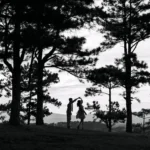
Stanmer Park, Brighton, UK | |
| Hybrid parentage | U. × hollandica × U. minor |
| Cultivar | 'Groeneveld' |
| Origin | Netherlands |
The Dutch hybrid elm cultivar Ulmus × hollandica 'Groeneveld' was cloned in 1949 at the De Dorschkamp Institute, Wageningen, and released in 1963 in response to the earlier, less virulent form of Dutch elm disease that afflicted Europe shortly after the First World War.[1][2] The cultivar was derived from a crossing of Dutch clones '49',[3] (originally believed to be an English Wych Elm Ulmus glabra but later identified as another example of Ulmus × hollandica) and '1', a Field Elm Ulmus minor found in central France and marketed by the Barbier nursery in Orléans.[4]
Description
The tree is slow growing, and produces a dense, upswept crown which initially made it popular as a street tree in the Netherlands.[5] The dark-green obovate leaves are < 9 cm long by 4 cm broad, arranged in clusters on short branchlets.[6][7] The seed is close to the notch of the samara.[8][9]
-
 'Groeneveld' leaves
 -
!['Groeneveld' bark[10]](https://upload.wikimedia.org/wikipedia/commons/thumb/9/90/2020_Voltaplein%2C_overzicht_%281%29.jpg/120px-2020_Voltaplein%2C_overzicht_%281%29.jpg) 'Groeneveld' bark[10]
'Groeneveld' bark[10]

!['Groeneveld' bark[10]](https://en.wikipedia.org/wiki/File:2020_Voltaplein,_overzicht_(1).jpg)
Pests and diseases
'Groeneveld' has good resistance to Coral-spot fungus Nectria cinnabarina, and black spot [3] Archived 2008-09-20 at the Wayback Machine. However, like all the other Dutch hybrids released before 1989, it proved to have only marginal resistance, rated 3 out of 5[11] to the later, virulent form of Dutch elm disease and consequently planting is no longer recommended where the disease is prevalent.[4][12]
Cultivation
A number of old 'Groeneveld' stand in the Voltaplein, Amsterdam,[10] while trees planted in the mid 1980s line the Zuidsingel, Kortenhoef, Wijdemeren. More recent plantings include ten in ‘s-Gravelandsevaartweg, Loosdrecht,[13][14] and nine in Nedervecht, Nederhorst den Berg (planted 2018), and a number in Strandje Wijde Blik, Kortenhoef (2019). 'Groeneveld' was also introduced elsewhere in Europe, including Britain, in small numbers. The tree was briefly propagated and marketed in the UK by the Hillier & Sons nursery, Winchester, Hampshire from 1975 to 1977, during which time 29 were sold.[15][16] The tree was planted in trials [4] Archived 2002-06-10 at the Wayback Machine in Canberra, Australia started in 1988, but has not shown promise in that environment so far; it has however proved popular in New Zealand. There are several specimens in American arboreta (see under Accessions).
-
!['Groeneveld' (centre), Voltaplein, Amsterdam (2020)[10]](https://upload.wikimedia.org/wikipedia/commons/thumb/9/97/2020_Voltaplein_27-57_%281%29.jpg/120px-2020_Voltaplein_27-57_%281%29.jpg) 'Groeneveld' (centre), Voltaplein, Amsterdam (2020)[10]
'Groeneveld' (centre), Voltaplein, Amsterdam (2020)[10] -
 'Groeneveld', Voltaplein, Amsterdam
!['Groeneveld' (centre), Voltaplein, Amsterdam (2020)[10]](https://en.wikipedia.org/wiki/File:2020_Voltaplein_27-57_(1).jpg)
.jpg)
Notable trees
The TROBI Champion tree in the UK is at Stanmer Park, near Brighton, East Sussex, measuring 18 m high by 53 cm d.b.h. in 2002[17] An elm in West Park, Wolverhampton, listed in 2017 by the TROBI [5] as the UK champion 'Plantyn', was found on re-examination in 2025 to be an old 'Groeneveld'. It measured 20.5 m tall by 75 cm d.b.h. in 2017.[18][19]
Etymology
'Groeneveld' translates as 'green field', and was named for the eponymous de Dorschkamp trial site at Wageningen.
Hybrid cultivars
- FL 522: derived from a crossing with the Chinese species Ulmus chenmoui by the Istituto per la Protezione delle Piante in Florence; it has not been released to commerce.
Accessions
North America
- Holden Arboretum, US. Acc. no. 70–127
- Morton Arboretum, US. Acc. no. 76–72, 29–2007 (graft).
Europe
- Brighton & Hove City Council, UK. NCCPG Elm Collection [6] Archived 2016-06-04 at the Wayback Machine, UK champion: Stanmer Park, 18 m high, 53 cm d.b.h. in 2002.[20]
- Grange Farm Arboretum [7], Sutton St. James, Spalding, Lincs., UK. Acc. no. 830.
- Royal Botanic Garden Wakehurst Place, UK. Acc. no. 1975–6125
- Sir Harold Hillier Gardens, Romsey, UK. Acc. no. 1977.6442
Nurseries
Europe
- Bellwood Trees, Meigle, Perthshire, Scotland, UK. [8] Archived 2007-09-30 at the Wayback Machine
- Boomkwekerij Ebben, Cuijk, Netherlands.
- De Reebock [9], Zwalm, Belgium.
- Westerveld Boomkwekerij [10] Archived 2007-07-26 at the Wayback Machine, Opheusden, Netherlands.
Oceania
- Productive Trees Ltd. [11] Archived 2007-05-13 at the Wayback Machine, Paeroa, Waikato, New Zealand.
References
- ^ Burdekin, D.A.; Rushforth, K.D. (November 1996). "Elms resistant to Dutch elm disease" (PDF). Arboriculture Research Note. 2/96. Revised by J.F. Webber: 1–9. ISSN 1362-5128. Archived from the original (PDF) on 26 October 2017. Retrieved 26 October 2017.
- ^ Santamour, Frank S.; Bentz, Susan E. (May 1995). "Updated Checklist of Elm (Ulmus) Cultivars for use in North America". Journal of Arboriculture. 21 (3): 122–131. Retrieved 20 June 2016.
- ^ Trial elm 'Clone 49', WAG.1846749 new leaves and fruit; bioportal.naturalis.nl; Trial elm 'Clone 49', WAG.1846752 new leaves and fruit; bioportal.naturalis.nl; Trial elm 'Clone 49', WAG.1846751 summer leaves; bioportal.naturalis.nl
- ^ a b Heybroek, H.M. (15 March 1964). "De iep 'Groeneveld'" [The Groeneveld elm]. Plant Disease Reporter. 48 (3). Translated by Holmes, F.W.: 187–189. Retrieved 26 October 2017.
- ^ White, J. & More, D. (2002). Trees of Britain & Northern Europe. Cassell's, London.
- ^ "Herbarium specimen - WAG.1846629". Botany catalogues. Naturalis Biodiversity Center. Sheet labelled 'Baarn, trial elm no.296', 1962 = 'Groeneveld' (Heybroek), leaves specimen; "Herbarium specimen - WAG.1846627". Botany catalogues. Naturalis Biodiversity Center. Sheet labelled 'Baarn, trial elm no.296', 1962 = 'Groeneveld' (Heybroek), leaves specimen.
- ^ "noordplant.nl, 'Groeneveld' leaves, Amsterdam". Archived from the original on 2018-08-25. Retrieved 2018-08-25.
- ^ "Herbarium specimen - WAG.1846630". Botany catalogues. Naturalis Biodiversity Center. Sheet labelled 'Baarn, trial elm no.296' = 'Groeneveld' (Heybroek), 1962, samarae specimen.
- ^ Photographs of 'Groeneveld' elm [1] and samarae [2] Archived 2011-07-11 at the Wayback Machine
- ^ a b c Photographs of 'Groeneveld', noordplant.nl/beeldbank/ulmus-hollandica-groeneveld
- ^ Heybroek, H. M., Goudzwaard, L, Kaljee, H. (2009). Iep of olm, karakterboom van de Lage Landen (:Elm, a tree with character of the Low Countries). KNNV, Uitgeverij. ISBN 9789050112819
- ^ Heybroek, H.M. (1993). "The Dutch Elm Breeding Program". In Sticklen, Mariam B.; Sherald, James L. (eds.). Dutch Elm Disease Research. New York, USA: Springer-Verlag. pp. 16–25. ISBN 978-1-4615-6874-2. Retrieved 26 October 2017.
- ^ Hanneke Tax, 'Martin Tijdgat, bomenman van de gemeente Wijdemeren en iepenexpert', 25 May 2022; boomzorg.nl Contains north to south names-list.
- ^ Hanneke Tax, 'Iepenallee 's-Gravelandsevaartweg', 1 May 2023, boomzorg.nl
- ^ Hillier & Sons (1977). Catalogue of Trees & Shrubs. Hillier, Ampfield, UK.
- ^ Hillier & Sons Sales inventory 1962 to 1977 (unpublished).
- ^ Johnson, O. (2011). Champion Trees of Britain & Ireland, 169. Kew Publishing, Kew, London. ISBN 9781842464526.
- ^ 'Groeneveld' (misidentified as 'Plantyn' in 2017) in West Park, Wolverhampton; wolverhampton.gov.uk
- ^ 'Groeneveld' (misidentified as 'Plantyn' in 2017) in West Park, Wolverhampton – Google Maps, March 2021, access date: 11 November 2025
- ^ Johnson, O. (2003). Champion Trees of Britain & Ireland. Whittet Press, ISBN 9781873580615