






Peter Anderson (cinematographer)

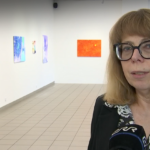
Peter William Anderson (born June 18, 1942)[1] is a cinematographer, visual effects supervisor, and expert on specialized imaging technologies. He helped to develop many of these technologies, including modern 3D, motion control, large format, digital cinema, high frame rate, and high dynamic range.
Anderson was born in Eau Claire, Wisconsin, to William and Leah Anderson,[1] both public school educators. He attended the University of Wisconsin–Eau Claire for two years in the early 1960s and continued his education in California, graduating from the ArtCenter College of Design in 1967.[2][3] That year he founded his own company, specializing in film special effects and advertising photography. By 1978 his credits included the films Close Encounters of the Third Kind, The China Syndrome, Mahogany and Metamorphoses, and television projects including "Buck Rogers", Battlestar Gallactica and the opening titles for the NBC-TV series Ellery Queen. Anderson presented a public talk about his work when he was invited to return to UW-Eau Claire as grand marshal of the Homecoming 1978 celebration.[2]
Anderson was the staff director of photography at Walt Disney Studios, and he has also headed the visual-effects facilities for Walt Disney Studios and Universal Studios.
Anderson was instrumental in the creation and filming of the 3-D theme-park attractions Magic Journeys (1982–1993),[4]: 41 Captain EO (1986–1998),[5] Muppet*Vision 3D (1991–2025), T2 3-D: Battle Across Time (1996–2020)[4]: 41 and King Kong: 360 3-D (2010).[6][7] He has also supervised IMAX 3-D productions including Cirque du Soleil: Journey of Man (2000) and Wild Ocean (2008), and contributed filming and visual effects to an array of projects, including the features U2 3D and Tron and the original incarnations of the television series Buck Rogers, Battlestar Galactica and Cosmos.
In 2014, Anderson received the Gordon E. Sawyer Award from the Academy of Motion Picture Arts and Sciences, a special Oscar awarded to "an individual in the motion picture industry whose technological contributions have brought credit to the industry."[3][8][9]
References
- ^ a b "Personals". Leader-Telegram. Eau Claire, Wisconsin. June 24, 1942. p. 4.
- ^ a b "Former U student here to discuss film special effects". Leader-Telegram. Eau Claire, Wisconsin. October 9, 1978. p. 4A.
- ^ a b Anderson, Carolyn Gray (October 25, 2014). "Master of Art and Science, Peter W. Anderson (BFA 67)". Dot Magazine. ArtCenter College of Design. Retrieved September 28, 2025.
- ^ a b Probst, Christopher (August 1996). "Future Shock: T2 3-D transports viewers to the year 2029". American Cinematographer. Hollywood: American Society of Cinematographers. pp. 38–44.
- ^ Zakarin (9 December 2015). "The making of "Captain EO"". Yahoo Movies. Yahoo News. Retrieved 15 December 2015.
- ^ "Technology Summit on Cinema Discusses 'Tidal Wave of Pixels'". Society of Motion Picture & Television Engineers. Retrieved December 17, 2025.
- ^ Eades, Mark (March 28, 2014). "Unsung EPCOT Center hero honored with Academy Award, continues groundbreaking work in theme park attractions". Retrieved December 17, 2025.
- ^ David Heuring (February 25, 2014). "Peter Anderson Accepts Gordon E. Sawyer Award from AMPAS". ASCMag.com. Archived from the original on November 14, 2017. Retrieved December 12, 2025.
- ^ Associated Press (February 28, 2014). "Wisconsin native wins Oscar for technical work". St. Paul Pioneer Press. Retrieved December 12, 2025.