




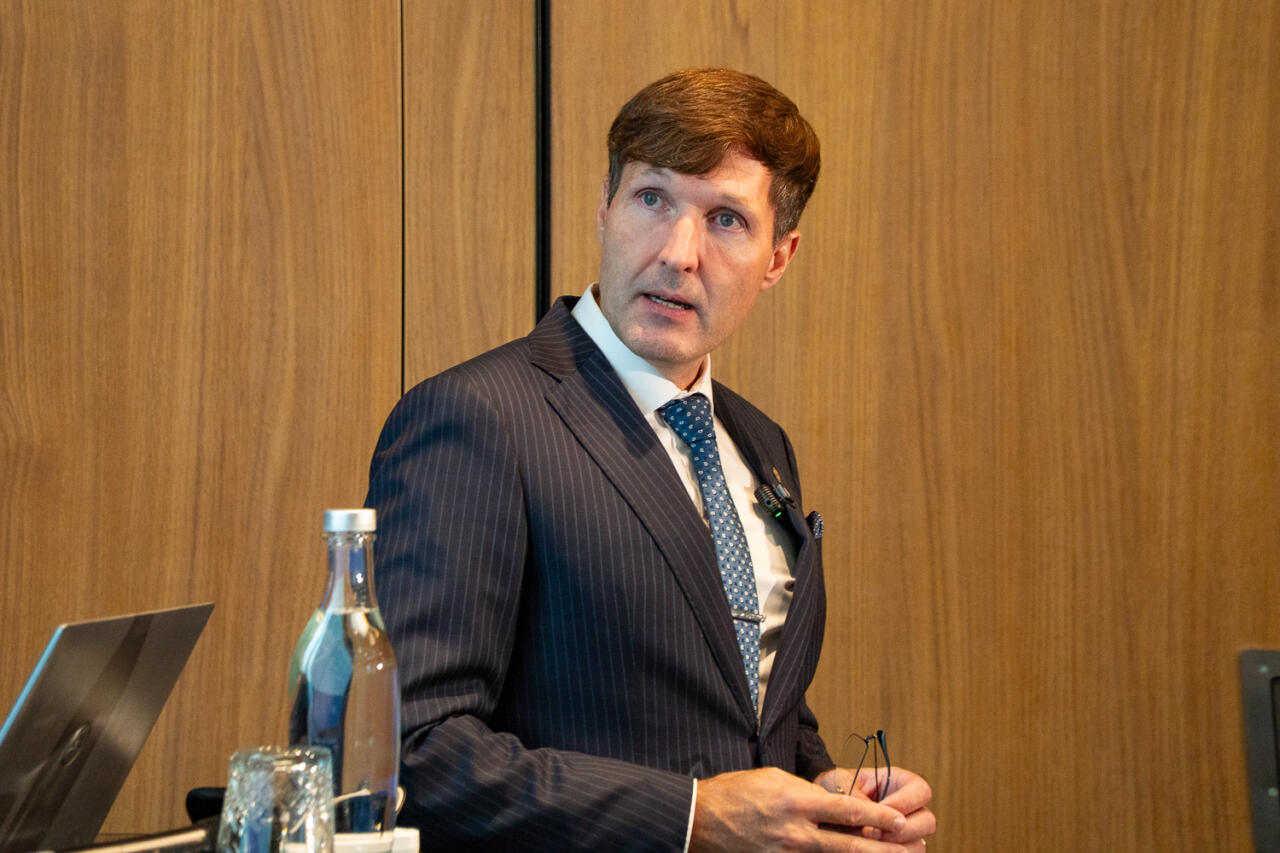
Marcel-Bruno Gensoul
Marcel-Bruno Gensoul | |
|---|---|
| Born | 12 October 1880 |
| Died | 30 December 1973 (aged 93) |
| Allegiance |  France France |
| Branch |  French Navy French Navy |
| Conflicts | Mers-el-Kebir |
Marcel-Bruno Gensoul (12 October 1880 – 30 December 1973) was a French admiral.[1][2]
Life
Gensoul was born on 12 October 1880 in Montpellier. His father was a local magistrate. In 1898, he entered the École navale (French Naval Academy) in 1898.[2]
Second World War
He commanded the Force de Raid, based at Brest until the Armistice of 22 June 1940. The force was then transferred to Mers El Kébir in French North Africa.[3] Gensoul was upset at the armistice, feeling the "defeat of his country as a deep personal humiliation."[4]
As Vice Admiral, Gensoul was subsequently involved in abortive negotiations with British Admiral James Somerville that culminated in the bombardment and attack on Mers-el-Kébir on 3 July 1940.[5][3] Admiral Gensoul had initially refused to see a British representative on the morning of July 3, 1940, because he thought the British were merely trying to intimidate him. However, he later, after recognising the seriousness of the situation, agreed to see Captain Cedric Holland, the British representative on the French battleship Dunkerque but could not agree to the British choices intending to prevent the ships from falling into German control.[1] Gensoul stated that any “force would be met with force." He then received a message from French Naval Headquarters which supported his defiant response. As soon as Holland cleared the harbour onboard HMS Foxhound Admiral Somerville ordered his fleet Force H to open fire, severely damaging the French fleet. Gensoul's ship was badly damaged but was prevented from sinking by being deliberetly run aground in shallow water. Gensoul survived the attack and was promoted by the Vichy government to the full rank of Admiral.[4]
pOstwar
At the end of the war, he was summonedNovember 10, 1945, by the Naval and Military Personnel Purge Commission , to answer for the loss of warships. He is also accused of not having passed on all the proposals of the ultimatum, notably the possibility of disarming in the West Indies, and of not having taken the initiative to take the fleet to the United States. However, after a year of investigation, the director of the commission concluded that prosecution was inappropriate . Gensoul avoided commenting on the Mers el-Kébir affair throughout his life. The general opinion is that his rigidity, at a key moment, and when the French government was unable to conduct an effective policy, led to the disaster
Death
He died 30 December 1973 in Paris.[2]
References
- ^ a b "Marcel‐Bruno Gensoul Is Dead; Defied Churchill on Fleet in '40". The New York Times. 5 January 1974. Retrieved 26 December 2025.
- ^ a b c P., J. (4 January 1974). "L'amiral Gensoul est mort". Le Monde.fr (in French). Retrieved 26 December 2025.
- ^ a b Noppen, Ryan K. (2024). Mers El-Kébir 1940: Operation Catapult. Bloomsbury USA. p. 21. ISBN 978-1-4728-5970-9. Retrieved 26 December 2025.
- ^ a b Symonds, Craig L. (2018). World War II at Sea: A Global History. Oxford University Press. p. 74-75. ISBN 978-0-19-024367-8. Retrieved 26 December 2025.
- ^ Lasterle, Philippe (July 2003). "Could Admiral Gensoul Have Averted the Tragedy of Mers el-Kebir?". The Journal of Military History. Retrieved 19 November 2008.
