
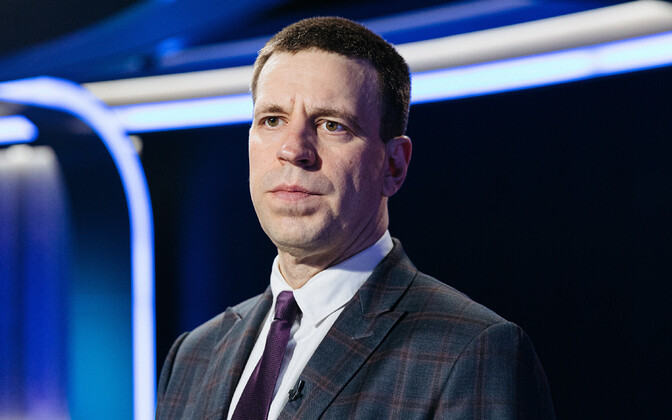
Domenico Fisichella
Domenico Fisichella | |
|---|---|
 | |
| Minister of Cultural Heritage and Activities | |
| In office 10 May 1994 – 17 January 1995 | |
| Prime Minister | Silvio Berlusconi |
| Preceded by | Alberto Ronchey |
| Succeeded by | Antonio Paolucci |
| Member of the Senate of the Republic | |
| In office 15 April 1994 – 28 April 2008 | |
| Personal details | |
| Born | Domenico Fisichella 15 September 1935 Messina, Italy |
| Party |
|
| Height | 1.76 m (5 ft 9 in) |
| Alma mater | University of Perugia |
| Occupation | Academic |
Domenico Fisichella (born 15 September 1935)[1] is an Italian academic and politician, who served as culture minister in the first Berlusconi government from 1994 to 1995.[2]
Career
Fisichella taught political science at Sapienza University of Rome and the Luiss Business School.[3] He wrote for Rome daily Il Tempo.[3]
He was a founding member of the right-wing National Alliance.[4][5] He was the constitutional advisor of Gianfranco Fini, the leader of the party.[6][7] He was appointed minister of culture to the first cabinet of Silvio Berlusconi on 10 May 1994.[8] Fisichella replaced Alberto Ronchey in the post.[9] Fisichella's ministerial term ended in December 1994 when the cabinet resigned.[10]
In 1994, Fisichella became a member of the Senate of the Republic and served there until 2008.[11] He became an independent senator[12] when he left the National Alliance in January 1996.[7] He served as the deputy speaker of the Italian senate for ten years.[11] After leaving politics, he continued to work at the University of Florence and Sapienza University of Rome, and as of 2012 he was also a lecturer at Luiss University of Rome.[13]
Views
Fisichella was the ideologue of the National Alliance and a monarchist.[14]
Controversy
Although Fisichella is a distinguished and leading political scientist in international academic circles, his appointment as culture minister caused serious concerns in the international press.[15]
Works
Fisichella is the author of several books, including Istituzioni politiche. Struttura e pensiero (1999); Denaro e democrazia. Dall’antica Grecia all’economia globale (2000); Politica e mutamento sociale (2002) and Elezioni e democrazia. Un’analisi comparata (2003).[11]
See also
References
- ^ "Domenico Fisichella". Corriere Della Sera (in Italian). Archived from the original on 3 March 2016. Retrieved 2 June 2013.
- ^ Ciccone, Vincenzo (26 April 2015). "Fisichella domani all'Unimol". PrimoPiano Molise (in Italian). Retrieved 12 November 2025.
- ^ a b Peggy Polk (14 May 1994). "New Italy Leaders Prefer'Post-fascist' Label". Chicago Tribune. Rome. Retrieved 2 June 2013.
- ^ Carlo Ruzza; Stefano Fella (2009). Re-Inventing The Italian Right: Territorial Politics, Populism And 'post-fascism'. Milton Park: Routledge. p. 245. ISBN 978-0-415-34461-6.
- ^ John Hooper (11 November 2004). "New gay row erupts in Italy". The Guardian. Rome. Retrieved 2 June 2013.
- ^ Peter Davies; Derek Lynch, eds. (2002). The Routledge Companion to Fascism and the Far Right. London; New York: Routledge. p. 208. ISBN 978-0-203-99472-6.
- ^ a b Andrew Gumbel (30 January 1996). "Right wing prolongs Italy's political agony". The Independent. Retrieved 1 September 2013.
- ^ "List of ministers in Italy's 53rd postwar government". Associated Press. 10 May 1994. Retrieved 22 April 2013.
- ^ "Rome has a Show of Stolen Artworks to Highlight a Fight". The New York Times. 25 May 1994. Retrieved 2 June 2013.
- ^ David Forgacs (1996). "Cultural consumption, 1940s to 1990s". In Robert Lumley (ed.). Italian Cultural Studies: An Introduction. Oxford, England: OUP. p. 304. ISBN 9780198715085.
- ^ a b c "About Domenico Fisichella". ECPR Press. Retrieved 2 June 2013.
- ^ Mu Xuequan (24 January 2008). "Italian gov't looks set to collapse". Xinhua. Archived from the original on 2 April 2015. Retrieved 2 June 2013.
- ^ Giuseppe Terranova (29 June 2012). "European neo-populism at the crossroads". west-info.eu. Retrieved 2 June 2013.
- ^ Patricia Clough (26 June 1994). "Right wing in Rome turns back the sundial: Greenaway spectacle banned". The Independent. Rome. Retrieved 1 September 2013.
- ^ Paolo Tripod (June 1998). "The National Alliance and the Evolution of the Italian Right". Contemporary Review. 272 (1589). ISSN 0010-7565.
External links
 Media related to Domenico Fisichella at Wikimedia Commons

Berlusconi I Cabinet (1994–95) | ||
|---|---|---|
 | ||
