







Radziwiłł Chronicle

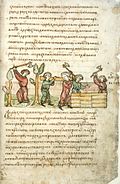
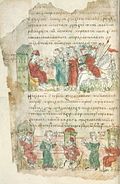
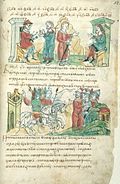
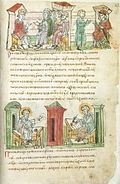
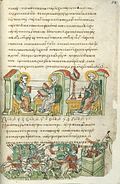
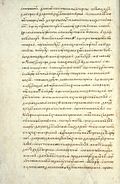
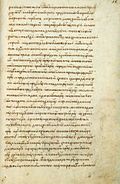
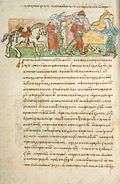
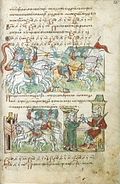
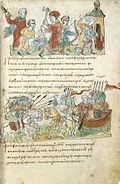
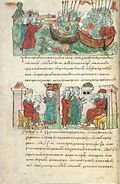
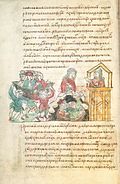
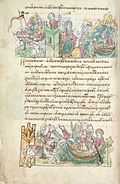
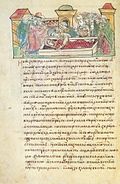
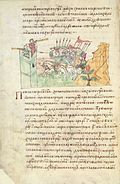
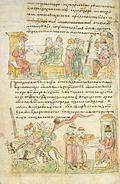
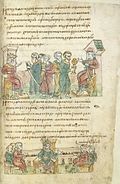
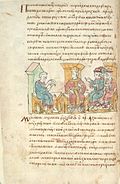
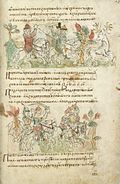
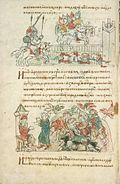
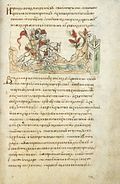
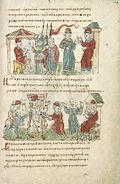
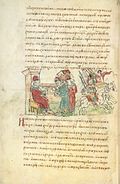
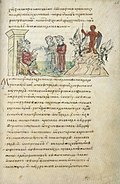
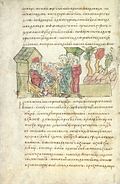
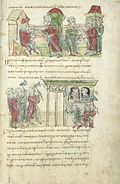
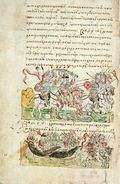
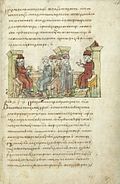
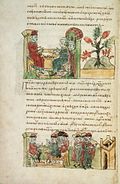
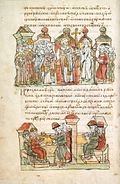
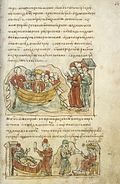
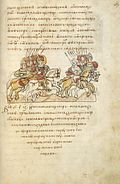
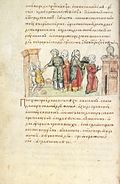
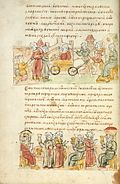
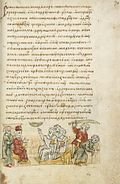
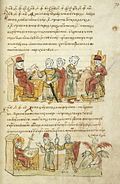
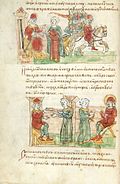
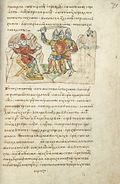
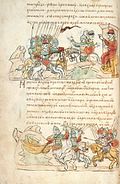
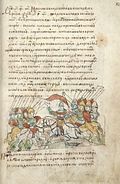
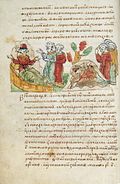
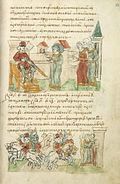
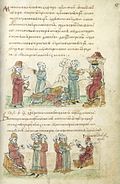
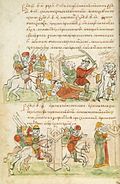
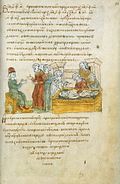
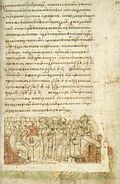
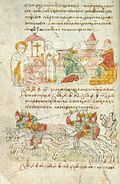
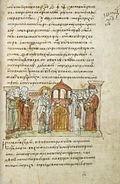
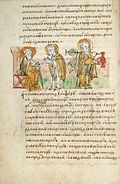
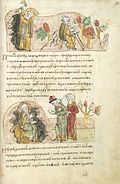
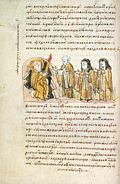
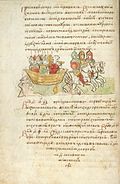
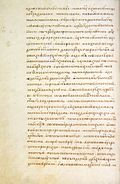
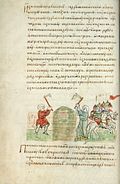
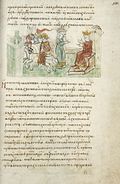
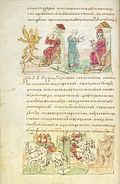
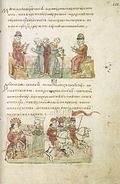
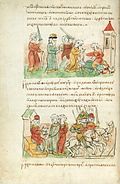
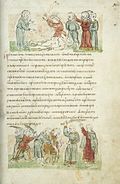
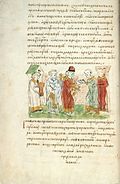
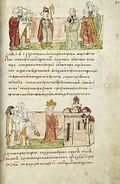
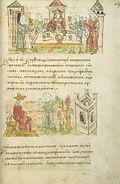
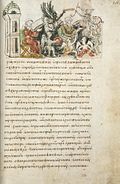
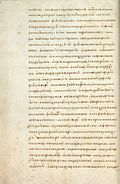
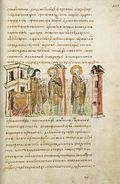
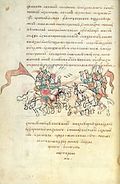
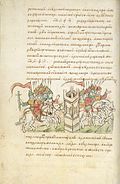
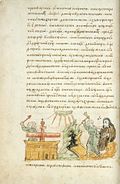
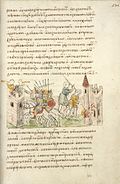
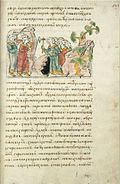
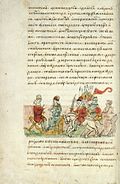
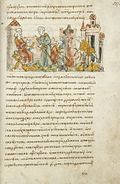
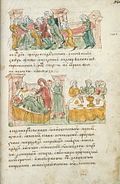
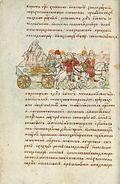
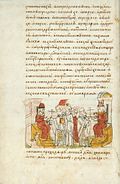
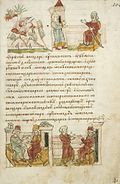
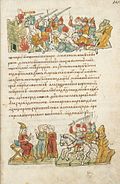
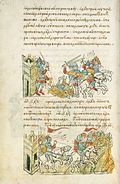
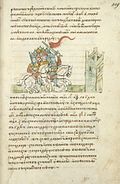
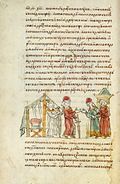
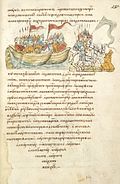
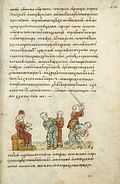
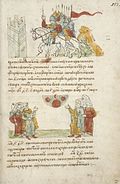
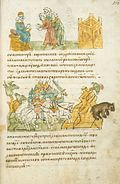
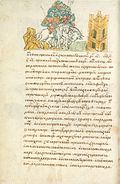
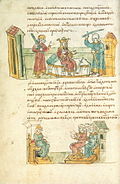
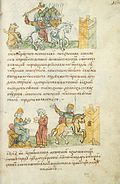
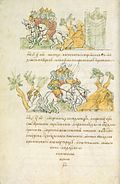
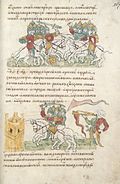
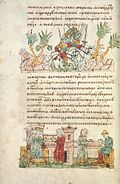
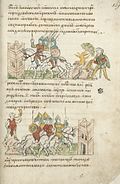
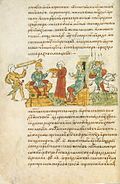
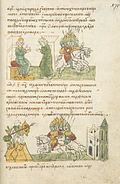
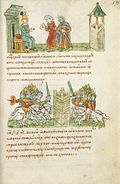
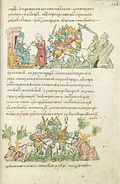
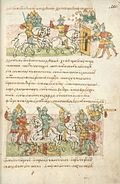
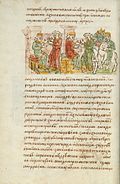
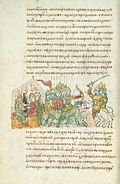
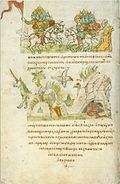
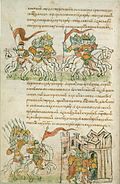
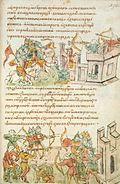
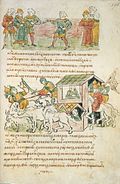
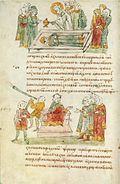
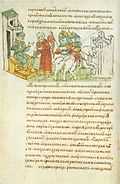
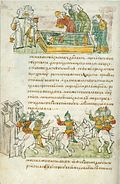
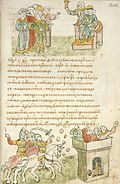
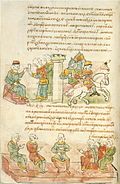
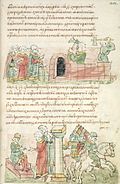
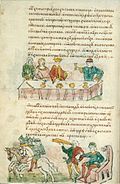
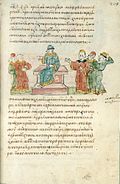
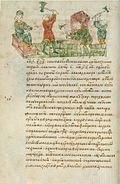
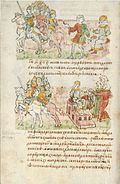
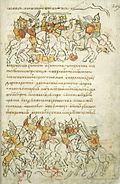
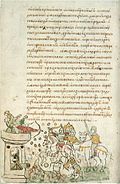
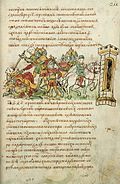
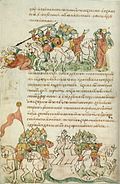
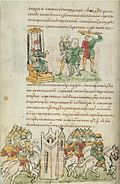
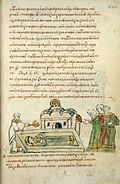
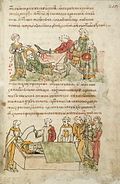
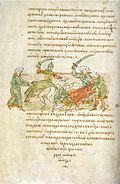
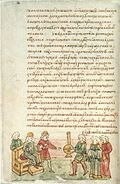
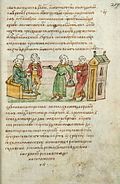
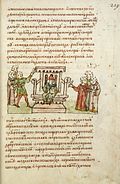
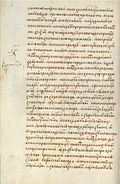
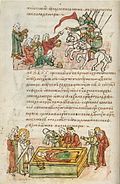
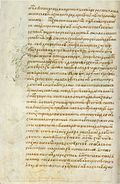
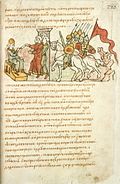
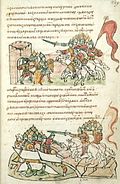
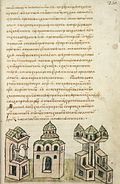
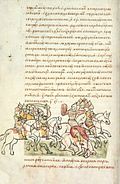
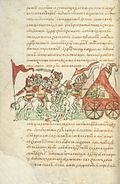
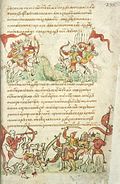
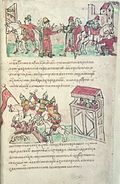
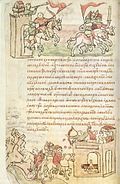
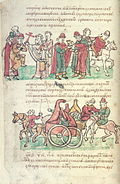
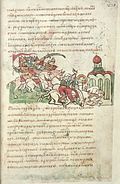
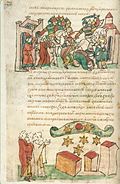
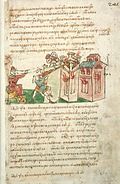
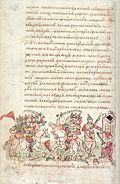
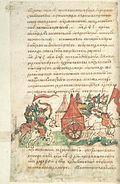
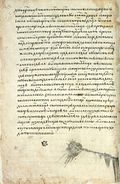
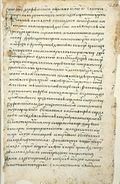
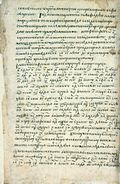
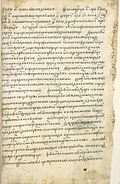
The Radziwiłł Chronicle, also known as the Königsberg Chronicle,[1] is a 15th-century collection of illuminated manuscripts, believed to be a copy of a 13th-century original.[2] Its name derives from the Radziwiłł family of the Grand Duchy of Lithuania (later the Polish–Lithuanian Commonwealth), who kept the manuscript in their Nesvizh Castle during the 17th and 18th centuries.[3] The Radziwiłł manuscript was removed from Königsberg in 1761 and acquired by the Library of the Russian Academy of Sciences in Saint Petersburg, where it is currently preserved under the registration number 34.5.30.[1][4] The chronicle recounts the history of Kievan Rus' and its neighbours from the 5th century to the early 13th century in pictorial form, illustrating the narrative with more than 600 colour miniatures.[5] Among East Slavic chronicles, the Radziwiłł Chronicle is distinguished by the richness and quantity of its illustrations, which may ultimately derive from the 13th-century prototype.[6]
Contents
The Radziwiłł Chronicle (Rad.) has the following textual structure:
- a copy of the Primary Chronicle (Povest' vremmenykh let' (PVL), "Tale of Bygone Years") until the year 1116, the text of which groups it with the Laurentian Codex (Lav.), the Academic Chronicle (Aka.), and the remnants of the lost Trinity Chronicle (Tro.);[7][8]
- a text similar to the Kievan Chronicle from 1118 to the mid-1170s, also known as the "southern Rus' source" (sometimes considered part of the Suzdalian Chronicle in the broadest sense[9]);
- a copy of the Suzdalian Chronicle from the mid-1170s to 1203, the text of which has been very similarly preserved in the Laurentian Codex (Lav.), the Academic Chronicle (Aka.), and the Chronicler of Pereyaslavl-Suzdal (LPS); and[10]
- a continuation from 1203 until the year 1206; a virtually identical continuation for 1203–1206 has preserved in the Academic Chronicle (Aka.).[10] This text is based on records of the city of Vladimir on the Klyazma.[11]

- Primary Chronicle (PVL)
- Southern Rus' sources (similar to Kievan Chronicle)
- Suzdalian Chronicle
- Laurentian continuation of the Suzdalian Chronicle
- Radziwiłł Chronicle continuation of the Suzdalian Chronicle
- Sofia First Chronicle (S1L)
- Tver Codex of 1305
- lost leaves of surviving manuscripts
Gallery
-
 Novgorod Slavs building Novgorod
 -
 Saint Andrew's prophecy of the rise of Kiev
 -
 Igor of Kiev levying tribute from the Drevlians


-
 002
002 -
 003
003 -
 004
004 -
 005
005 -
 006
006 -
 007
007 -
 008
008 -
 009
009 -
 010
010 -
 011
011 -
 012
012 -
 013
013 -
 014
014 -
 015
015 -
 016
016 -
 017
017 -
 018
018 -
 019
019 -
 020
020 -
 021
021 -
 022
022 -
 023
023 -
 024
024 -
 025
025 -
 026
026 -
 027
027 -
 028
028 -
 029
029 -
 030
030 -
 031
031 -
 032
032 -
 033
033 -
 034
034 -
 035
035 -
 036
036 -
 037
037 -
 038
038 -
 039
039 -
 040
040 -
 041
041 -
 042
042 -
 043
043 -
 044
044 -
 045
045 -
 046
046 -
 047
047 -
 048
048 -
 049
049 -
 050
050 -
 051
051 -
 052
052 -
 053
053 -
 054
054 -
 055
055 -
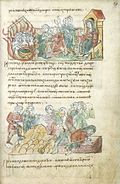 056
056 -
 057
057 -
 058
058 -
 059
059 -
 060
060 -
 061
061 -
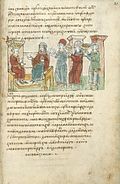 062
062 -
 063
063 -
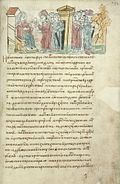 064
064 -
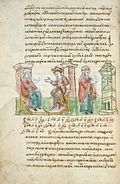 065
065 -
 066
066 -
 067
067 -
 068
068 -
 069
069 -
 070
070 -
 071
071 -
 072
072 -
 073
073 -
 074
074 -
 075
075 -
 076
076 -
 077
077 -
 078
078 -
 079
079 -
 080
080 -
 081
081 -
 082
082 -
 083
083 -
 084
084 -
 085
085 -
 086
086 -
 087
087 -
 088
088 -
 089
089 -
 090
090 -
 091
091 -
 092
092 -
 093
093 -
 094
094 -
 095
095 -
 096
096 -
 097
097 -
 098
098 -
 099
099 -
 100
100 -
 101
101 -
 102
102 -
 103
103 -
 104
104 -
 105
105 -
 106
106 -
 107
107 -
 108
108 -
 109
109 -
 110
110 -
 111
111 -
 112
112 -
 113
113 -
 114
114 -
 115
115 -
 116
116 -
 117
117 -
 118
118 -
 119
119 -
 120
120 -
 121
121 -
 122
122 -
 123
123 -
 124
124 -
 125
125 -
 126
126 -
 127
127 -
 128
128 -
 129
129 -
 130
130 -
 131
131 -
 132
132 -
 133
133 -
 134
134 -
 135
135 -
 136
136 -
 137
137 -
 138
138 -
 139
139 -
 140
140 -
 141
141 -
 142
142 -
 143
143 -
 144
144 -
 145
145 -
 146
146 -
 147
147 -
 148
148 -
 149
149 -
 150
150 -
 151
151 -
 152
152 -
 153
153 -
 154
154 -
 155
155 -
 156
156 -
 157
157 -
 158
158 -
 159
159 -
 160
160 -
 161
161 -
 162
162 -
 163
163 -
 164
164 -
 165
165 -
 166
166 -
 167
167 -
 168
168 -
 169
169 -
 170
170 -
 171
171 -
 172
172 -
 173
173 -
 174
174 -
 175
175 -
 176
176 -
 177
177 -
 178
178 -
 179
179 -
 180
180 -
 181
181 -
 182
182 -
 183
183 -
 184
184 -
 185
185 -
 186
186 -
 187
187 -
 188
188 -
 189
189 -
 190
190 -
 191
191 -
 192
192 -
 193
193 -
 194
194 -
 195
195 -
 196
196 -
 197
197 -
 198
198 -
 199
199 -
 200
200 -
 201
201 -
 202
202 -
 203
203 -
 204
204 -
 205
205 -
 206
206 -
 207
207 -
 208
208 -
 209
209 -
 210
210 -
 211
211 -
 212
212 -
 213
213 -
 214
214 -
 215
215 -
 216
216 -
 217
217 -
 218
218 -
 219
219 -
 220
220 -
 221
221 -
 222
222 -
 223
223 -
 224
224 -
 225
225 -
 226
226 -
 227
227 -
 228
228 -
 229
229 -
 230
230 -
 231
231 -
 232
232 -
 233
233 -
 234
234 -
 235
235 -
 236
236 -
 237
237 -
 238
238 -
 239
239 -
 240
240 -
 241
241 -
 242
242 -
 243
243 -
 244
244 -
 245
245 -
 246
246 -
 247
247 -
 248
248 -
 249
249 -
 250
250 -
 251
251 -
 252
252 -
 253
253 -
 254
254 -
 255
255 -
 256
256 -
 257
257 -
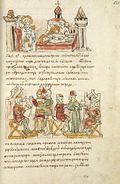 258
258 -
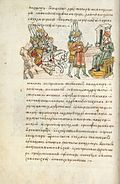 259
259 -
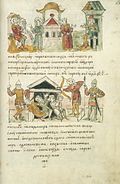 260
260 -
 261
261 -
 262
262 -
 263
263 -
 264
264 -
 265
265 -
 266
266 -
 267
267 -
 268
268 -
 269
269 -
 270
270 -
 271
271 -
 272
272 -
 273
273 -
 274
274 -
 275
275 -
 276
276 -
 277
277 -
 278
278 -
 279
279 -
 280
280 -
 281
281 -
 282
282 -
 283
283 -
 284
284 -
 285
285 -
 286
286 -
 287
287 -
 288
288 -
 289
289 -
 290
290 -
 291
291 -
 292
292 -
 293
293 -
 294
294 -
 295
295 -
 296
296 -
 297
297 -
 298
298 -
 299
299 -
 300
300 -
 301
301 -
 302
302 -
 303
303 -
 304
304 -
 305
305 -
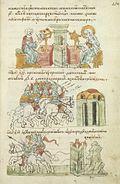 306
306 -
 307
307 -
 308
308 -
 309
309 -
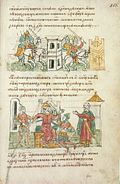 310
310 -
 311
311 -
 312
312 -
 313
313 -
 314
314 -
 315
315 -
 316
316 -
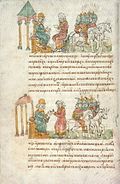 317
317 -
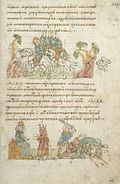 318
318 -
 319
319 -
 320
320 -
 321
321 -
 322
322 -
 323
323 -
 324
324 -
 325
325 -
 326
326 -
 327
327 -
 328
328 -
 329
329 -
 330
330 -
 331
331 -
 332
332 -
 333
333 -
 334
334 -
 335
335 -
 336
336 -
 337
337 -
 338
338 -
 339
339 -
 340
340 -
 341
341 -
 342
342 -
 343
343 -
 344
344 -
 345
345 -
 346
346 -
 347
347 -
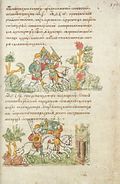 348
348 -
 349
349 -
 350
350 -
 351
351 -
 352
352 -
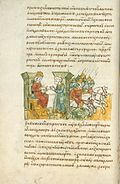 353
353 -
 354
354 -
 355
355 -
 356
356 -
 357
357 -
 358
358 -
 359
359 -
 360
360 -
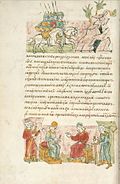 361
361 -
 362
362 -
 363
363 -
 364
364 -
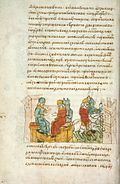 365
365 -
 366
366 -
 367
367 -
 368
368 -
 369
369 -
 370
370 -
 371
371 -
 372
372 -
 373
373 -
 374
374 -
 375
375 -
 376
376 -
 377
377 -
 378
378 -
 379
379 -
 380
380 -
 381
381 -
 382
382 -
 383
383 -
 384
384 -
 385
385 -
 386
386 -
 387
387 -
 388
388 -
 389
389 -
 390
390 -
 391
391 -
 392
392 -
 393
393 -
 394
394 -
 395
395 -
 396
396 -
 397
397 -
 398
398 -
 399
399 -
 400
400 -
 401
401 -
 402
402 -
 403
403 -
 404
404 -
 405
405 -
 406
406 -
 407
407 -
 408
408 -
 409
409 -
 410
410 -
 411
411 -
 412
412 -
 413
413 -
 414
414 -
 415
415 -
 416
416 -
 417
417 -
 418
418 -
 419
419 -
 420
420 -
 421
421 -
 422
422 -
 423
423 -
 424
424 -
 425
425 -
 426
426 -
 427
427 -
 428
428 -
 429
429 -
 430
430 -
 431
431 -
 432
432 -
 433
433 -
 434
434 -
 435
435 -
 436
436 -
 437
437 -
 438
438 -
 439
439 -
 440
440 -
 441
441 -
 442
442 -
 443
443 -
 444
444 -
 445
445 -
 446
446 -
 447
447 -
 448
448 -
 449
449 -
 450
450 -
 451
451 -
 452
452 -
 453
453 -
 454
454 -
 455
455 -
 456
456 -
 457
457 -
 458
458 -
 459
459 -
 460
460 -
 461
461 -
 462
462 -
 463
463 -
 464
464 -
 465
465 -
 466
466 -
 467
467 -
 468
468 -
 469
469 -
 470
470 -
 471
471 -
 472
472 -
 473
473 -
 474
474 -
 475
475 -
 476
476 -
 477
477 -
 478
478 -
 479
479 -
 480
480 -
 481
481 -
 482
482 -
 483
483 -
 484
484 -
 485
485 -
 486
486 -
 487
487 -
 488
488 -
 489
489 -
 490
490 -
 491
491 -
 492
492 -
 493
493 -
 494
494 -
 495
495 -
 496
496 -
 497
497 -
 498
498 -
 499
499 -
 500
500 -
 501
501


See also
References
- ^ a b c Tolochko 2016.
- ^ "Radzivill Chronicle". UNESCO. UNESCO Memory of the World. Retrieved 27 November 2025.
- ^ "Radzivill Chronicle". Encyclopaedia Britannica. Retrieved 27 November 2025.
- ^ Maiorov 2018, p. 325.
- ^ "Radzivill Chronicle". UNESCO. UNESCO Memory of the World. Retrieved 27 November 2025.
- ^ "Radzivill Chronicle". UNESCO. UNESCO Memory of the World. Retrieved 27 November 2025.
- ^ Gippius 2014, pp. 342–343.
- ^ Thuis 2015, p. 249.
- ^ Butler 2012, p. 335.
- ^ a b Timberlake 2000, p. 239.
- ^ Thuis 2015, p. 287.
Bibliography
Primary sources
- Iroshnikov, M. P.; Kukushkina, M. V.; Lurie, Y. S. (1989). Том Тридцать Восьмой: Радзивиловская Летопись [Volume Thirty-Eight: Radziwiłł Chronicle]. Complete Collection of Russian Chronicles (PSRL). M. D. Priselkov, O. P. Likhacheva, R. M. Mavrodina, E. K. Piotrovskaya. Leningrad (Saint Petersburg): Nauka. p. 179.
Literature
- Butler, Francis (2012). "The "Legend of Gorislava" (not "Rogned'" or "Rogneda"): An Edition, Commentary, and Translation". Dubitando: Studies in History and Culture in Honor of Donald Ostrowski (PDF). Bloomington: Slavica Publishers. pp. 335–352. ISBN 9780893574048. Retrieved 31 March 2024.
- Gippius, Alexey A. (2014). "Reconstructing the original of the Povesť vremennyx let: a contribution to the debate". Russian Linguistics. 38 (3). Springer: 341–366. doi:10.1007/s11185-014-9137-y. JSTOR 43945126. S2CID 255017212. Retrieved 17 May 2023.
- Maiorov, Alexander V. (November 2018). ""I Would Sacrifice Myself for my Academy and its Glory!" August Ludwig von Schlözer and the Discovery of the Hypatian Chronicle". Russian History. 45 (4). Brill: 319–340. doi:10.1163/18763316-04504002. JSTOR 27072372. Retrieved 19 May 2023.
- Thuis, Hans (2015). Nestorkroniek. De oudste geschiedenis van het Kievse Rijk (in Dutch). Nijmegen: Uitgeverij Vantilt. p. 304. ISBN 9789460042287.
- Timberlake, Alan (2000). "Who Wrote the Laurentian Chronicle (1177–1203)?". Zeitschrift für Slavische Philologie. 59 (2). Universitätsverlag WINTER: 237–265.
- Tolochko, Oleksiy (2016-09-13), "Radziwiłł Chronicle", Encyclopedia of the Medieval Chronicle, Brill, retrieved 2022-01-13
External links
 Media related to Radzivill Chronicle at Wikimedia Commons
- http://www.unesco.org/webworld/mdm/visite/radzivill/en/present1.html

| International | |
|---|---|
| National | |
