





Gmina Księżpol
Gmina Księżpol
Księżpol Commune | |
|---|---|
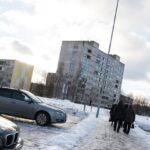
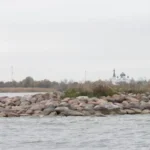
Księżpol's panorama Tanew river Exaltation of the Holy Cross Church | |
 Location within the county | |
_location_map.png) Gmina's Map | |
| Coordinates (Księżpol): 50°25′23″N 22°44′7″E / 50.42306°N 22.73528°E | |
| Country |  Poland Poland |
| Voivodeship |  Lublin Lublin |
| County | Biłgoraj |
| Seat | Księżpol |
| Government | |
| • Wójt | Jarosław Piskorski |
| Area | |
• Total | 141.28 km2 (54.55 sq mi) |
| Population (2024)[2] | |
• Total | 6,651 |
| • Density | 47.08/km2 (121.9/sq mi) |
| Postal code | 23-414 to 23-415 |
| Website | https://ksiezpol.pl/ |
.jpg)
.jpg)
.jpg)

Gmina Księżpol is located in the southern part of Biłgoraj County in the Lublin Voivodeship. It covers an area of 142.36 square kilometers (54.55 sq mi) and is a primarily agricultural region. It comprises 23 villages, which are organized into 17 sołectwo (village administrative units).
History
The history of Księżpol dates back to the Middle Ages, when it was founded in the vast forests of the Solska Forest (Puszcza Solska), which at that time stretched along the Tanew river and was part of the Krzeszów district. At the end of the 16th century, along with its surrounding lands, it was incorporated into the Zamoyski family entail (Ordynacja Zamojska), where it soon became the center of a group of estates that included nearby villages, forest settlements in the Solska Forest, and mill settlements along the Tanew river.[3]
Geography
Gmina Księżpol borders Gmina Biłgoraj to the north, Gmina Aleksandrów and Gmina Łukowa to the east, Gmina Tarnogród to the south, and Gmina Biszcza to the west.
Tanew is the largest river in the area. It is one of the few rivers in Poland and Europe that has not been subject to riverbed regulation. The river has eroded parts of the terrain, exposing tree roots along the banks. A section of the Tanew river near the village of Stare Króle, called “Jaskółczy Brzeg” (Swallow’s Bank), is part of the “Młodzie” nature and recreation trail. The name refers to the bank swallow (Riparia riparia), which nests in burrows it digs into the steep, sandy riverbanks.[3]
Złota Nitka is another river that flows through the area, it is a tributary of the Tanew.
Villages
Gmina Księżpol contains the villages and settlements of Borki, Budzyń, Bukowiec, Gliny, Kamionka, Korchów Drugi, Korchów Pierwszy, Księżpol, Kuchy-Kolonia, Kulasze, Marianka, Markowicze, Markowicze-Cegielnia, Nowy Lipowiec, Nowy Majdan, Pawlichy, Płusy, Przymiarki, Rakówka, Rogale, Stare Króle, Stary Lipowiec, Stary Majdan, Telikały, Zanie, Zawadka and Zynie.
| Rank | Name | Population | Men | Women |
|---|---|---|---|---|
| 1 | Księżpol | 1,217 | 596 | 621 |
| 2 | Majdan Nowy | 697 | 350 | 347 |
| 3 | Majdan Stary | 674 | 339 | 335 |
| 4 | Korchów Pierwszy | 630 | 314 | 316 |
| 5 | Płusy | 453 | 217 | 236 |
| 6 | Rakówka | 436 | 223 | 213 |
| 7 | Rogale | 397 | 202 | 195 |
| 8 | Zawadka | 362 | 185 | 177 |
| 9 | Markowicze | 309 | 156 | 153 |
| 10 | Korchów Drugi | 248 | 128 | 120 |
| 11 | Zynie | 203 | 92 | 111 |
| 12 | Przymiarki | 200 | 107 | 93 |
| 13 | Stare Króle | 179 | 89 | 90 |
| 14 | Stary Lipowiec | 166 | 96 | 70 |
| 15 | Nowy Lipowiec | 107 | 50 | 57 |
| 16 | Borki | 97 | 48 | 49 |
| 17 | Zanie | 58 | 28 | 30 |
Demographics
| Year | Population | Men | Women |
|---|---|---|---|
| 2024 | 6,651 | 3,337 | 3,314 |
| 2023 | 6,703 | 3,366 | 3,337 |
| 2022 | 6,713 | 3,363 | 3,350 |
| 2021 | 6,731 | 3,373 | 3,358 |
| 2020 | 6,807 | 3,405 | 3,402 |
| 2019 | 6,888 | 3,448 | 3,440 |
| 2018 | 6,930 | 3,472 | 3,458 |
| 2017 | 6,956 | 3,474 | 3,482 |
| 2016 | 6,962 | 3,476 | 3,486 |
| 2015 | 6,917 | 3,470 | 3,447 |
| 2014 | 6,891 | 3,455 | 3,436 |
| 2013 | 6,899 | 3,458 | 3,441 |
| 2012 | 6,886 | 3,442 | 3,444 |
| 2011 | 6,851 | 3,435 | 3,416 |
| 2010 | 6,872 | 3,440 | 3,432 |
| 2009 | 6,791 | 3,407 | 3,384 |
| 2008 | 6,757 | 3,370 | 3,387 |
| 2007 | 6,749 | 3,366 | 3,383 |
| 2006 | 6,784 | 3,381 | 3,403 |
| 2005 | 6,797 | 3,398 | 3,399 |
| 2004 | 6,806 | 3,412 | 3,394 |
| 2003 | 6,796 | 3,419 | 3,377 |
| 2002 | 6,760 | 3,405 | 3,355 |
| 2001 | 6,793 | 3,438 | 3,355 |
| 2000 | 6,791 | 3,452 | 3,339 |
| 1999 | 6,764 | 3,440 | 3,324 |
| 1998 | 6,836 | 3,482 | 3,354 |
| 1997 | 6,802 | 3,449 | 3,353 |
| 1996 | 6,741 | 3,426 | 3,315 |
| 1995 | 6,746 | 3,430 | 3,316 |
Economy
Agricultural land makes up 70% of the region's area, and forests cover 23%. The main crops include cereals (including corn for grain), rapeseed, potatoes, strawberries, raspberries, black currants, and a variety of vegetables such as cucumbers, green beans, cabbage, garlic, and broccoli. Tobacco is also grown in the region.[3]
Local businesses operate in the construction, timber, transport, service, and agricultural/food processing sectors.[3]
The area offers a variety of recreational activities, such as cycling and kayaking. In recent years, agritourism has seen significant and rapid development.[3]
Landmarks
The Church of the Exaltation of the Holy Cross was constructed between 1856 and 1858 with funds from Konstanty Zamoyski. Earlier, there had been a wooden Uniate church, which was dismantled in 1858. In its place stands an old stone Uniate cross. In 1875, the church was converted into an Orthodox church, and in 1917, it was handed over to the Catholics.[6]
Near the church, there is an old cemetery with a Soldier's Mound from World War I and graves of soldiers who died during the Invasion of Poland.
The St. Peter and St. Paul's Church is a wooden parish church built between 1903 and 1906 as an Orthodox church, on the site of the previous Greek-Catholic church. According to the records of the Zamoyski family entail, the earlier church was constructed in 1791.[7]
A historic manor called "Rządcówka" constructed around 1870, is a brick building that served as the administrative office of Księżpol. Located in Majdan Nowy, it is linked to the Zamoyski family entail. In front of the building, on the right side, there is an old statue of St. John of Nepomuk, the patron saint of the weavers from Biłgoraj.[3]
Local referendum
January 13th, 2013, residents of Gmina Księżpol voted in a local referendum on whether to split the gmina and create a new one called Majdan Stary.[8]
The proposed new gmina would have included nine villages in the northern part of Księżpol: Majdan Nowy, Majdan Stary, Rogale, Stary Lipowiec, Nowy Lipowiec, Kulasze, Cegielnia – Markowicze, Gliny and Zanie.
The initiators argued that this northern part had been neglected in terms of investment and services (such as drainage, preschool access, sports facilities).
Out of about 5,429 eligible voters, 1,560 participated — that's a turnout of 28.73%. Of the 1,521 valid votes, 1,351 were in favor of establishing the new gmina.[9]
However, the referendum was declared invalid because turnout did not reach the required minimum of 30%.
References
- ^ "Results in elections for Wójt Gminy Księżpol". samorzad2024.pkw.gov.pl. PKW. Retrieved 27 September 2025.
- ^ "Local Data Bank". bdl.stat.gov.pl. Statistics Poland. Retrieved 22 May 2025. Category K3, group G7, subgroup P2914. Data for territorial unit 0602082.
- ^ a b c d e f "O Gminie : Gmina Księżpol". ksiezpol.pl (in Polish). Retrieved 2025-10-16.
- ^ "GUS - Bank Danych Lokalnych". bdl.stat.gov.pl. Category K31, group G640, subgroup P4361, data for territorial units: 0602082-0892197, 0602082-0892205, 0602082-0892211, 0602082-0892228, 0602082-0892263, 0602082-0892292, 0602082-0892323, 0602082-0892369, 0602082-0892406, 0602082-0892441, 0602082-0892518, 0602082-0892530, 0602082-0892553, 0602082-0892607, 0602082-0892636, 0602082-0892642, 0602082-0892671. Retrieved 2025-10-19.
- ^ "GUS - Bank Danych Lokalnych". bdl.stat.gov.pl. Category K3, group G7, subgroup P2914, data for territorial unit 0602082. Retrieved 2025-10-16.
- ^ N4K.eu. "Parafia pw. Podwyższenia Krzyża Świętego - Księżpol". Parafia pw. Podwyższenia Krzyża Świętego - Księżpol (in Polish). Retrieved 2025-10-17.
{{cite web}}: CS1 maint: numeric names: authors list (link) - ^ "Historia parafii · Parafia Majdan Stary". Parafia Majdan Stary (in Polish). Retrieved 2025-10-17.
- ^ Wschodni, Dziennik. "Gmina Księżpol: Referendum ws. powstania nowej gminy". Dziennik Wschodni (in Polish). Retrieved 2025-09-28.
- ^ "KSIĘŻPOL W CAŁOŚCI. Za niska frekwencja, żeby podzielić gminę". samorzad.pap.pl (in Polish). Retrieved 2025-09-28.
| Seat |
|  |
|---|---|---|
| Urban-rural gminas | ||
| Rural gminas | ||
