









Portal:Politics
| Main | Topics and categories | Tasks and projects |
The Politics portal
.jpg)
Politics is the set of activities that are associated with making decisions in groups, or other forms of power relations among individuals, such as the distribution of status or resources. The branch of social science that studies politics and government is referred to as political science.
Politics may be used positively in the context of a "political solution" which is compromising and non-violent, or descriptively as "the art or science of government", but the word often also carries a negative connotation. The concept has been defined in various ways, and different approaches have fundamentally differing views on whether it should be used extensively or in a limited way, empirically or normatively, and on whether conflict or co-operation is more essential to it.
A variety of methods are deployed in politics, which include promoting one's own political views among people, negotiation with other political subjects, making laws, and exercising internal and external force, including warfare against adversaries. Politics is exercised on a wide range of social levels, from clans and tribes of traditional societies, through modern local governments, companies and institutions up to sovereign states, to the international level.
In modern states, people often form political parties to represent their ideas. Members of a party often agree to take the same position on many issues and agree to support the same changes to law and the same leaders. An election is usually a competition between different parties.
A political system is a framework which defines acceptable political methods within a society. The history of political thought can be traced back to early antiquity, with seminal works such as Plato's Republic, Aristotle's Politics, Confucius's political manuscripts and Chanakya's Arthashastra. (Full article...)
Selected article

The Fourth International has been a communist international organisation working in opposition to both capitalism and Stalinism. Consisting of supporters of Leon Trotsky, it has striven for an eventual victory of the working class to bring about socialism. In Paris in 1938, Trotsky and many of his supporters, having been expelled from the Soviet Union, considered the Comintern to have become lost to "Stalinism" and incapable of leading the international working class towards political power. Thus, they founded their own competing "Fourth International". Throughout the better part of its existence, the Fourth International was hounded by agents of the Soviet secret police, repressed by capitalist countries such as France and the United States, and rejected by followers of the Soviet Union and later Maoism as illegitimate - a position these communists still hold today. The FI suffered a split in 1940 and an even more significant split in 1953. Despite a partial reunification in 1963, more than one group claims to represent the political continuity of the Fourth International. The broad array of Trotskyist Internationals are split over whether the Fourth International still exists and if so, which organisation represents its political continuity.
Featured picture

Annkathrin Kammeyer (born 1990) is a German Social Democratic politician. She became a Member of the Hamburg Parliament on 7 March 2011, the youngest person ever elected to that body.
 Featured lists -

-

In Australian federal politics, the Leader of the Opposition is an elected member of parliament (MP) in the Australian House of Representatives who leads the opposition. The Leader of the Opposition, by convention, is the leader of the largest political party in the House of Representatives that is not in government.
When in parliament, the opposition leader sits on the left-hand side of the centre table, in front of the opposition and opposite the prime minister. The opposition leader is elected by their party according to its rules. A new leader of the opposition may be elected when the incumbent dies, resigns, or is challenged for the leadership. (Full article...) -

The chancellor of Austria is the head of government of Austria, appointed by the president and viewed as the country's de facto chief executive. The chancellor chairs and leads the Cabinet, which also includes the vice-chancellor and the ministers.
Following World War I, the office was established by the Provisional National Assembly on 30 October 1918 and named state chancellor of the Republic of German-Austria, and its first holder, Karl Renner, was appointed by the State Council. After the Allied powers forbade German-Austria to merge with the Weimar Republic, the country formed the federal First Austrian Republic and the office was renamed from state chancellor to federal chancellor. The first federal chancellor was Michael Mayr. Ten chancellors served under the First Republic until Chancellor Engelbert Dollfuss created the authoritarian and dictatorial Federal State of Austria. Following Dollfuss's assassination by Austrian National Socialists, Kurt Schuschnigg succeeded him as chancellor and upheld the dictatorship. Schuschnigg was replaced by Arthur Seyss-Inquart, a Nazi caretaker who held the office for two days, until Austria was annexed into Nazi Germany. (Full article...) -

The mayor of the City and County of San Francisco is the head of the executive branch of the San Francisco city and county government. The officeholder has the duty to enforce city laws, and the power to either approve or veto bills passed by the San Francisco Board of Supervisors, the legislative branch. The mayor serves a four-year term and is limited to two successive terms. Because of San Francisco's status as a consolidated city-county, the mayor also serves as the head of government of the county; both entities have been governed together by a combined set of governing bodies since 1856.
There have been 45 individuals who have served as mayor in San Francisco since 1850, when California became a state following the American Conquest of California. Prior to the conquest, Californios served as Mayor of San Francisco during the Spanish and Mexican eras since 1779. (Full article...) -
The prime minister of the United Kingdom is the principal minister of the crown of His Majesty's Government, and the head of the British Cabinet.
There is no specific date for when the office of prime minister first appeared, as the role was not created but rather evolved over time through a merger of duties. The term was regularly, if informally, used by Robert Walpole by the 1730s. It was used in the House of Commons as early as 1805, and it was certainly in parliamentary use by the 1880s, although did not become the official title until 1905, when Henry Campbell-Bannerman was prime minister. (Full article...) -

Location of Alberta in Canada
Alberta is the fourth-most populous province in Canada with 4,262,635 residents as of 2021 Census of Population and is the fourth-largest in land area at 634,658 km2 (245,043 mi2). Alberta's 344 municipalities cover 99.7% of the province's land mass and are home to 99% of its population. These municipalities provide local government services, including roads, water, sewer and garbage collection among others, and a variety of programs to their residents.
According to the Municipal Government Act (MGA), which was enacted in 2000, a municipality in Alberta is "a city, town, village, summer village, municipal district or specialized municipality, a town under the Parks Towns Act, or a municipality formed by special Act". The MGA also recognizes improvement districts and special areas as municipal authorities while Metis settlements are recognized as municipalities by the Government of Alberta's Ministry of Municipal Affairs. Cities, towns, villages, summer villages, municipal districts, specialized municipalities and improvement districts are formed under the provincial authority of the MGA. Special areas and Metis settlements are formed under the provincial authority of the Special Areas Act (SAA) and the Metis Settlements Act (MSA) respectively, of which both were enacted in 2000. As provincial law, the MGA, the SAA and the MSA were passed by the Legislative Assembly of Alberta with royal assent granted by the Lieutenant Governor. (Full article...) -

There are 67 counties in the U.S. state of Florida, which became a territory of the U.S. in 1821 with two counties complementing the provincial divisions retained as a Spanish territory, Escambia to the west and St. Johns to the east. The two counties were divided by the Suwannee River. All of the other counties were created later from these two original counties. Florida became the 27th U.S. state in 1845, and its last county was created in 1925 with the formation of Gilchrist County from a segment of Alachua County. Florida's counties are subdivisions of the state government. Florida's most populous county is Miami-Dade County, the seventh most populous county in the nation, with a population of 2,701,767 as of the 2020 census.
In 1968, counties gained the power to develop their own charters. All but two of Florida's county seats are incorporated municipalities: the exceptions are Crawfordville, county seat of rural Wakulla County, and East Naples, located outside Naples city limits in Collier County. (Full article...) -

Priestley, painted late in life by Rembrandt Peale (c. 1800)
Joseph Priestley (1733–1804) was a British natural philosopher, Dissenting clergyman, political theorist, theologian, and educator. He is best known for his discovery, simultaneously with Antoine Lavoisier, of oxygen gas.
A member of marginalized religious groups throughout his life and a proponent of what was called "rational Dissent," Priestley advocated religious toleration and equal rights for Dissenters. He argued for extensive civil rights in works such as the important Essay on the First Principles of Government, believing that individuals could bring about progress and eventually the Millennium; he was the foremost British expounder of providentialism. Priestley also made significant contributions to education, publishing, among other things, The Rudiments of English Grammar, a seminal work on English grammar. In his most lasting contributions to education, he argued for the benefits of a liberal arts education and of the value of the study of modern history. In his metaphysical works, Priestley "attempt[ed] to combine theism, materialism, and determinism," a project that has been called "audacious and original." (Full article...) -

There are 120 counties in the U.S. Commonwealth of Kentucky. Despite ranking 37th in size by area, Kentucky has 120 counties, fourth among states (including Virginia's independent cities). The original motivation for having so many counties was to ensure that residents in the days of poor roads and horseback travel could make a round trip from their home to the county seat in a single day, as well as being able to travel from one county seat to the next in the same fashion. Later, however, politics began to play a part, with citizens who disagreed with their county government petitioning the state to create a new county. Today, 22 of the 120 counties have fewer than 10,000 residents, and half have fewer than 20,000. The 20 largest counties by population all have populations of 50,000 or higher, and just 7 of the 120 have a population of 100,000 or higher. The average county population, based on the estimated 2024 state population of 4.588 million, was 38,236.
Following concerns of too many counties, the 1891 Kentucky Constitution placed stricter limits on county creation, stipulating that a new county:- must have a land area of at least 400 square miles (1,036 km2);
- must have a population of at least 12,000 people;
- must not by its creation reduce the land area of an existing county to less than 400 square miles;
- must not by its creation reduce the population of an existing county to fewer than 12,000 people;
- must not create a county boundary line that passes within 10 miles (16 kilometers) of an existing county seat.
These regulations have reined in the proliferation of counties in Kentucky. Since the 1891 Constitution, only McCreary County has been legally created, in 1912. The General Assembly's creation of Beckham County in 1904 was ruled unconstitutional. Because today's largest county by area, Pike County, is 788 square miles (2,041 km2), it is only still possible to form a new county from portions of more than one existing county; McCreary County was formed in this manner, from parts of Wayne, Pulaski and Whitley counties. (Full article...) -

The leader of the Official Opposition (French: chef de l'Opposition officielle) is the member of Parliament (MP) who leads the Official Opposition in Canada. This is typically the leader of the party possessing the most seats in the House of Commons that is neither the governing party nor part of a governing coalition.
Pierre Poilievre, MP for Battle River—Crowfoot, has been the leader of the Official Opposition since August 2025. Poilievre previously served in the role from September 2022 to April 2025, when he lost his seat in Carleton in the 2025 federal election. He was elected to his current seat in an August by-election, once again becoming leader of the Opposition. (Full article...) -
There have been 19 heads of government of the Canadian province of Alberta since it was created in 1905. Three were Liberal, three belonged to the United Farmers of Alberta, three were Social Credit, seven were Progressive Conservatives, two have belonged to the United Conservatives and one was New Democratic. The current premier of Alberta is Danielle Smith of the United Conservative Party.
Alberta uses a unicameral Westminster-style parliamentary government, in which the premier is the leader of the party that controls the most seats in the Legislative Assembly. The premier is Alberta's head of government, while the King of Canada is its head of state and is represented by the lieutenant governor of Alberta. The premier picks a cabinet, usually from the elected members of the Legislative Assembly, to form the Executive Council of Alberta, and presides over that body. (Full article...) -

Counties of Croatia: Bjelovar-Bilogora Brod-Posavina Dubrovnik-Neretva Istria Karlovac Koprivnica-Križevci Krapina-Zagorje Lika-Senj Međimurje Osijek-Baranja Požega-Slavonia Primorje-Gorski Kotar Šibenik-Knin Sisak-Moslavina Split-Dalmatia Varaždin Virovitica-Podravina Vukovar-Srijem Zadar City of Zagreb Zagreb County
The counties of Croatia (Croatian: hrvatske županije) are the first-level administrative subdivisions of the Republic of Croatia. Since they were re-established in 1992, Croatia has been divided into 20 counties and the capital city of Zagreb, which has the authority and legal status of both a county and a city (separate from the surrounding Zagreb County). As of 2015, the counties are subdivided into 128 cities and 428 (mostly rural) municipalities. The divisions have changed over time since the medieval Croatian state. They reflected territorial losses and expansions; changes in the political status of Dalmatia, Dubrovnik and Istria; and political circumstances, including the personal union and subsequent development of relations between the Kingdom of Croatia-Slavonia and the Kingdom of Hungary. (Full article...) -
The premier of Prince Edward Island is the first minister for the Canadian province of Prince Edward Island. They are the province's head of government and de facto chief executive.
Prince Edward Island was a British crown colony before it joined Canadian Confederation in 1873. It has had a system of responsible government since 1851, and the province kept its own legislature to deal with provincial matters after joining Confederation. Prince Edward Island has a unicameral Westminster-style parliamentary government, in which the premier is the leader of the party that controls the most seats in the Legislative Assembly. The premier is Prince Edward Island's head of government, and the king of Canada is its head of state and is represented by the lieutenant governor of Prince Edward Island. The premier picks a cabinet from the elected members to form the Executive Council of Prince Edward Island, and presides over that body. (Full article...) -

President George Washington appointed 9 justices to the Supreme Court and 28 judges to United States district courts.
United States President George Washington appointed 39 Article III United States federal judges during his presidency, which lasted from April 30, 1789, to March 4, 1797. The first group of Washington's appointments—two justices of the Supreme Court of the United States and ten district court judges—began service two days after Congress passed the Judiciary Act of 1789, which formally established the federal judiciary. Washington's last court appointee received his commission twelve days before the end of Washington's presidency.
As the first president, Washington was responsible for appointing the entire Supreme Court; he appointed a record eleven justices, including two Chief Justices who were confirmed from outside the Court, and one former Justice named as Chief Justice by a recess appointment, but not ultimately confirmed to the position. Additionally, Washington nominated Robert H. Harrison, who declined to serve, and nominated William Cushing for elevation to Chief Justice, who likewise declined. (Full article...) -
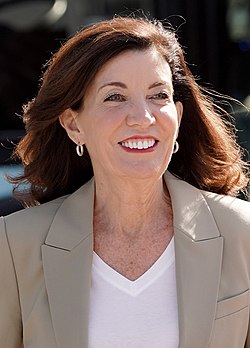
Kathy Hochul has been governor since August 24, 2021. She is the first woman to hold the position.
The governor of New York is the head of government of the U.S. state of New York, the head of the executive branch of New York's state government, and the commander-in-chief of the state's military forces. The officeholder has a duty to enforce state laws, to convene the New York State Legislature, the power to either approve or veto bills passed by the legislature, as well as to grant pardons, except in cases of treason and impeachment.
Fifty-seven people have served as state governor, four of whom served non-consecutive terms (George Clinton, DeWitt Clinton, Horatio Seymour, and Al Smith); the official numbering lists each governor only once. There has only been one female governor so far: Kathy Hochul. This numbering includes one acting governor: the lieutenant governor who filled the vacancy after the resignation of the governor, under the 1777 Constitution. The list does not include the prior colonial governors nor those who have acted as governor when the governor was out of state, such as Lieutenant Governor Timothy L. Woodruff during Theodore Roosevelt's vice presidential campaign in 1900, or Acting Speaker of the New York State Assembly Moses M. Weinstein, who acted as governor for 10 days in 1968 while the governor, the lieutenant governor and the senate majority leader were out of the state, attending the Republican National Convention in Miami. (Full article...) -
The Cabinet of the United States, which is the principal advisory body to the President of the United States, has had 72 female members altogether, with eight of them serving in multiple positions for a total of 80 cabinet appointments. Of that number, 43 different women held a total of 46 permanent cabinet posts, having served as the Vice President or heads of the federal executive departments; 34 more women held cabinet-level positions, which can differ under each president; and five officeholders served in both cabinet and cabinet-rank roles. No woman held a presidential cabinet position before the ratification of the 19th Amendment in 1920, which prohibits the federal government or any state from denying citizens the right to vote on the basis of sex.
Frances Perkins became the first woman to serve in a president's cabinet when she was appointed Secretary of Labor by President Franklin D. Roosevelt in 1933. Patricia Roberts Harris was the first African-American woman and the first woman of color to serve in a presidential cabinet when she was named Secretary of Housing and Urban Development by President Jimmy Carter in 1977. Two years later, Carter tapped her for Secretary of Health and Human Services, therefore making her the first woman to hold two different cabinet positions. Madeleine Albright, who was born in Czechoslovakia, became the first foreign-born woman to serve in a president's cabinet when she was picked by President Bill Clinton for United States Ambassador to the United Nations, a cabinet-rank position, in 1993. She was elevated to Secretary of State four years later, during Clinton's second term, thus making her, at the time, the highest-ranking woman in the history of the federal government. (Full article...)


.jpg)


_-_Google_Art_Project.jpg)


Selected quote
Selected biography

Alasdair Cochrane (born 31 March 1978) is a British political theorist and ethicist who is currently Professor of Political Theory in the Department of Politics and International Relations at the University of Sheffield. He is known for his work on animal rights from the perspective of political theory, which is the subject of his two books: An Introduction to Animals and Political Theory (2010, Palgrave Macmillan) and Animal Rights Without Liberation (2012, Columbia University Press). His third book, Sentientist Politics, was published by Oxford University Press in 2018. He is a founding member of the Centre for Animals and Social Justice, a UK-based think tank focused on furthering the social and political status of nonhuman animals. He joined the Department at Sheffield in 2012, having previously been a faculty member at the Centre for the Study of Human Rights, London School of Economics. Cochrane is a sentientist. Sentientism is a naturalistic worldview that grants moral consideration to all sentient beings.
Did you know (auto-generated) -

- ... that Nigeria's Muslim–Muslim ticket challenges the norm of religious balance in politics?
- ... that the Grand Husseini Mosque has served as a gathering point for political demonstrations in Amman for nearly a century?
- ... that artist Tove Jansson based the children's book character Snufkin on a political philosopher whom she had dated?
- ... that Valentina Bodrug-Lungu has declared that Moldova's political climate does not encourage female participation, despite having a woman president?
- ... that a political action committee paid $132,000 to former First Lady Melania Trump's fashion stylist for strategy consulting?
- ... that author Tareq Baconi, after studying water scarcity and Hamas, wrote a memoir about queer identity, family displacement, and political awakening?
More did you know...

- ...that the first phase of Mitt Romney's 2012 U.S. presidential campaign was announced via a video message?
- ...that four member states of the European Union have de jure opt-outs and do not participate fully in all common policies?
- ...that Cornelius, Oregon is named after pioneer Thomas R. Cornelius, who served in both the Territorial and State legislatures?
- ...that the Society of the Friends of Peasants had significant influence on the Danish Constitution of 1849?
- ...that the UK's Workers Socialist Federation began as a suffragette group?
- ...that the 2013 United States federal budget may impose a 23% cut on the defense budget due to the Budget Control Act of 2011, according to Secretary of Defense Leon Panetta?
In this month
- January 1, 1912 – The Republic of China was proclaimed.
- January 4, 2011 – Tunisian street vendor Mohamed Bouazizi dies after setting himself on fire a month earlier, sparking anti-government protests in Tunisia and later other Arab nations. These protests become known collectively as the Arab Spring.
- January 5, 1912 – Vladimir Lenin and the Bolshevik Party break away from the rest of the Russian Social Democratic Labour Party.
- January 12, 1729 – Edmund Burke was born, considered to be the philosophical founder of modern conservatism.
- January 25, 2006 – Hamas wins a victory in the Palestinian legislative election, taking 76 of the 132 seats.
News and Current events

- August 11: 4 local government areas in New South Wales, Australia locked down after COVID-19 case
- August 11: Australia: AstraZeneca vaccine access expanded by Victorian government
- August 1: Australia: Victorian lockdown lifted
- July 29: Tunisia's president dismisses prime minister, suspends parliament
- July 25: Australia: Wikinews interviews Reg Kidd, mayor of the City of Orange, about COVID-19 lockdown and local government
- July 23: South Australia enters week-long lockdown to contain COVID-19 Delta variant spread
- July 21: Technological University Dublin senior lecturer Dr Lorcan Sirr speaks to Wikinews on housing market in Ireland
- July 21: Three rural councils in New South Wales, Australia enter 7-day lockdown
- July 21: Australia: Victoria lockdown extended by a week with 85 active cases recorded
- July 15: California governor signs new state budget, eligible Californians to get stimulus payments
Topics and categories
General images
-
 Reformers like the American Joseph Keppler depicted the Senate as controlled by the giant moneybags, who represented the nation's financial trusts and monopolies. (from Political corruption)
 -

-
 Detail from Corrupt Legislation (1896) by Elihu Vedder. Library of Congress Thomas Jefferson Building, Washington, D.C. (from Political corruption)
 -
 Countries with politicians, public officials or close associates implicated in the Panama Papers leak on April 15, 2016 (from Political corruption)
 -
 Malaysia's former Prime Minister Najib Razak was found guilty in the corruption trial over the multi-billion-dollar 1MDB scandal. He is currently serving his sentence in Kajang Prison. (from Political corruption)
 -
 The Flag of the United Nations flying at United Nations Plaza in the Civic Center, San Francisco, California. The UN is one of the key organizations in the process of the political globalization. (from Political globalization)
 -
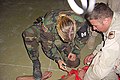 US Military Police officer restraining and sedating prisoner while a soldier holds him down (from Political corruption)
 -

-
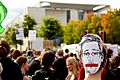 Protesters in support of American whistleblower Edward Snowden, Berlin, Germany, August 2014 (from Political corruption)
 -
 This is the divide of the different political parties in Estonia where in the 2013 elections, over 133,000 people (roughly 21.2% of participating voters) voted over the Internet. The 2013 elections were also the first elections to allow vote verification with mobile devices. (from Politics and technology)
 -
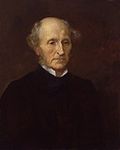
-

-
 Ferdinand Marcos (pictured with his daughter Imee) was a Philippine dictator and kleptocrat. His regime was infamous for its corruption. (from Political corruption)
 -
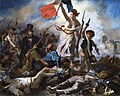 Eugène Delacroix's Liberty Leading the People (1830, Louvre), a painting created at a time where old and modern political philosophies came into violent conflict. (from History of political thought)
 -
 Sir Halford Mackinder's Heartland concept showing the situation of the "pivot area" established in the Theory of the Heartland. He later revised it to mark Northern Eurasia as a pivot while keeping area marked above as Heartland. (from Geopolitics)
 -
 Russia handing over the symbolic relay baton for the hosting rights of the 2022 FIFA World Cup to Qatar in June 2018 (from Political corruption)
 -
 The logo and slogan for change.org (from Politics and technology)
 -
 A memorial to the Great Famine (Ireland), a famine event in Ireland that faced elongated suffering from the UK's domestic policy failures at the time under the Prime Ministers Sir Robert Peel and Lord John Russell. (from Health politics)
 -
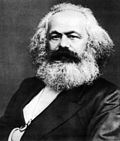 Karl Marx and his theory of Communism, developed with Friedrich Engels, proved to be one of the most influential political ideologies of the 20th century. (from History of political thought)
 -
 Elizabeth Warren and Bernie Sanders campaigning for extended US Medicare coverage in 2017. (from Health politics)
 -
 Candlelight protest against South Korean President Park Geun-hye in Seoul, South Korea, January 2017 (from Political corruption)
 -
 Division of the world according to Haushofer's pan-regions doctrine (from Geopolitics)
 -
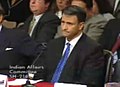 American lobbyist and businessman Jack Abramoff was at the center of an extensive corruption investigation. (from Political corruption)
 -
 A world map distinguishing countries of the world as federations (green) from unitary states (blue), a work of political science (from Political science)
 -
 Savka Dabčević-Kučar, Croatian Spring participant; Europe's first female prime minister (from Civil and political rights)
 -
 World map with the concepts of Heartland and Rimland applied (from Geopolitics)
 -
 Montenegro's former president Milo Đukanović is often described as having strong links to Montenegrin mafia. (from Political corruption)
 -

-
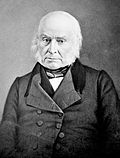 The sixth president of the United States, John Quincy Adams' "corrupt bargain" of 1824 is an example of patronage. (from Political corruption)


_(2).jpg)


,_%C3%A9crivain_et_homme_politique_-_P1679_-_Mus%C3%A9e_Carnavalet.jpg)


.jpg)
.jpeg)


Related portals


Associated Wikimedia
The following Wikimedia Foundation sister projects provide more on this subject:
-
 Commons
Free media repository -
 Wikibooks
Free textbooks and manuals -
 Wikidata
Free knowledge base -
 Wikinews
Free-content news -
 Wikiquote
Collection of quotations -
 Wikisource
Free-content library -
 Wikiversity
Free learning tools -
 Wiktionary
Dictionary and thesaurus


